mulberryshoots

"Tell me, what is it you plan to do with your one wild and precious life?" ~ Mary Oliver

Month: September, 2015

a new classic in cookery writing . . .

kitchen towels

“Ruth Reichl – My Kitchen Year” is a wonderful book that also happens to be a cookbook that I can cook from every day. As a memoir of her days after Gourmet magazine abruptly closed, it’s easy to understand how she returned to the kitchen to assuage her grief during a time of uncertainty. Be that as it may, this book contains handwritten chapter headings with poignant photographs of the countryside throughout the seasons surrounding her home in New York state along with recipes that are classic and easy to follow. There are no foodie stylists around, just one photographer who takes the picture, then joins in eating the goods. This book is intimate in its charm and fresh with recipes that are classic updated with contemporary touches.

I happen to cook a lot and to also cook dishes that are similar to the ones that Ruth Reichl celebrates here. . . although she manages to insert special little touches that I hadn’t thought of before. For example, combining chopped shallots and onions to finest grated cheddar cheese before making a grilled sourdough cheese sandwich. Or, her best fried chicken brined in salt, then soaked in buttermilk and ONION before frying in coconut oil and butter.

Above and beyond the visual and culinary treats that this book offers, it also contains anecdotes that are poignant to Ruth Reichl – one of a woman offering to treat her to a sandwich while she’s waiting in an airport after the sudden demise of Gourmet magazine. Or the memory evoked during a fried chicken picnic at Tanglewood of a youthful trip to Israel, forced on her by her parents where she met another young woman who happened to be Carole King – who, along with James Taylor and Yo Yo Ma, provided the program for that Tanglewood fried-chicken picnic evening.

This all makes me feel that Ruth Reichl has lived a blessed life despite the very public humiliation of the closing of her Gourmet magazine after ten years as its editor. She’s married to Michael who is 75 who happily eats her blinis with sour cream and salmon roe in her videos, she also has a son whom she adores. Best of all, she’s moved from New York City to a low slung contemporary house in New York State that was built overlooking beautiful countryside with nearby farms and other provisioners of vegetables, cheeses and other organic goodies.

It almost seems like the whole demise-cum-survival scenario was “meant to be” as the next chapters of her and her family’s life. She just didn’t know it at the time.

I’ve always liked Ruth Reichl through years of reading cookery magazines and cookbooks. The graphics of those Gourmet magazines under her stewardship were unbelievably rich and beautiful if you might recall. I’ve saved all my copies of Gourmet from those times because they were such a feast for the eyes as well as for the kitchen. And with these few rainy days, I’m looking forward to pulling them out and looking at them once again.

In this book, I am particularly looking forward to trying her New York cheesecake recipe with the chocolate wafer crust and sour cream glaze, and other homey recipes like shirred eggs with pureed potatoes for supper with a simple green salad.

Finally, she makes a big deal out of making turkey stock for gravy at Thanksgiving – and she’s absolutely right that no matter how the roasted bird turns out, the stuffing and the mashed potatoes, with a deeply rich “made from scratch” turkey gravy, everybody will love whatever is on their plate. Not that Ruth Reichl’s “other” offerings would be anything other than tasty and tender.

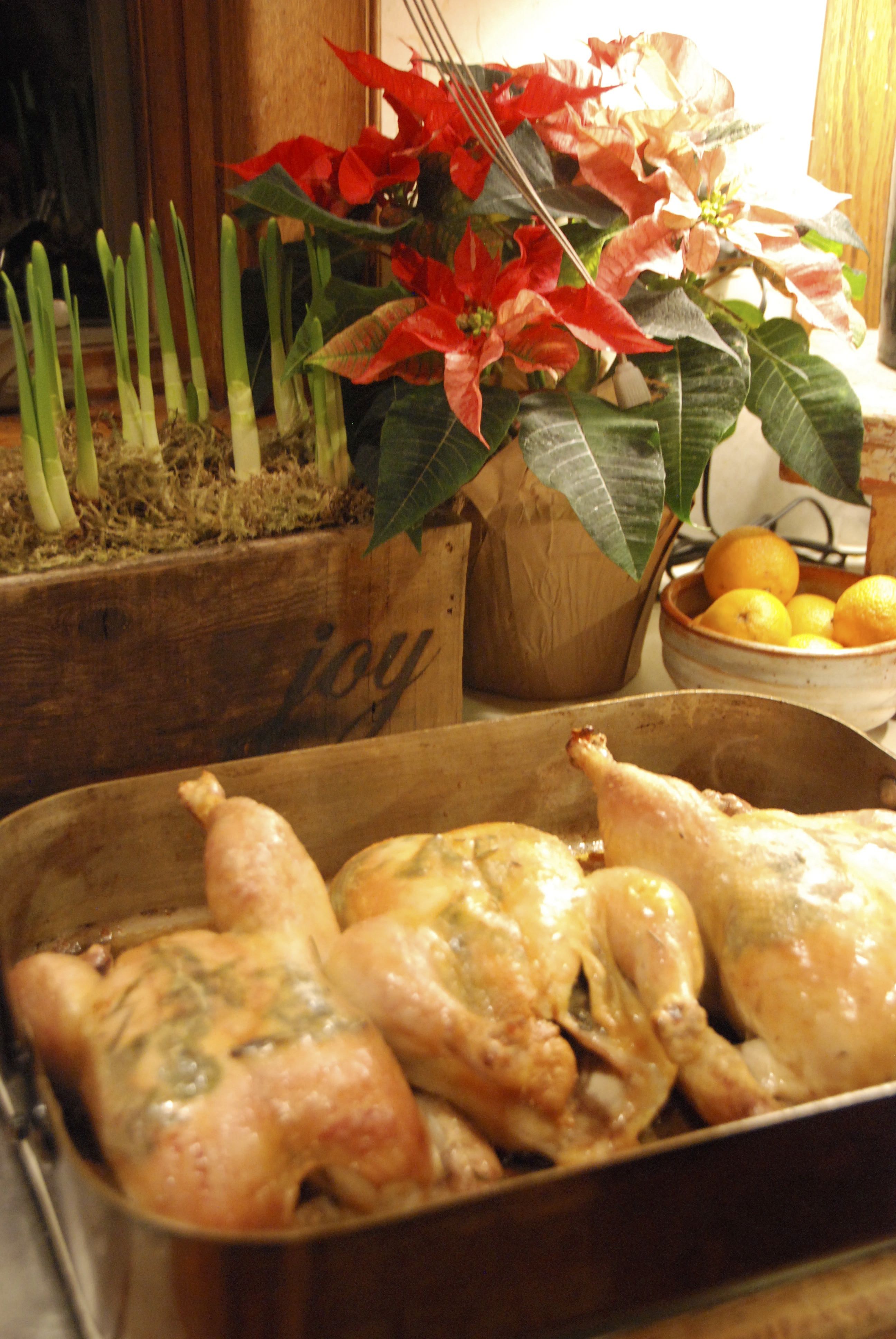
I’ve reached a time when I shouldn’t be buying any more cookbooks. My cookery library started with Elizabeth David’s Penguin editions and expanded through the years with books by M.F.K. Fisher, Julia Child, Alice Waters, the River Cafe, Nigel Slater, the Conrans, Thomas Keller, Noma and Judy Rodgers. (We celebrated Christmas Eve with Judy Rodgers’ roast chicken and bread salad two years ago when she died at the age of 57 a few weeks before Christmas. It was out of this world and memorably delicious! – see photo on right)PCG 132
Still, I think that this new volume by Ruth Reichl will now be my favorite and will be a standby to look through for new things to try and to tweak classic recipes I’ve already made many times. It is a beautiful volume on so many levels.

In an interview published by the New York Times last week, Ruth Reichl was quoted as saying “You should have as much fun as you can because you don’t know what’s coming down the road.” Well, it looks like she not only survived what she didn’t see coming down the road, but with this memoir/cookbook, she’s also managed to illustrate how she’s landed on her feet, built a new home and produced what I think will become a true classic in the ever mushrooming world of cooking.

Good for her! – and good for us too!

Postscript: since this post was written, I’ve tried out Ruth Reichl’s pancake recipe. The only change I made was to use buttermilk instead of whole milk. They are truly the best pancakes I’ve ever had – delectably tender in the middle and slightly crispy on the edges. You might think pancakes are easy to make (and they are) but this recipe is head and shoulders (and different) from any others that I’ve tried.

Am also looking forward to roasting filet of beef sprinkled with truffle salt and eaten at room temperature with leftovers for sandwiches the next day!


 

living large . . .

825db30fbfeff7de0671e7ab04f94163

I’ve been noticing lately that the Universe’s messages to me have all been about not holding back and deciding to go full tilt in living my life everyday.

So what if Pope Francis is 78 years old with various age-related problems – his will and intentions during his U.S. visit have sent a strong message about values that all can benefit from and that are hard to ignore. “Be good to each other and do the right thing.”

Coming upon the New York Times review article about Sviastoslav Richter reminded readers of how probably unhappy as a person Richter was and reluctant to concertize in the U.S. in 1960. But just take a listen to his recordings (which I did last night) of Schumann’s Fantasy in C, Chopin’s “Revolutionary” Etude and Beethoven “Appassionata” sonata, third movement. He goes full tilt with a musical energy that can’t be ignored . . . and if you’re anything like me, it almost makes your hair stand on end!

I guess that’s what it’s all about: “appassionata” means passion – and just because we find ourselves older than we ever thought we would be, it doesn’t mean that we can avoid living our lives by being reticent nor making excuses for why we don’t do things more and better than we ever have before. Going for it as long as we can sounds pretty good to me.

In parallel, I have also rediscovered in the past weeks what has given me so much pleasure in my life, and am following these pursuits happily again. What else, really, is there to do? As Ruth Reichl said recently, “you should have as much fun as you can because you don’t know what’s coming down the road.”

Oh, and then there’s the “blood full moon eclipse” tonight too, not to be seen again until 2033, eighteen years from now. But right now, it’s more than enough to take just one day at a time, playing and listening to music, cherishing what we have and mostly, paying attention to it all, with many thanks.


“going for it ! . . . “

th

When asked about the Pope’s health and stamina, someone who knew him when he became Pope at the age of seventy-six two years ago said that he’s gained a little weight since then because he hasn’t had a chance to get much exercise. He also has one lung, suffers from diabetes and moves with a sore hip. You’d never know it from watching him during this visit.

The vigorous schedule he has met since he touched down in Washington, D.C. yesterday has been remarkable. Not only that, you can tell that this guy is truly in the moment all the time. That same person who saw him two years ago said he got the impression at the time that the new Pope, despite his health and his age, was “just going to go for it.”

And so he has done. The fifty minute speech he gave to the Joint Houses of the U.S. Congress today was spoken in English although his native language is Spanish (he’s from Argentina) and he is also fluent in Italian. He said that the U.S. is still held in the world as a land of hope – and that we should live up to that symbol of hope. This national identity has been lost in translation by political mud-slinging that has become a national pastime, it seems.

Somebody with moral courage had to speak up as he has. And I’m glad he did. He asked for us to pray for him. And so we will, even those of us who are not Catholic nor even particularly religious in a formal sense.

People here talk all the time about wanting to  “make a difference.” Pope Francis has illustrated how to talk the talk that’s long overdue while continuing to walk the walk all day long. For someone who is 78 years old,  Pope Francis is a pretty amazing example of what “just going to go for it!” looks like — and it’s still unfolding before our very eyes.

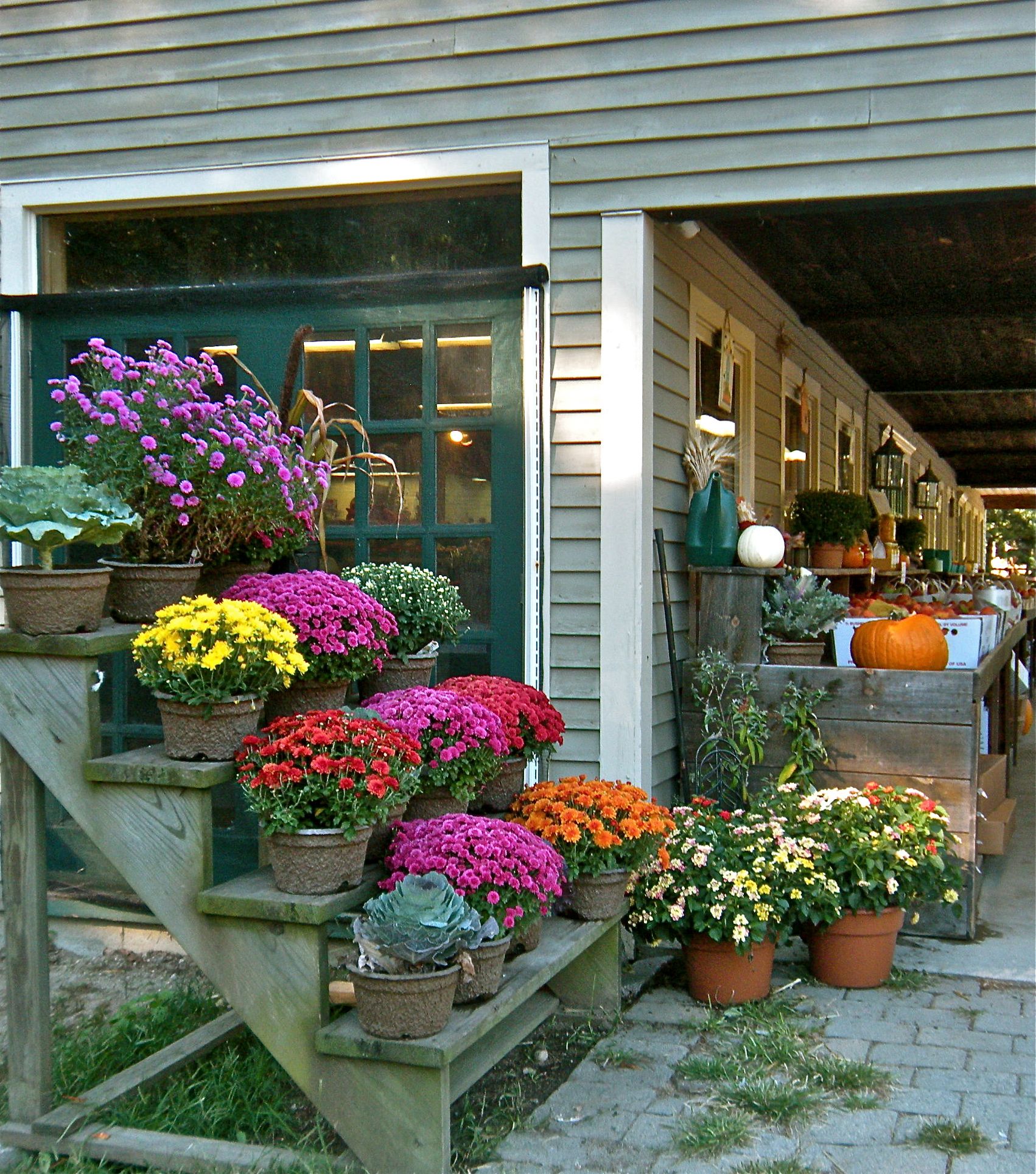
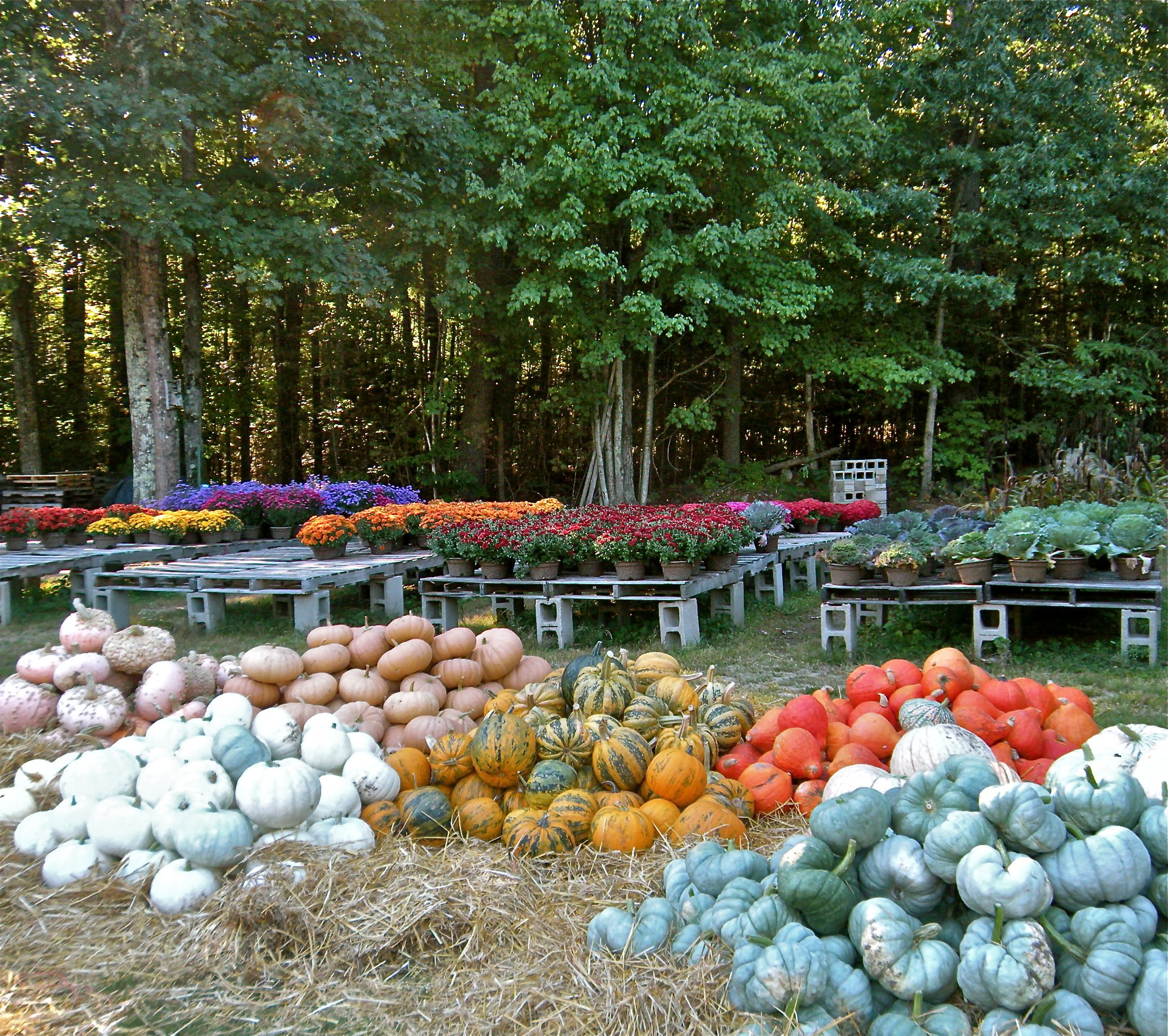
early Fall days in New England . . .

LULL 3 Lull 6 LULL 2 LULL 4

“chef’s table” . . .

chrysanthemum

I’ve been watching a documentary series called “Chef’s Table” on Netflix and am two thirds of the way through them. In each one, a chef is featured along with a biographical sketch and geographical context (Italy, Patagonia, New York, L.A.) The format is crisp and the photography is gorgeous. Way better than the standard fare on PBS!

The protagonists selected are not “pop stars” of cuisine as featured on the Cooking Channel. Instead, the message of each one depicts the individual journey each person follows in order to discover and create his/her own identity in the food that they prepare and serve. Instead of imitating and replicating the kind of cuisine that one has been taught, they use the techniques to discover or rediscover their cultural origins and most importantly, what they really want to do with their cooking. And we thought cooking was just about satisfying us because we’re hungry?

So, the “holy grail”quest for chefs portrayed in this series is finding one’s identity in one’s cooking. In writing, it’s called finding your voice. It’s not enough just to provide tasty dishes, the soul of the chef must be communicated to those who eat his/her food. I’ve experienced this while listening to pianists who succeed in communicating in this way to listeners and you can tell when it’s there and regrettably, when it’s not.

And these chefs are very human, warts and all – Dan Barber is particularly cranky and verbally abusive to his “team” of chefs in the kitchen. He owns up to the fact that he has a temper but doesn’t care to do much about it, even while the camera is rolling as he criticizes and swears at his sous chefs.

Ego is a big element too, especially with the male chef, Francis Mallman who revels repeatedly about his freedom to wander and to love and leave whomever and whenever he feels like it, traveling four-five times a week. When he was invited to participate in an international cooking competition in Europe (he’s from Argentina) he smuggled in half a ton of Andes potatoes, creating ten dishes including dessert made from his native spuds. He won, by the way.

Or, reverse ego with the Japanese woman chef (Niki Nakayama) who comes off as defensive, wanting to please and to succeed because people say she can’t. Couldn’t the producers have found a female chef who didn’t epitomize issues of chauvinism all around? Oh, and they also chose to out her relationship with her female sous chef as part of the gratuitous characterization of the one woman chef in the series. Really?

One “farm to table” chapter (Dan Barber) illustrated how our food products have been so over-processed to make profits for the manufacturers that there is no taste nor nutrition left in what we are offered in grocery stores. For example, what does true wheat tastes like? One grower was astonished to be asked to develop a smaller butternut squash with less water and more flavor, saying that he had never been asked to grow something to taste better, only to enhance crop production and shelf life.

So, if you follow that thread and look around you, one discovers that what we buy is for the benefit of the producers in terms of profit and not nutrition and taste for consumers. DUH!!??? How did it take this long for us to realize this economic reality so that we can pay more attention to what we buy and how we cook?

We’ll probably never serve the kinds of dishes featured in these restaurants nor cook meals over huge fires dug into the earth, but our eyes and ears can be opened further by this very interesting documentary series called “Chef’s Table.”

Quality is dependent upon what goes into the food we eat and it’s helpful to recognize that we’re not getting it in most grocery stores. The chefs’ search for identity aside, the photography of wilderness and closeups of food offer a moveable feast for any foodie who likes to eat or to cook, especially both.

knitting . . .

sweater 1

I taught myself how to knit when I was ten years old, sitting in my bedroom, following a Vogue knitting pattern and emerging triumphantly with a white bed jacket, of all things.  It had a seed stitch border on it and ever since that first project, it’s been my favorite go-to pattern for most of my knitting projects including this one.

Knitting serves to while away time that one might be spending idly by and also as an outlet for one’s ideas. I challenge myself by knitting from scratch – that is, without a pattern which usually entails numerous do-overs until the sweater is finished to my satisfaction. And truth be told, I almost gave up on this one and put it away without sewing it up!

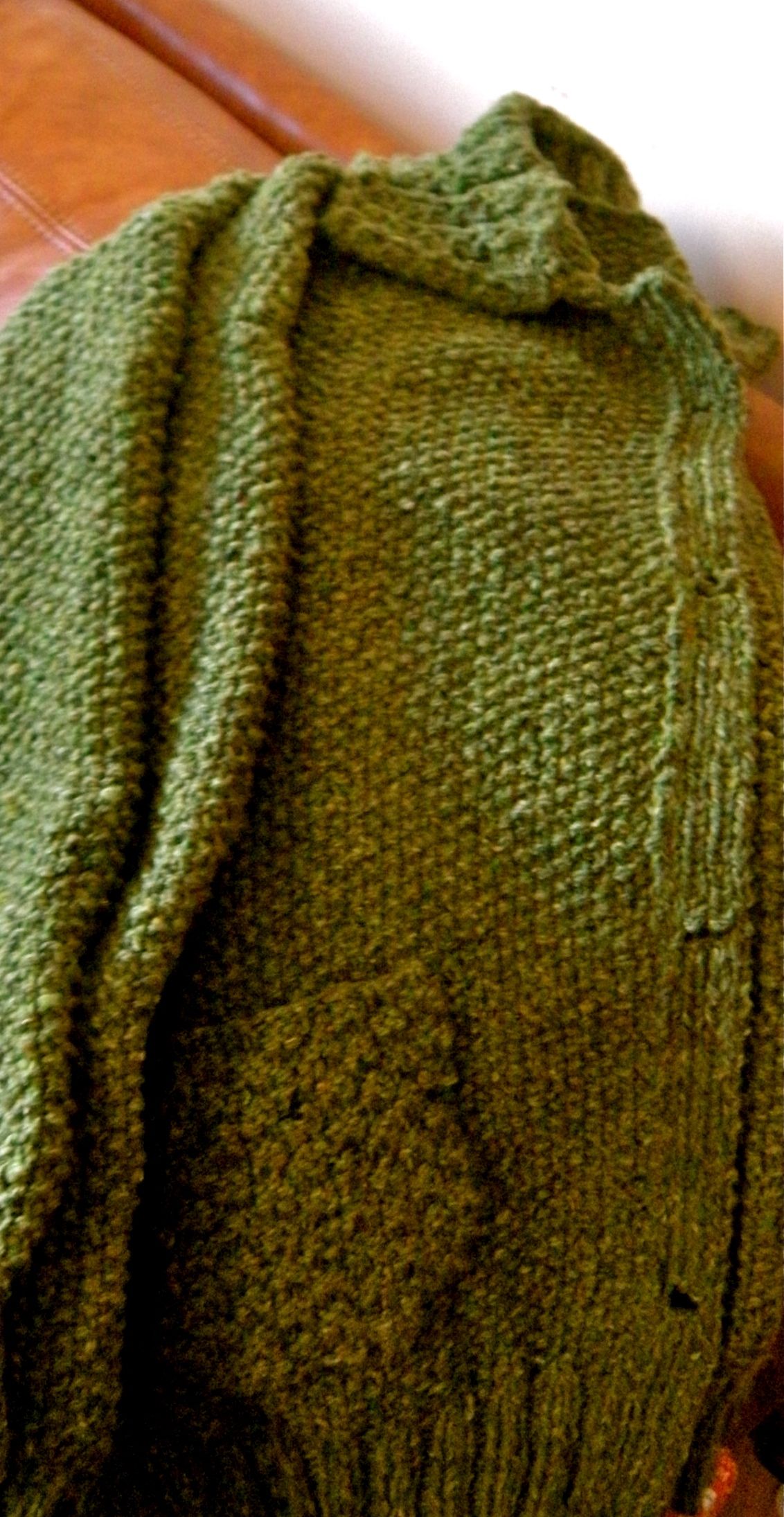
But, listening to “Bluebloods” seasons 3 & 4 on my laptop to keep me company, I decided to take it on, revamping the sleeves so that they morphed into a dropped shoulder dolman sleeve that was just the right length to the wrist after retrofitting the armhole opening once the fronts and back were sewn together. See what I mean?

It always amazes me how much time and steps are still required even though you think you’re done after the main pieces are knitted (fronts, back and sleeves.) For example, this neckline was finished with knitted ribbing first, then attached to the cabled ribbed collar (that started out as a bottom cuff) so that it would stand up properly.

The pockets were knitted in a moss stitch (double seed stitch) to contrast with the allover seed stitch pattern of the sweater. The front ribbing for buttons and buttonholes were knitted during this phase also and sewn edge to edge with the fronts so that they would lie flat. I’m waiting for the buttons to arrive (olive green tortoise shell with a raised edge) and will sew them on next week.

Knitting is sometimes carried out as a waiting game. I wouldn’t say that I was fatalistic while knitting this sweater, but I had a hunch it would provide many challenges before it was completed.

But it was the beauty of the yarn itself, a soft wool, silk and cashmere blend in a moss green tweed color that kept me going. I used to have a brown cable knit sweater that I wore while the girls were growing up and we lived in Lexington. Long gone, I’ve tried to replicate it a few times either by finding one used or knitting another one.sweater 2

But today, I have decided that this will represent that sweater to me during this next phase of my life. Good to change colors and to wear something a little different, just as it will be to refresh my outlook with a sweater knitted from this beautiful yarn called “Wintergrass”.


“have as much fun as you can” . . .


clematis %22Montana%22

This morning at breakfast, I read a quotation to live by from Ruth Reichl, cook and former head of Gourmet Magazine:

“At this point in your life,” she said, “you have to have as much fun in life as you can because you don’t know what’s coming down the road.”

She is 67 and her husband, Michael Singer, is 75. They live in a vast glass house they built eleven years ago in New York State. More can be found at this link:

sunday supper . . .


baked potatoesTwice-baked potatoes are a favorite of a friend of ours. He’s joining us for dinner tonight and everything on the menu can be eaten easily with just a fork: roast chicken, yellow beans and the baked potatoes. I put them in the oven midday, oiling the skins with a little vegetable oil after pricking the skins all over – having had a burst baked potato in the oven when I forgot to do that.

They came out of the oven beautifully baked, slightly soft to the touch and yielding their tender insides to the mixing bowl, beaten gently using an electric mixer, the milk, butter and salt combining smoothly into a thick, creamy mixture. Scooped back into the baked skins, I mounded them high and sprinkled grated cheddar cheese on top.roast chicken

When the roast chicken is done, resting after its own high-temperature stint in the oven, unsalted butter slathered all over the golden skin anointing the bird at the end, I’ll place the potatoes to bake its second time, melding the flavors and melting the cheese on top. The yellow beans take awhile to cook so that they are tender to the bite.

And so this meal is our supper on a cool, September Sunday.