mulberryshoots

"Tell me, what is it you plan to do with your one wild and precious life?" ~ Mary Oliver

Category: Food

oeufs en gelee. . .


Well, if you read about my Christmas meltdown earlier, here is a follow-up report on making oeufs en gelee. An etsy potter from Australia wrote to me at the time that she was interested enough to “google” it to see what this dish was all about.

Apparently, it’s a traditional first course dish served in France and England from what little is available online. A photograph of a big glass bowl filled with jellied consomme with eggs suspended in it, a pile of toast and butter beside it stayed in my memory from Roald and Liccy Dahl’s book called, “Memories of Food at Gipsy House.” I think it was Roald’s own words that imprinted it into my mind:

“R.D. To me this is the most beautiful and delicious dish, but it is difficult to make well. If you can succeed in having the eggs not only soft-boiled inside but also separately suspended in the jelly, and yet not having the jelly too firm, then you have achieved the miracle.”

Okay: achieving miracles. It sure didn’t feel like that when I attempted to peel eight small eggs after having boiled them the allotted time. The shells kept sticking even though I had plunged them into cold water after removing them from the boiling water. The insides were also too runny. So, there went the first batch of eggs! I had also taken out my old beat-up copy of Julia Child‘s “Mastering the Art of French Cooking” volume one in which she very helpfully described on page 113 some aspects of the “mystery” that goes into making the consomme turn out just right: you have to chill and test small batches of your consomme cum gelatin mix to see if it jells up properly–not rubbery and not too soft. My little test plate wasn’t jelling as fast as I wanted it to. Meanwhile, the phone rang and a voice asked me where was I for a chiropractor adjustment?–which had somehow slipped my mind while peeling the first batch of eggs.

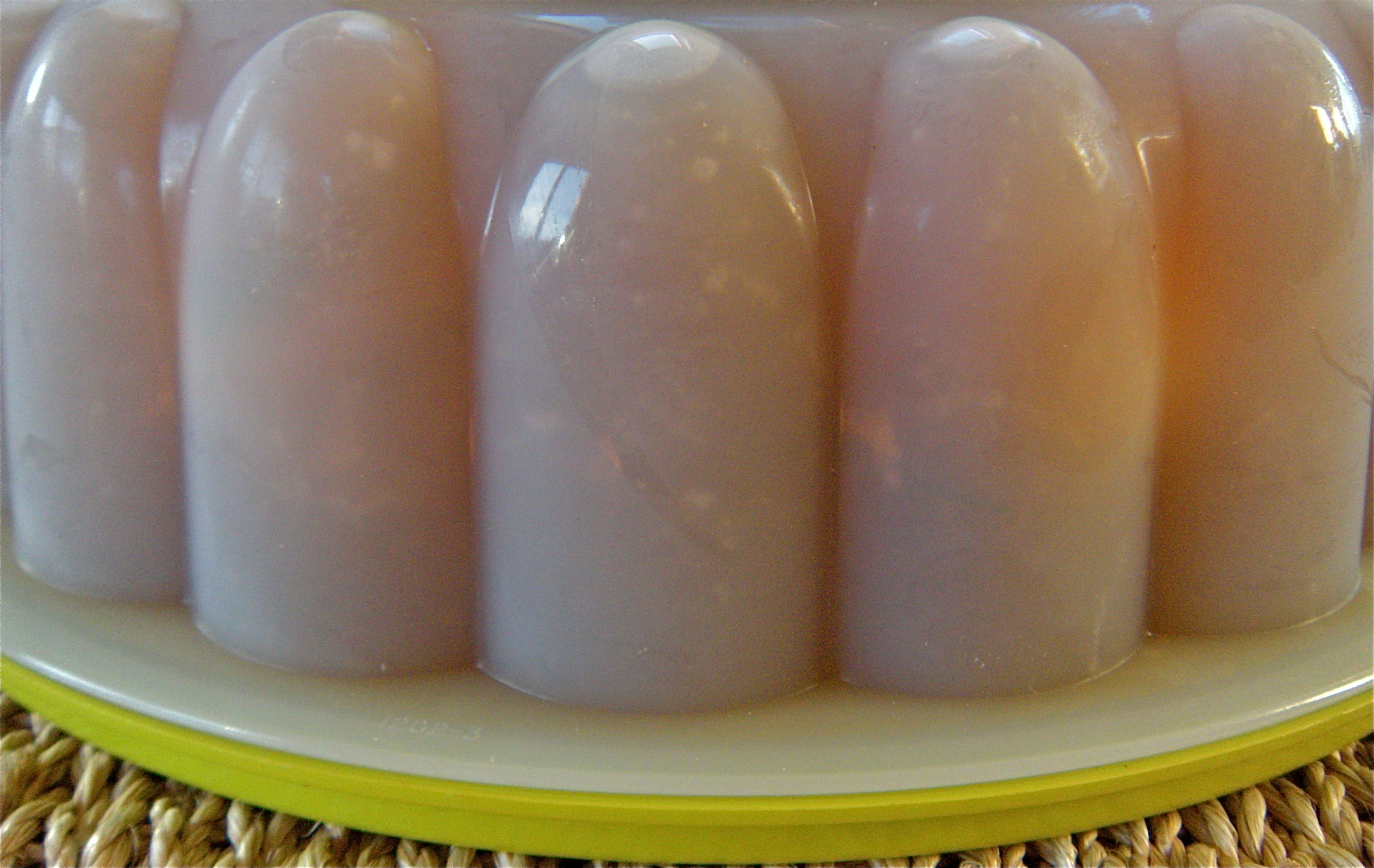
So, I layered the broth into a Tupperware jello mold (see photo above) and put it in the fridge while I boiled up a second batch of eggs, leaving them to boil for a minute longer this time, plunging them into cold water afterwards. Then we ate supper: carryout Chinese. Afterwards, I peeled the eggs carefully and they seemed okay this time. I dried them off and slipped them into the mold, and then put fresh springs of tarragon around them. Added more consomme mixture that had chilled in an ice filled pie pan and then put it back in the fridge. An hour later after the third batch of consomme had jelled (this time firmer than the rest for some reason), I broke it up and spooned it onto the remaining room left in the mold, hoping that this jelly on the bottom would hold the thing together. Put the lid on firmly and set it in the fridge.

It looks like this mysterious, luminous pale brown concoction with eggs suspended, tarragon leaves barely visible.

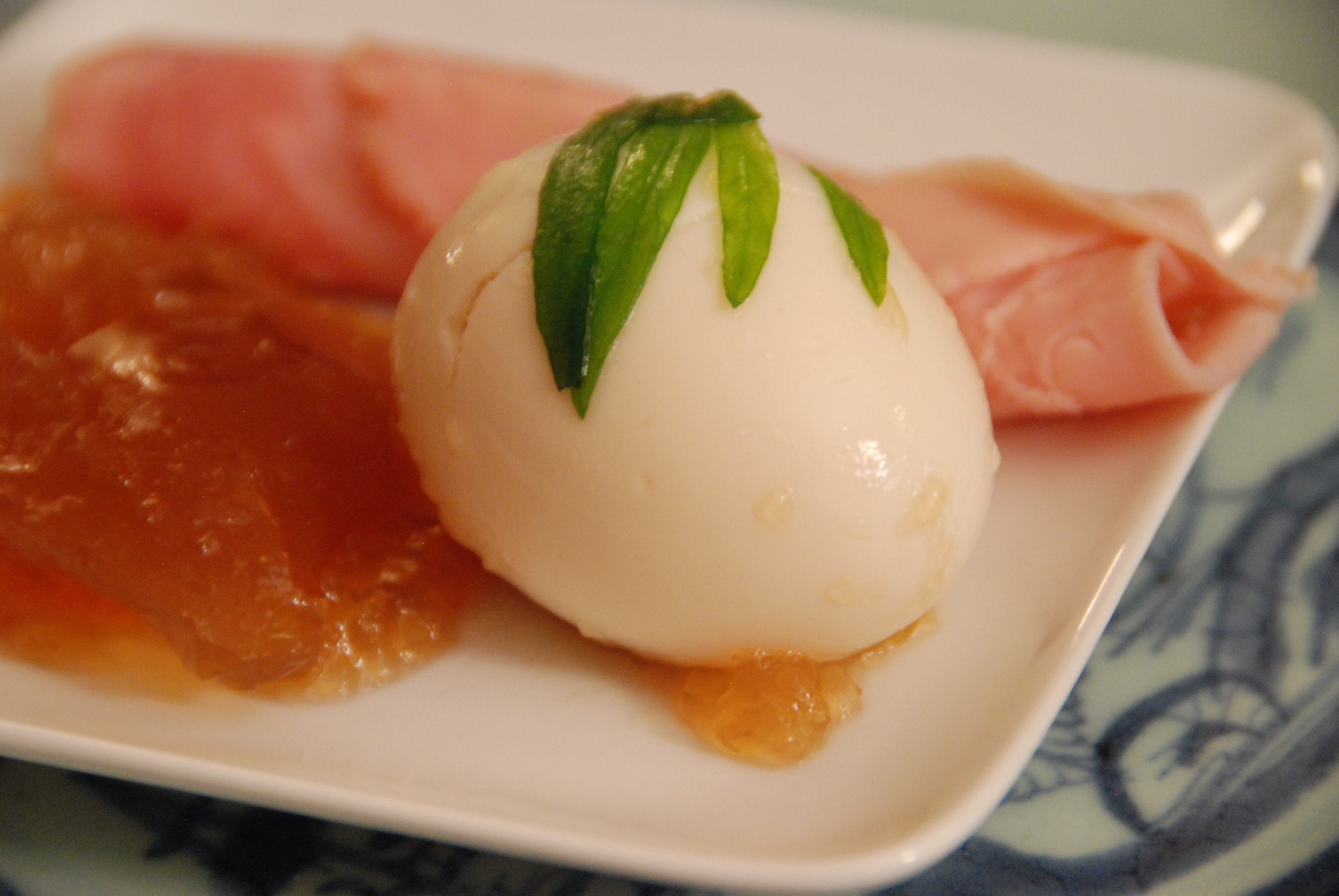
At this point, I’m just glad that oeufs en gelee are now in the fridge and ready to bring up to serve as a first course with toast, butter, a little fresh ham and cornichons. I’m not so naive as to think that it will actually taste that great–although I am still hopeful.

I think the important thing for me was doing it because I was enraptured by Roald Dahl‘s experience and description of this dish. And besides, who wouldn’t want to make a try at performing miracles during this time of year?

Here’s an update: a photo of a serving of oeufs en gelee on Christmas Day!
commonplace journals. . .


my commonplace journals

Today is Wednesday (“why I love wednesday and thursday mornings“) and I just cut out a recipe for Japanese sake-steamed chicken from the NY Times Dining section. The description of a small chicken steamed gently over sake and water, rested, succulent slices covered with a sauce made of ginger, soy, garlic, lemon, orange and rice vinegar sounded like the perfect thing to make for dinner tonight.

A Japanese kabocha squash that has been languishing in the wooden bowl on the counter will be cut up into chunks and  simmered in a dashi broth with a little soy added. Bowls of white rice will accompany the chicken and the squash.

These recipes will be added to the current volume of scrapbooks that I have been creating for years. In them, I have assembled everything worth keeping that refreshes my spirit and stimulates my appetite for cooking, reading, writing, anything that I want to remember and think about more. For example, the article about the lady who put in plants with plumes that mimicked the exotic roosters is saved in one of these books(“why i love wednesday and thursday mornings”.)

Last year, as I was doing research about Ralph Waldo Emerson, I read about his habit of keeping what he called “Commonplace Journals.” He used them as a way to capture one’s thoughts and to collect and savor the things that appealed to him. He encouraged this practice because the journals were a tangible tool and handbook for trusting your own intuition and being self-reliant (“emerson and the heart“).

The photo above of my scrapbooks illustrates the kind of collage that I put together to represent where my head was at the time for that particular volume. Although there were many images of wishes and desires in these volumes, they represent much more than that. Their pages captured something intangible, an energy or a kind of longing that embodied my spirit as it hovered around in those days. It was a way of putting together a pastiche of where I wanted my life to be going, or perhaps end up, a way of awake dreaming for what my life could be.

I believe that making imagery visible makes what you hope for more tangible. At least that’s what these journals have been for me. Paging through them, some of them from twenty years ago, I can see the person I was back then. Somewhat dated, to be sure. But the spirit of who I was and what I wanted to realize still comes through loud and clear.

scallion pancake recipe. . .


1.  Mix 2 1/2 cups flour with 1 cup warm water. Mix well and knead gently. If it is too sticky, add a little more flour. Knead gently until smooth; cover with a clean dishtowel and let rest 15-20 minutes.

2.  Wash and chop up a small bunch of young green scallions–slice them lengthwise, then chop and mix white with green parts; set aside.

3.  Take a fresh package of lard (manteca) and heat about 1/4 cup of it in the microwave until it is soft and spreadable but not liquified. Add in 2 tsp. of sesame oil and mix well; set aside. This should be the consistency of sour cream.

4.  Flour a board; divide the dough into 3 parts; roll out one part to about 6-7 inches–spread with lard/sesame oil mixture–not too thin, not too thick.

5.  Sprinkle the surface with coarse sea salt or kosher salt.

6.  Divide onions into three parts and sprinkle one onto the first pancake. Roll up securely and then, taking one end, curl it into a snail on itself. Pinch together, pat and roll this snail out into almost the same size as before.

7. Use a clean skillet and heat up some canola oil or Wesson oil–when the oil is warm, slip in the pancake and cook it gently (mildly sizzling but do not burn.) When it is golden brown, turn it over and cook the other side.

8.  Drain onto paper towels and cover with clean towel; wipe out the skillet each time, add fresh oil and cook the 2nd and 3rd pancakes.

9.  Drain each one separately on paper towels to soak up any excess oil.

10. When all 3 are cooked, put them on top of each other and cut in half with a cleaver, then crosswise, then in wedges.

11. If you want a dipping sauce, make one with lite soy, rice or Chinese black vinegar, sesame oil, sugar and a little water–grate some fresh ginger root into it if you want.

THESE were the best scallion pancakes that I have ever made.

making scallion pancakes . . .


hands down "the best EVER"

I was very good in chemistry and almost majored in it in college, at least when I was a freshman. What I mean is that I can follow experimental directions and also have an intuitive sense about mixing things together to see how they will react. In large part, that’s the process by which I approach cooking most of the time. The rest of being a cook for me is also intuitive but more free form, the reason a dish will turn out slightly differently each time even though you are following the same basic steps.

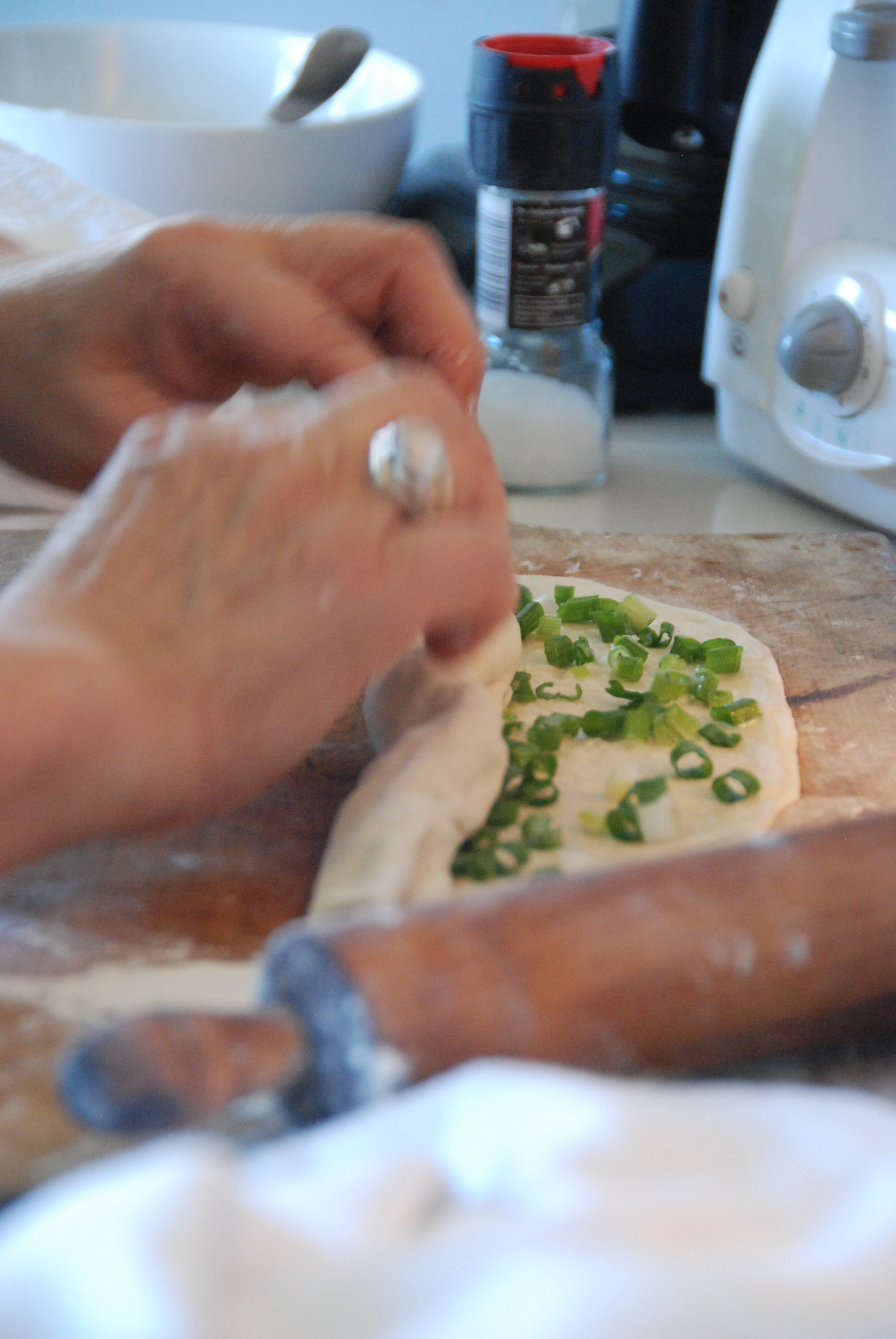
My Dad’s primo cooking dish was making scallion pancakes. He was absolutely rigid about how to make them and that his way was the only way. I watched as he chopped the green onions and put them in a bowl, made the flour dough with hot water and let it rest, shape the dough into a long snake and cut up portions, then roll each one out, spread with soft lard, sprinkle with salt, then onions, roll them up, then make a snail from the rolled up pancake, flatten the snail out again. Then cook carefully in a skillet, pile the cooked ones one on top of the next and then with a large cleaver, cut through all of them to serve them as fragrant, warm, savory wedges of salted heaven.

Recently when family was visiting, I impulsively decided to make them. But I didn’t have Dad’s exact recipe with me so I was a little dubious. I found a recipe online that sounded about right. It didn’t have a leavener like baking powder, which I distinctly remembered was Dad’s “secret ingredient.” I also remembered the last time I had included it that the pancakes were a little spongey to roll out.

I decided to follow the online proportions for flour and water and then go with my instincts. Instead of spreading lard on the surface of the pancake, I warmed a little in the microwave with a dollop of sesame oil. Then I mixed the softened but not liquid lard and sesame oil, spreading it thinly on the pancake. I used sea salt from a grinder. The green onions were washed carefully, slit down the lengths and then chopped finely, the white and the green parts. The fragrance of the raw onions filled the small galley kitchen I was working in. The dough without baking powder was easier to work after resting.

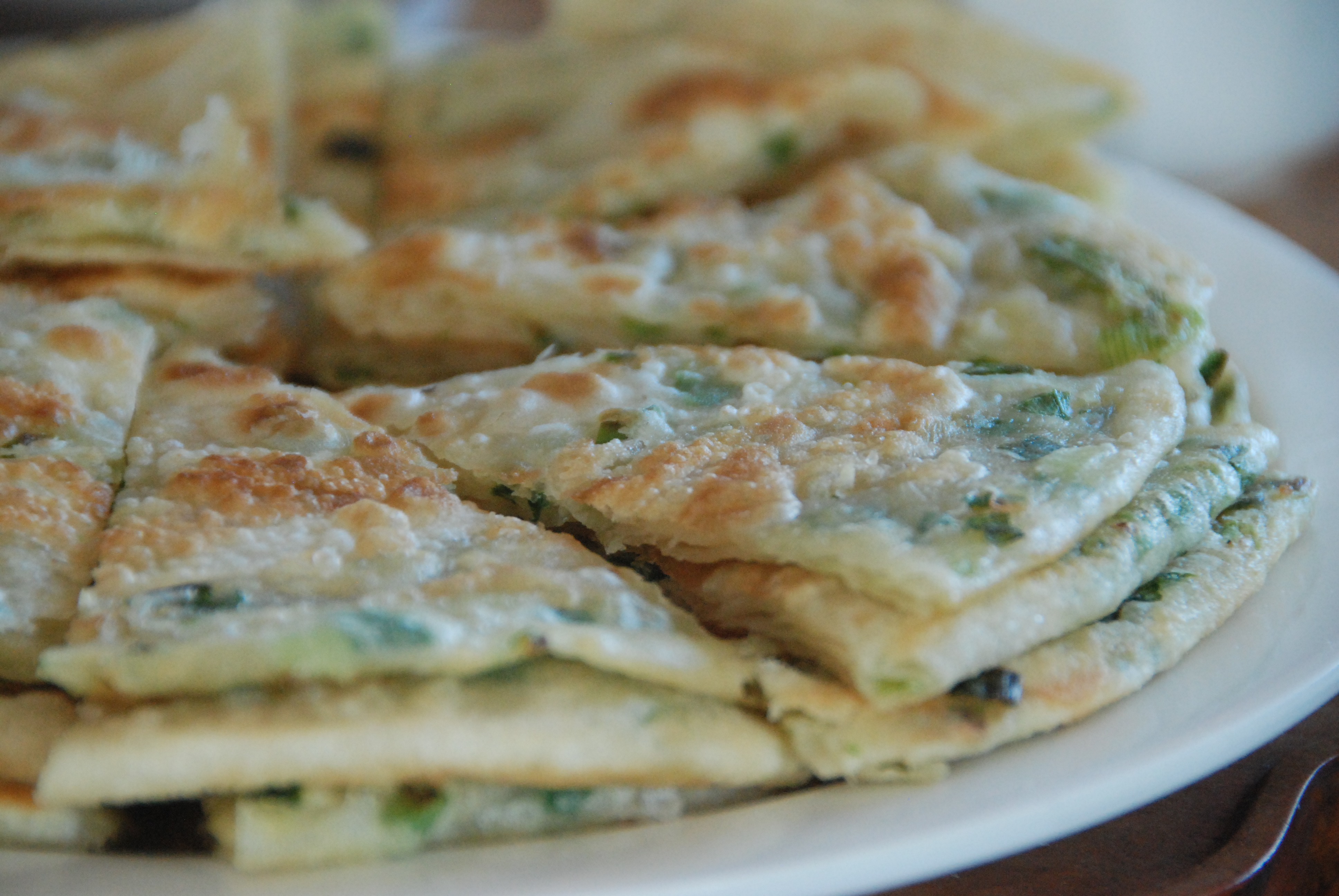
Everyone agreed as we wolfed them down that these were the best ever, Dad’s sacrosanct recipe notwithstanding. I wonder what he would have thought about such delicious scallion pancakes made from a recipe available on the internet. I also wonder if they’ll ever come out as well as this batch the next time I make them. The photo tells the whole story.

If you would like to try the recipe, I will post it next. One word of caution though: don’t try to make them if you are averse to using fresh lard (manteca at any super market) because actually, that is the true secret ingredient!  Let me know how they turn out for you.

knitting without a pattern. . .


knitting the past into the present. . . and then, letting it go free

I went to the fish market tonight to pick up some Nantucket Bay Scallops–the last of the season, it seems. They were tiny, succulent and briny. I dusted them with barely any flour, salt and coarse pepper. Melted a little unsalted butter in a skillet, threw in a couple of cloves of peeled and chopped garlic. Quickly cooked the scallops until they were barely cooked, light brown and only slightly crispy. I took them out of the skillet and plated them because they kept cooking after they were off the heat. Fresh Meyer lemon juice squeezed on top.

A few handfuls of farm fresh spinach–very young–from Verrill Farm, washed and cooked quickly in some olive oil. When it was just wilted, added a little light cream–the real thing and let it thicken. Scooped into a small bowl. Along with the Nantuckets, as they are called around here, the creamed spinach, we had a slice of pumpkin-apple bread.

For dessert tonight, I made some Sioux Indian Pudding that we serve heated up a little, then topped with Haagen Daz vanilla bean ice cream. The pumpkiny-pie flavor of the cornmeal with the smooth cold ice cream is one of our favorite desserts. G liked it from when he was young so I started making it when he told me about this favorite memory.

So far, this post has been about food.–so why is the title about knitting?  Because I knit the way that I cook. Find something fresh and appealing. Make it into something that suits your imagination. That’s how I knit without a pattern. I am writing about knitting because the lady at the counter at the fish store (see above) complimented me on the sweater I had on. Her name was Darlene. I thanked her for the compliment and told her that I used to have a sweater like it which I wore all the time when the kids were growing up. I wore it with a black and white feather patterned cotton skirt and a magenta V-neck t-shirt. They all said that they remembered that sweater. There’s a photo of me in that outfit with Jackie-O sunglasses on.

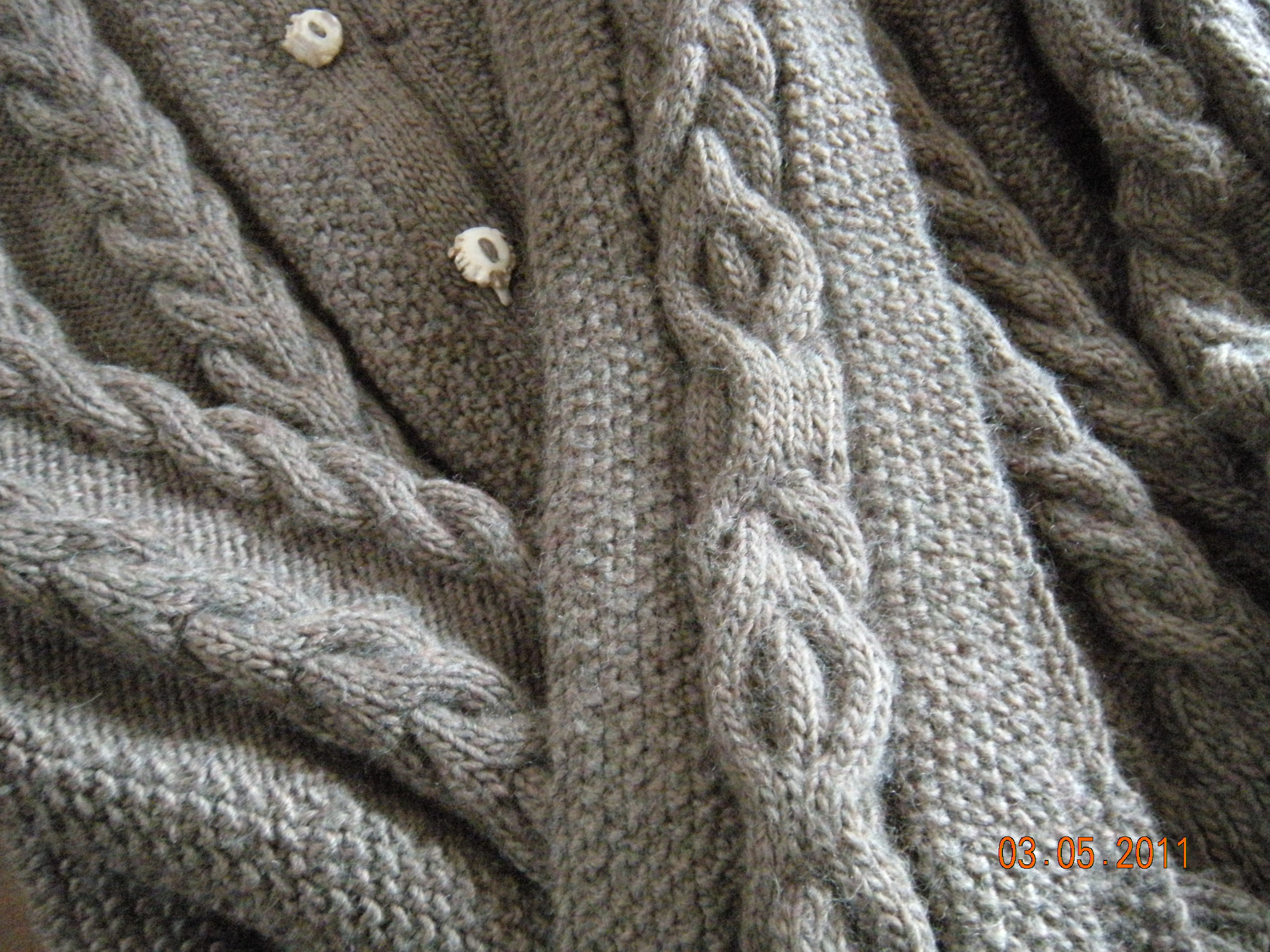
Alas, I had grown out of it and also lost track of it somehow. Then, about a year ago, I decided to knit myself a replica of the treasured sweater. I didn’t need a pattern because I had a picture of it in my mind that was more clear to me than if had been printed on paper. This 2nd generation version of the most treasured cardigan I had had early in my life turned out even better than the first. Which doesn’t always happen later in life when you try to recapture something you loved a long time ago. I used panels of seed stitch and cable stitch. Instead of an ordinary cable pattern, I made this one in the shape of a staghorn cable. The yarn was from Peru: a yummy taupe alpaca yarn. To finish it, I splurged on hand-carved deer antler buttons with brown scalloped edging. Darlene especially noticed the buttons. She said that when she travels, she picks up interesting buttons that she might use someday. She hasn’t knitted anything  since they bought the fish store, she said. But she can appreciate a nice handknit sweater. Her words were a nice surprise that lightened my day as I drove home.

I also knitted a scarf from the sweater’s leftover yarn that has a cable that wanders all over the place. I decided there were no rules to say that cables had to come back together symmetrically all the time. It was an interesting experiment where not only did I not use a pattern, but the knitting also took on a direction of its own. Go figure.

why i love wednesday and thursday mornings. . .

I read the New York Times seven days a week. My favorite days are Wednesdays because of the scrumptious food   described in the “Dining” section and Thursdays for thought-provoking expositions of lifestyle in the “Home” section. Once, there was a full page description of a woman who came across an exotic rooster in the woods on her land. She was an artist and began to raise these creatures with huge sprouting crowns of feathers on their heads. To protect them from hawks, she planted unusual grasses and plants whose appearance mimicked the cockerel headdresses. One shadowy photo of an interior room showed a huge medieval press cupboard, carving all over it, majestic turned turnip legs and bun feet. “Who lives like this?” I asked myself as I sipped my second and third cups of coffee, the sun streaming in the kitchen windows, my bare feet on the floor.

In the food section, there’s usually at least one recipe or a description of a dish in a restaurant that I will adapt for our supper, if not that same night, by the weekend when I’ve had a chance to find the ingredients. It might be a simple cheese souffle recipe by Mark Bittmann, the Minimalist Cook, a title I have always thought to be slightly ironic. Then, there are the rampant stories of chefs who cook outrageously, making their own rules as they go along. It’s also amusing to speculate about the competitive camaraderie among the food writers.

As I write this post, I see that what appeals to me most are the stories about mavericks, non-conforming, devil-be-damned expos that feature what seems to make people happy. The ones who don’t paint their walls and leave the plaster cracked, full of character to them, if not for everyone. Those cooks who have a hard time working for anyone else and who cook what pleases them most, not just the customers who flock to their restaurants.

These portraits and vignettes are my weekly bread. Especially on Wednesday and Thursday mornings.