mulberryshoots

"Tell me, what is it you plan to do with your one wild and precious life?" ~ Mary Oliver

Category: Life & Spirit

later . . .


I don’t want to sound morbid but I’ve been reading David Rieff’s memoir about his mother’s death, “Swimming in a Sea of Death.” Susan Sontag died of leukemia contracted as a result of her chemotherapy treatments for both breast and uterine cancer. And now, overnight it seems, we hear about Nora Ephron’s death from pneumonia contracted as a result of leukemia also. They’re different kinds of leukemia though, (Myelodysplastic Syndrome in Sontag’s case and Acute Myeloid Leukemia in Ephron’s passing.) Both of these women were writers and both loved New York City.

What strikes me is the way that each of them lived and how each handled her dying. Sontag was determined not to believe (really) that she was in fact dying. Or in her son’s words, repeated over and over again in the memoir, that she was headed towards “extinction.” There’s a lot of writing about doctors who choose to maintain a patient’s wish for hope when there really is none. In Ephron’s case, it appears she hardly let it be known that she was seriously ill until the night before she took her last breath, surrounded by family and friends.

So, lest you think that this post is about dying, it’s actually about living. Ephron finished her last book. “I Remember Nothing” by making lists of what she’d like to forget and what she would rather remember. As usual, they were witty and poignant: she wanted to forget Clarence Thomas for one thing, and wanted to remember how it felt driving over the bridge back into Manhattan. Most of all, she exhorted us to do just what we want to do in each moment and not to wait until we get too sick to do something when it’s too late. Because, as even my own doctor said awhile back, “Everyone gets something.”

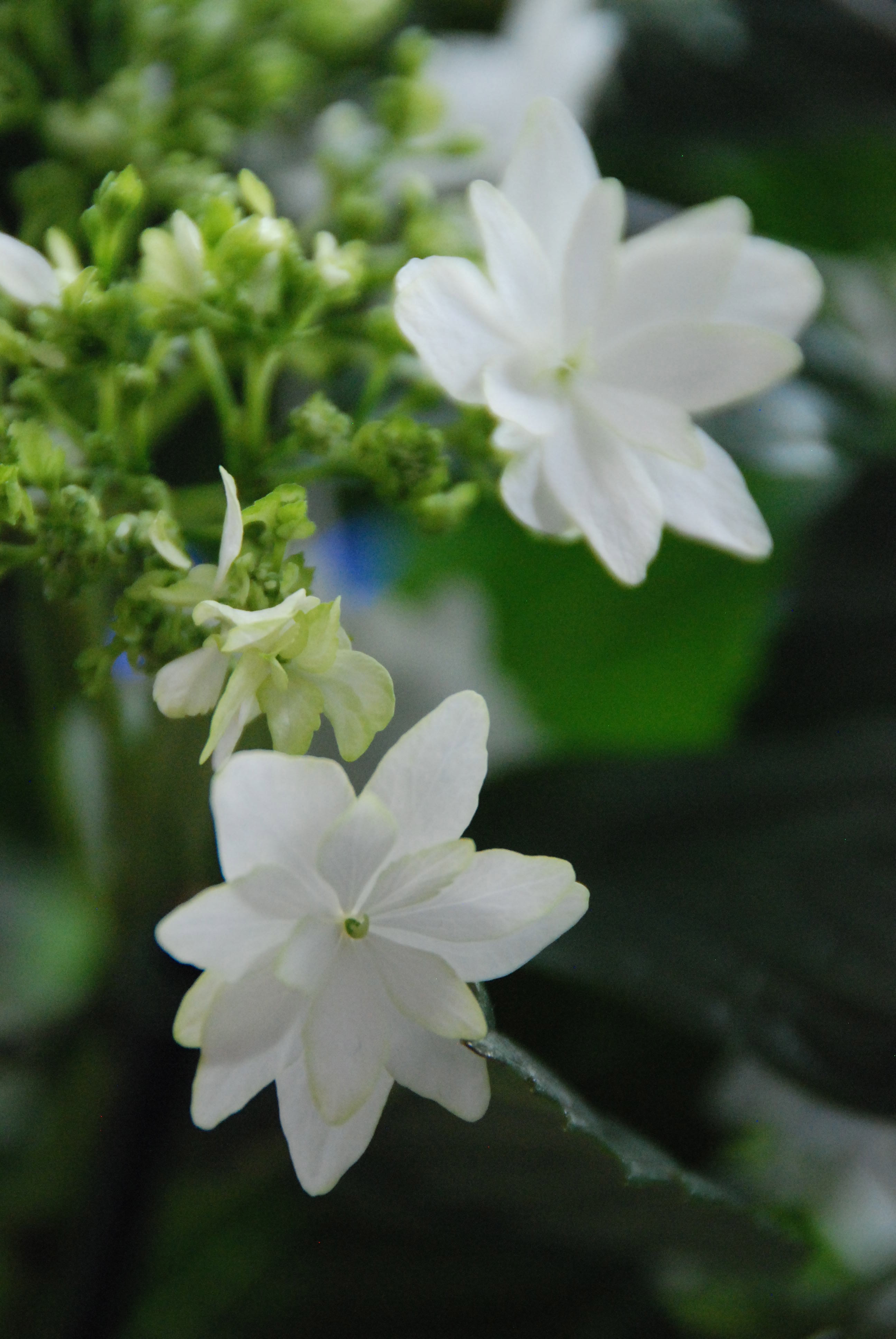
So this morning, I returned the garden hose for a better quality one that cost twice as much and paid for a foam knee pad and a beautiful pair of grass trimming shears. As I passed the Dunkin’Donuts, I impulsively pulled in for an iced black coffee and two honey dip donuts to share with G. as a mid-morning snack before heading out in the garden to plant the new hydrangeas and the crimson red daylilies.

After lunch, I drove to the library to return my books and took out Nora Ephron’s books to read again.

P.S. Click here for an article about Nora Ephron which appeared in the NYTimes the day after her death.

Click here for NYTimes coverage of Nora Ephron’s memorial service.

P.P.S. Thought you might like to see Nora Ephron’s Lists from (“I Remember Nothing,” Alfred Knopf, 2010):
What I Won’t Miss:
Dry skin
Bad dinners like the one we went to last night
E-mail
Technology in general
My closet
Washing my hair
Bras
Funerals
Illness everywhere
Polls that show that 32 percent of the American people believe in creationism
Polls
Fox
The collapse of the dollar
Joe Lieberman
Clarence Thomas
Bar mitzvahs
Mammograms
Dead flowers
The sound of the vacuum cleaner
Bills
E-mail. I know I already said it but I want to exmphasize it
Small print
Panels on Women in Film
Taking off makeup every night

What I Will Miss:
My kids
Nick
Spring
Fall
Waffles
The concept of waffles
Bacon
A walk in the park
The idea of a walk in the park
The park
Shakespeare in the Park
The bed
Reading in bed
Fireworks
Laughs
The view out the window
Twinkle lights
Butter
Dinner at home just the two of us
Dinner with friends
Dinner with friends in cities where none of us lives
Paris
Next year in Istanbul
Pride and Prejudice
The Christmas tree
Thanksgiving dinner
One for the table
The dogwood
Taking a bath
Coming over the bridge to Manhattan
Pie
assimilation . . .

Katie Brown at the top (Citibank ad)


Yesterday at my shiatsu session, I related the events that have occurred since our meeting two weeks ago when C. first gave me Chinese herbs called “Clearing.” It consists primarily of lotus seeds which “are believed in Chinese medicine to ‘clear heat’ (清熱) and be particularly nutritious and restorative to one’s health.”

I don’t know what has happened,(maybe it’s even some kind of placebo effect,) but there’s been a major shift in my energy based on the amount of productive activity that has transpired since then; not only just clearing things, but reorganizing for optimal usefulness. C. immediately commented that this sounded like a feng-shui element for allowing energy to flow more effectively. Mundane things like the kitchen drawers, cabinets and the pantry have been reorganized from the bottom up, and amusing things that I forgot all about have surfaced, such as a kitchen towel in red letters on a white background saying, “I had a really nice dream last night about Daniel Craig” which is now hanging on the handlebar of my oven.

Anyhow, back to clearing heat from within. Something has shifted or disappeared. This unease used to compel me to question myself, to prove myself or to limit my capacity to be happy even when everything seemed to be fine. As a result, my energy level seems to be steady and strong, not driven or rushed in any way. And I seem to be able to get a lot more accomplished with a lot less impatience. Humph!

C. my shiatsu guru, says that there is a new feel when she takes the pulses of my organs as well. Before she confirmed that, she suggested that perhaps what I was experiencing was what she called “assimilation,” which I thought was a very good word to describe the clearing out of heat and the resulting assimilation within my internal forces.

Assimilation from a biological standpoint means “the conversion of nutrient into the fluid or solid substance of the body, by the processes of digestion and absorption”; assimilation from a psychological standpoint means “incorporation of new concepts into existing schemes.” Pretty good for a handful of Chinese herbs containing lotus seeds, right?

Of course, I’ve been working up to some kind of clearing for some time now–and feel that I have arrived like that woman climber in that incredible ad on TV where she stands on top of this mountainous pinnacle, as relaxed as can be, the rest of us wondering if she actually climbed up there (she did) or whether it was photoshopped in some way (it wasn’t.)

So what do you think about this metaphor that it’s as hard for some of us to change and shift around our internal energy from that which we learned a long time ago as it is to scale the peak of a mountain? Our mountains are what we make of them, aren’t they?

peace of mind . . .

our daily bread . . .

I’ve been thinking a lot about how things are going lately. Outside of ourselves, it sometimes feels as though everything is in play and mostly out of our control. Yes, we can sign the affirmation for recycling in our state with the passage of a bottle bill. But we can’t make Washington change. Nobody seems to be able to. We can’t make the overextended countries in Europe save themselves. We can’t do anything about the stock market nor its impact on our savings, such as they are.

What we can do every day is to realize there is a difference between all the hurtling conflict in the world and how we choose to live our day. It’s the small things, it seems to me, that truly make a difference: reading the newspaper and having breakfast together; having something light and fresh for lunch. Doing chores so that they’re actually done, and not just sitting around waiting for the next step. We are fortunate that we have time to enjoy with each other. Freeing ourselves from being dragged along by the behavior of others outside of ourselves gives us space and energy to do what is meaningful to us, even if it means correcting mistakes in something we’re in the process of making (the corners of the middle 5-star square in a quilt hanging don’t meet properly,) or being honest about why we decide to do things and then do them well, or drop them altogether if we have been doing things for the wrong reasons.

Perhaps I am overly optimistic that we can find peace of mind for ourselves in these small ways. But I don’t think so. Maybe that’s what they mean when they talk about being mindful. That word always has lots of baggage for me because it seems to entail some level of having peace of mind already in order to promote it. So, appreciating what we have so much of already is a start to living with peace of mind. The idea that the glass is half full or even almost full is a recognition that whatever we might think is missing could be something unnecessary or even bogus.

Now, I think I’m going to have my breakfast and read the paper. How about you?

” a room of my own” . . .

in a room of my own . . .

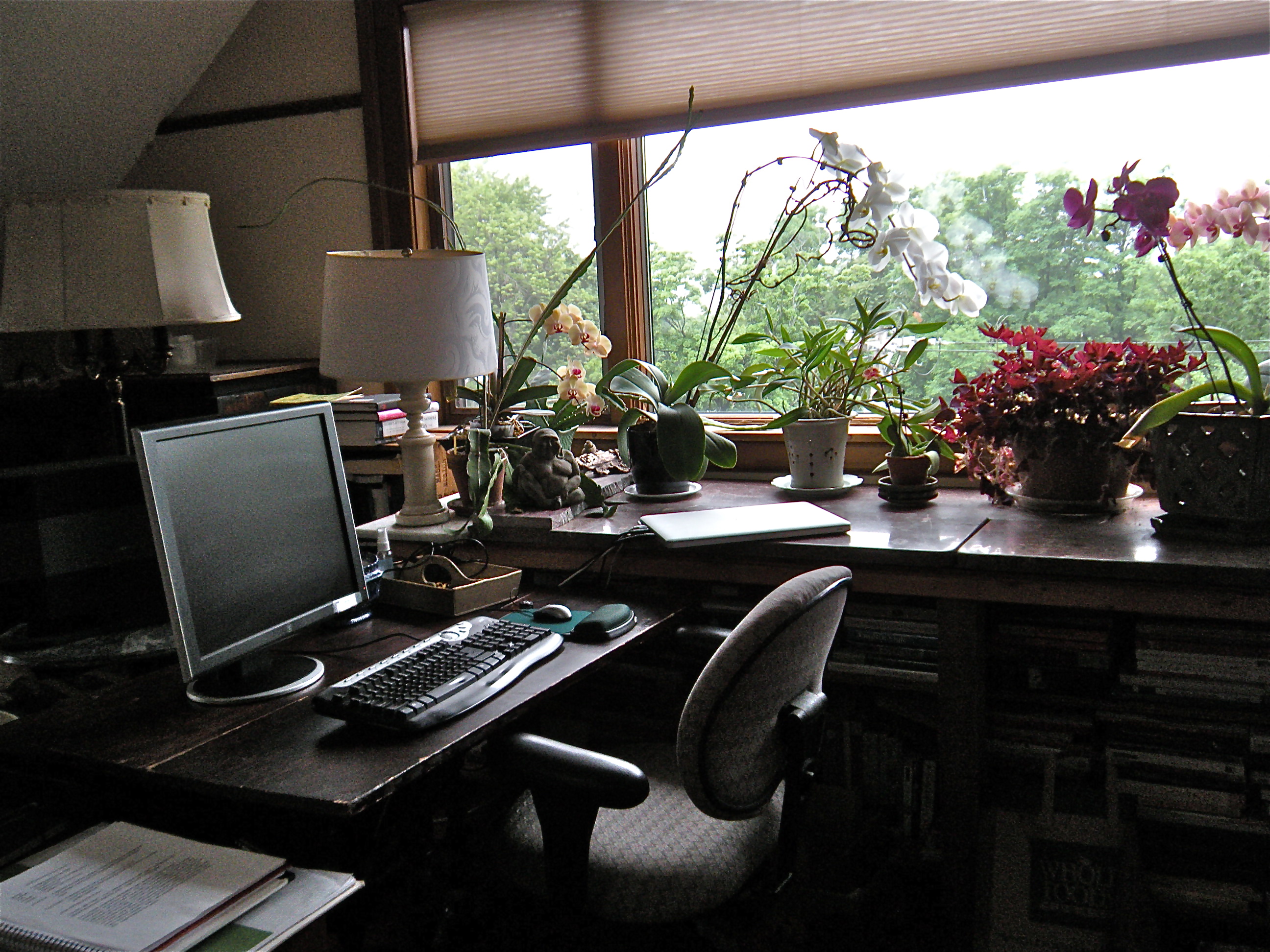
After weeks of inertia, I finally found a way today to make some sense of the boxes of stuff in the plant room. Previously, I had been shuffling things from one end to the other because there wasn’t a good place to store things. Last week, I purchased some big plastic bins with snap on covers at Staples. Today, I stored all the CDs (and tapes!) into one, documents in another and slid them under the harpsichord where they don’t look great, but at least they’re out of the way.

I had been thinking for a long time to dig out one of the old 22 inch monitor screens that I had used for work and make up a writing workstation with a keyboard and mouse. Needing a cable adapter to hook up the monitor to my Macbook Pro, I ordered one at Amazon.com which arrived yesterday. I opened the package gingerly in case it didn’t fit, but lo and behold, it did! And it also had a six foot cable, not just the four inch one that would have been so easy to get instead. Then, G. kindly offered up the keyboard from his study desktop and found me the tiny mouse that I had used (and loved) while I was still slaving away at my clinical operations job a few years ago. He found another keyboard which finally worked on his computer after it was rebooted. (When in doubt, reboot, right?)

The orchid shelf needed tending so I washed it off and trimmed the plants, staging them in a way so that there was some work surface next to the early gateleg table I had decided to use for my writing table. A fat and happy Buddha found a place to sit next to the lamp. By this time, I was on a roll, so we put the old Bose system on a stand in back of the table and hooked it up. Soon, sounds of Mitsuko Uchida playing Mozart Fantasies floated through the room. We beamed at each other in satisfaction for cobbling together old computer stuff that was lying around to make this new little space for me.

Golden floss from dross, as they say.

I marveled once again at the endurance the orchid blooms have demonstrated–they first flowered right after Christmas, and here it is now almost mid-June! Just amazing. And how fortunate we are to be able to make yet another place for ourselves in this beautiful old house. Lucky we are, indeed: we give thanks everyday.

life and death . . .

The weather has been so graceful lately: a little rain each day followed by sun and soft breezes. The garden is definitely doing well with this kind of cool growing weather. I planted a stand of white iris called “gull’s wing” yesterday along with two bareroot climbing roses by the barn. Today I will mend the trailing strings so that the morning glory plants will have something more stable to cling to as they make their way upwards over the summer.

Today, being Sunday, I have loitered longer than usual, reading the New York Times with my coffee. “Union Rags”, the horse that won the Belmont Stakes by a nose was owned by Phyllis Wyeth, whose husband is Jamie Wyeth, the painter son of Andrew Wyeth, one of America’s uber-painters. Apparently, Phyllis had sold the horse and then bought him back for three times what she had sold him for. So, yesterday was a day of triumph for her, a change of jockey apparently making the difference between winning the Belmont Stakes and placing seventh in the Kentucky Derby a few weeks ago.

Confined to a wheelchair after a car accident long ago, Phyllis Wyeth’s name conjured up memories I had having read about N.C. Wyeth, Andrew’s father, and Andrew’s own turbulent marriage to Betsy Wyeth, Jamie’s mother. Still living, Betsy is thought to have been both a muse and a stern comptroller of Andrew’s art.

Betsy is quoted as commenting that the strict order and control of her homes (in Chadds Ford and in Maine) were a response to the “inner chaos” she experienced within herself. Although known primarily as an illustrator rather than a painter, N.C.’s death along with his grandson, their stalled car hit by a train was described as mysterious, due to N.C.’s amorous crush on the grandson’s mother, the wife of his own son named N.C.

My goodness! all these reflections coming out of a horse race and the dynamics of owners, their lives, families, the intertwinings of generations of intense people leading intense lives. Maybe the chaos that lies within is something many of us experience in one way or another. Some may deal with it with passivity because they are afraid what it might unleash if not tamped down all the time. Others may ignore it altogether, choosing to will themselves into lives bent on pleasing those around them as a way of feeling worthwhile.

I’ve not pleased a whole lot of other people in my life, it seems. At the same time, I feel that I have at least been honest, for better or for worse. Is that what life and death is about? I wonder.

clearing . . .

looking up at the sky . . .


I don’t know about you but I don’t have enough storage space here to create as much order as I would like. Or maybe I just have too much stuff! Sometimes I imagine in my mind’s eye a meadow of sweet grass where a circle is mown in the middle and blankets are spread out so I can lie on them and look at the clouds in the sky, moving along in balloon animal shapes or some such.

In the midst of these ruminations as I sort through books on the shelves are the seeds of ideas to write something cohesive and on its own (in addition to the little essays on this blog.) I have a feeling inside that this inchoate form is still moving around in pieces and when it reaches a critical mass, I will sit down and the whole thing will just come out, similar to the now mythic description of Jack Kerouac typing his manifesto, “On the Road” on a never ending manuscript inserted into his manual typewriter. Where do we pick up these kinds of idealistic fantasies about writing?

On the shelves are writing books: writer memoirs, how-tos, lectures, guides, self-help, whatever. None of them do what’s really needed, which is to motivate me to just sit down and write “it.”

In the meantime, my goal today is to clean out the boxes in the room with the orchid plants on the shelf and to put away the winter bedding on top of the shelves in the bedroom. Mundane accomplishments to be sure, but at least visually noticeable progress, unlike the glacial creative process going on inside myself.

deliverance . . .

water, washing everything clean


I was thinking about how tensions are resolved and remembered this reading from the I-Ching, The Book of Changes (Wilhelm edition.) As some of you know, the I-Ching is a book of wisdom that serves as a foundation of Taoist beliefs. Here are excerpts from Hexagram 40, Deliverance:

“Here the movement goes out of the sphere of danger. The obstacle has been removed, the difficulties are being resolved. Deliverance is not yet achieved; it is just in its beginning, and the hexagram represents its various stages.

This refers to a time in which tensions and complications begin to be eased. At such times we ought to make our way back to ordinary conditions as soon as possible. These periods of sudden change have great importance. Just as rain relieves atmospheric tension, making all the buds burst open, so a time of deliverance from burdensome pressure has a liberating and stimulating effect on life. One thing is important, however: in such times we must not overdo our triumph. The point is not to push on farther than is necessary. Returning to the regular order of life as soon as deliverance is achieved brings good fortune.

A thunderstorm has the effect of clearing the air; the superior person produces a similar effect when dealing with mistakes and sins of men that induce a condition of tension. Through clarity she or he brings deliverance. However, when failings come to light, we do not dwell on them; we simply pass over mistakes, the unintentional transgressions, just as thunder dies away. We forgive misdeeds, the intentional transgressions, just as water washes everything clean.”

A moment worth rejoicing, right?

after the storm . . .

“my one wild and precious life”. . .

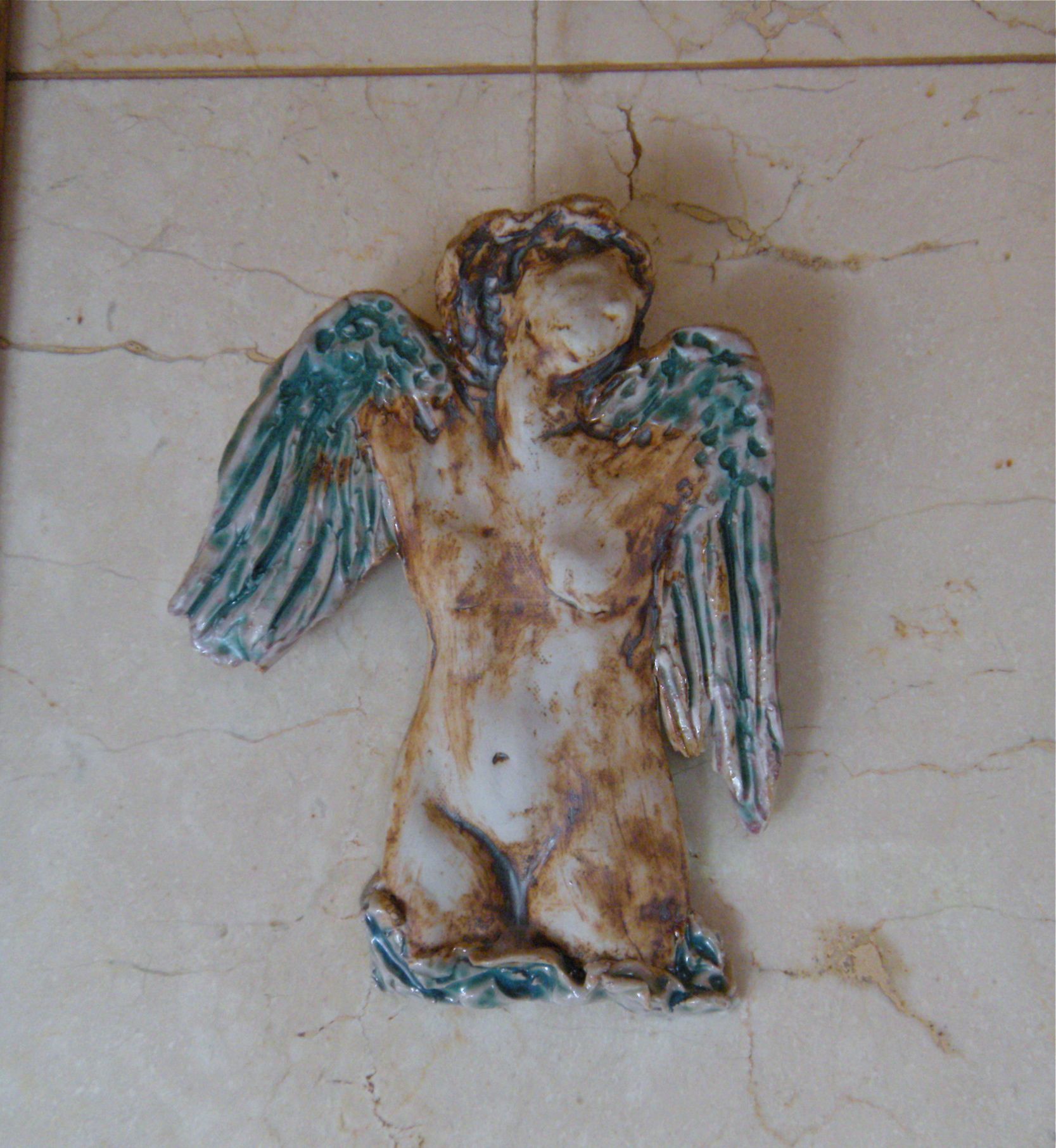
kitchen angel


“What is it you plan to do with your one wild and precious life?” ~ Mary Oliver

When do we ask ourselves this question?

When we read about the untimely death of Marina Keegan (“Still Time”)?

or when a baby like Josie is so purely innocent, just starting out (“home again“)?

A glimpse of mine can be found in my kitchen at any one moment.

by the stove

p.s. photos per reader request for more views:

on the shelf by our chairs


bird gallery on the bookshelves


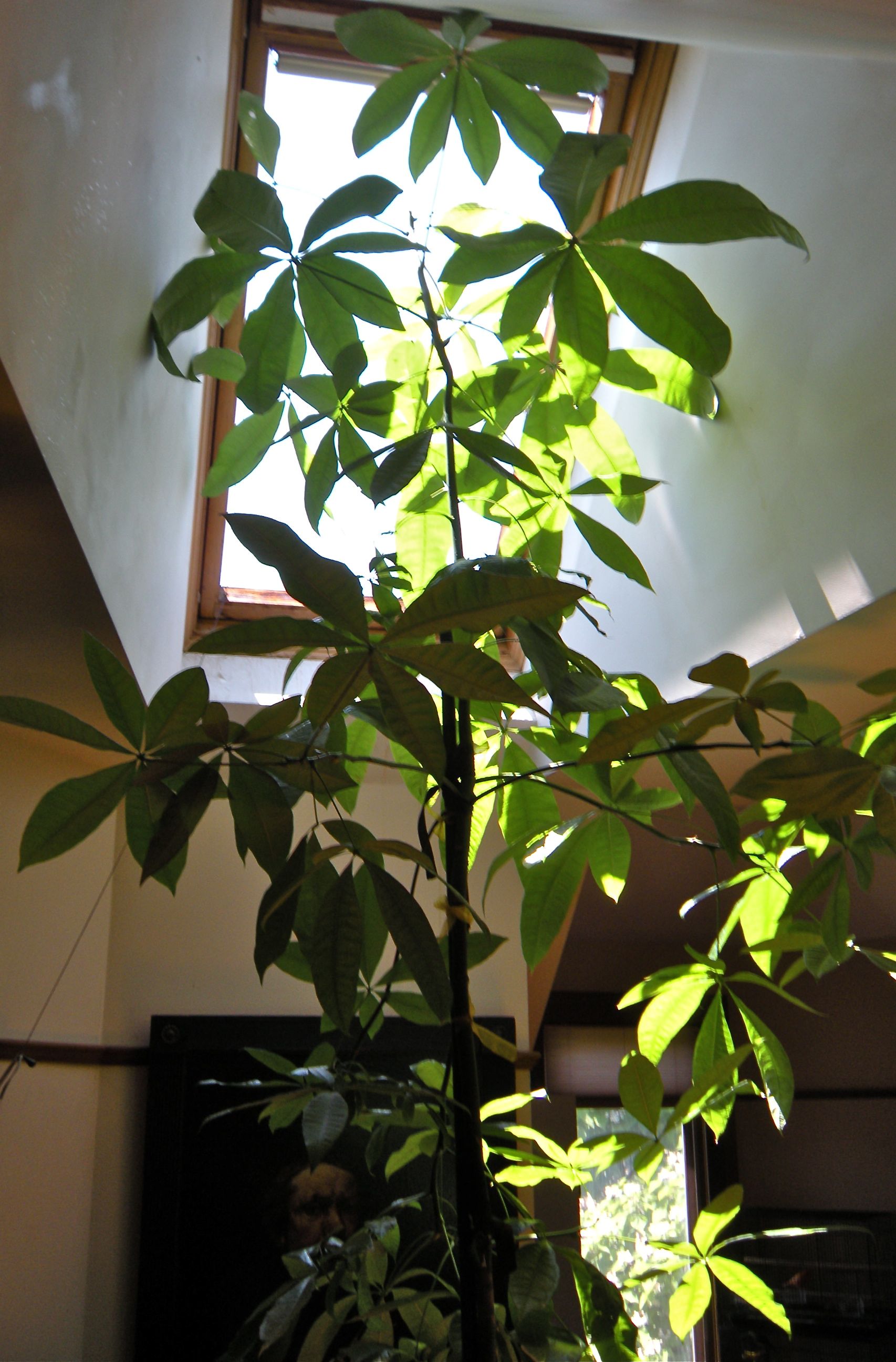
“money plant” that began 6 inches high on the kitchen counter!

what’s real. . .


I was thinking about how well we think we might know someone. Especially someone close to us, like our spouse or someone in our family, like a sister or a daughter. I’ve come to the conclusion lately that it’s hard to know what’s real and what’s an impression of what we think about them, tinged with feeling. How much room is there for honesty with all that thinking and feeling going on?

Some people are pessimistic and others look toward the best of everything. I’m one of the latter, often idealizing someone’s character or abilities just because I love them. I think we all do that. Then, something happens and we are rudely awakened to what’s real. Ego and arrogance coupled with a sense of self-satisfaction or smugness spurts out.

No matter. Because what is truly most important, it seems to me, is to be real to ourselves. To authenticate who we really are within. That takes some honesty, a slice of humble pie and removing the rose-colored glasses to take a good look at what’s real. Actually, you know, it doesn’t look bad at all.

still time . . .

Today, I came across an essay written by Marina Keegan, published in the Yale Daily News. It is inspirational to read and heartbreaking to realize that she died days after graduating from Yale.

After reading it, I believe that whatever our age is or where we are in life, there is still something to be done and to look forward to.

Here it is:

UNIVERSITY | 3:10 a.m. | May. 27, 2012 | By Marina Keegan
KEEGAN: The Opposite of Loneliness

The piece below was written by Marina Keegan ’12 for a special edition of the News distributed at the class of 2012’s commencement exercises last week. Keegan died in a car accident on Saturday. She was 22.

We don’t have a word for the opposite of loneliness, but if we did, I could say that’s what I want in life. What I’m grateful and thankful to have found at Yale, and what I’m scared of losing when we wake up tomorrow and leave this place.

It’s not quite love and it’s not quite community; it’s just this feeling that there are people, an abundance of people, who are in this together. Who are on your team. When the check is paid and you stay at the table. When it’s four a.m. and no one goes to bed. That night with the guitar. That night we can’t remember. That time we did, we went, we saw, we laughed, we felt. The hats.

Yale is full of tiny circles we pull around ourselves. A cappella groups, sports teams, houses, societies, clubs. These tiny groups that make us feel loved and safe and part of something even on our loneliest nights when we stumble home to our computers — partner-less, tired, awake. We won’t have those next year. We won’t live on the same block as all our friends. We won’t have a bunch of group-texts.

This scares me. More than finding the right job or city or spouse – I’m scared of losing this web we’re in. This elusive, indefinable, opposite of loneliness. This feeling I feel right now.

But let us get one thing straight: the best years of our lives are not behind us. They’re part of us and they are set for repetition as we grow up and move to New York and away from New York and wish we did or didn’t live in New York. I plan on having parties when I’m 30. I plan on having fun when I’m old. Any notion of THE BEST years comes from clichéd “should haves…” “if I’d…” “wish I’d…”

Of course, there are things we wished we did: our readings, that boy across the hall. We’re our own hardest critics and it’s easy to let ourselves down. Sleeping too late. Procrastinating. Cutting corners. More than once I’ve looked back on my High School self and thought: how did I do that? How did I work so hard? Our private insecurities follow us and will always follow us.

But the thing is, we’re all like that. Nobody wakes up when they want to. Nobody did all of their reading (except maybe the crazy people who win the prizes…) We have these impossibly high standards and we’ll probably never live up to our perfect fantasies of our future selves. But I feel like that’s okay.

We’re so young. We’re so young. We’re twenty-two years old. We have so much time. There’s this sentiment I sometimes sense, creeping in our collective conscious as we lay alone after a party, or pack up our books when we give in and go out – that it is somehow too late. That others are somehow ahead. More accomplished, more specialized. More on the path to somehow saving the world, somehow creating or inventing or improving. That it’s too late now to BEGIN a beginning and we must settle for continuance, for commencement.

When we came to Yale, there was this sense of possibility. This immense and indefinable potential energy – and it’s easy to feel like that’s slipped away. We never had to choose and suddenly we’ve had to. Some of us have focused ourselves. Some of us know exactly what we want and are on the path to get it; already going to med school, working at the perfect NGO, doing research. To you I say both congratulations and you suck.

For most of us, however, we’re somewhat lost in this sea of liberal arts. Not quite sure what road we’re on and whether we should have taken it. If only I had majored in biology…if only I’d gotten involved in journalism as a freshman…if only I’d thought to apply for this or for that…

What we have to remember is that we can still do anything. We can change our minds. We can start over. Get a post-bac or try writing for the first time. The notion that it’s too late to do anything is comical. It’s hilarious. We’re graduating college. We’re so young. We can’t, we MUST not lose this sense of possibility because in the end, it’s all we have.

In the heart of a winter Friday night my freshman year, I was dazed and confused when I got a call from my friends to meet them at EST EST EST. Dazedly and confusedly, I began trudging to SSS, probably the point on campus farthest away. Remarkably, it wasn’t until I arrived at the door that I questioned how and why exactly my friends were partying in Yale’s administrative building. Of course, they weren’t. But it was cold and my ID somehow worked so I went inside SSS to pull out my phone. It was quiet, the old wood creaking and the snow barely visible outside the stained glass. And I sat down. And I looked up. At this giant room I was in. At this place where thousands of people had sat before me. And alone, at night, in the middle of a New Haven storm, I felt so remarkably, unbelievably safe.

We don’t have a word for the opposite of loneliness, but if we did, I’d say that’s how I feel at Yale. How I feel right now. Here. With all of you. In love, impressed, humbled, scared. And we don’t have to lose that.

We’re in this together, 2012. Let’s make something happen to this world.