mulberryshoots

"Tell me, what is it you plan to do with your one wild and precious life?" ~ Mary Oliver

Category: Life & Spirit

seeing red cardinals. . .

photo taken by Timothy Hardin

Whenever I am driving along in the car and a red cardinal swoops in front of me, I think of it as a good omen. I don’t know why but I think of it as a secret messenger whispering in my ear that something good is going to happen. Or, simply that “hey, everything is fine!” It is a bird of affirmation. With this unfounded bias, whenever I see cardinals, the rosy, light brown female and the bright scarlet male, I sense that the Universe is playing a song and that I should listen to it.

In February, two years ago, my father lay in a bed by a basement window. He could see the trunk of a shrub outlined there if you propped his head up with a pillow. A few days before he died, we heard birds hopping on the branches of that shrub. When we looked up, we gasped when we saw not a pair of cardinals, but two pairs of cardinals. Yes, there were four adult cardinals brightly hopping on that shrub. If they were a “sign” of anything, the cardinals did not tell us what it was. They lingered for at least two days. Right on that same shrub–it seemed as though they were giving some last messages to my Dad while he was still here on earth. Or maybe vice versa, who knows?

My husband, G, is aware of my affection for cardinals. He shares an affinity for them too, I think. One day last year as I unloaded groceries from the car onto our front steps, he greeted me with a “shh” and beckoned for me to enter the side door of the house. Along the south wall, there was a twelve foot high iron trellis that G had erected years ago to support a bower of climbing roses, mostly pale pink “New Dawn” intermingled with “Constance Spry” . Signalling for me to step quietly inside the saw room, he pointed at the window and the underside of the rose bower, whispering the word, “nest.”

A proud father cardinal stood on a branch near a nest of baby cardinals, the mother nowhere to be seen. She returned a little later after a break sitting on the Sassafras tree on the other side of the driveway. Here, we witnessed two pairs of cardinals, parents and babies. Seeing them so close up in a nest built next to the house brought back the memory of the two pairs we had witnessed at my father’s bedside.

I don’t know what cardinals represent but click here to see what Ted Andrews, in his book Animal Speak says about them.

a taoist hermit. . .

In “About” I write that I think I would like to be a Taoist Hermit. If you read Bill Porter’s books written under the name, Red Pine, he relates stories about looking for Taoist hermits in the wild mountains west of Sian. Sometimes the hermits are in plain sight in a village but there’s no way to truly identify them even if you are looking straight at them. There are stories about hermits who sit alone in their mountain hut on a moonless night, eating only pine needles and drinking drops of dew.

I have been a loner all my life but I don’t think that qualifies me as being a “hermit.”  Here are two definitions of “hermit” I found online:

her·mit:

1. A person who has withdrawn from society and lives a solitary existence; a recluse.

2. A spiced cookie made with molasses, raisins, and nuts.

My existence is pretty solitary which is why being able to write this blog is a way to share who I am and to becoming more known by my family and friends.
So the hermit/recluse part is pretty well established in my lifestyle. Following the Tao begins with a single step (Lao Tzu) and the rest of the journey is the way that I live my life.
Click here if you would like to read a well-written article about the difference between Taoism and Confucianism (or Confuse’em-ism)

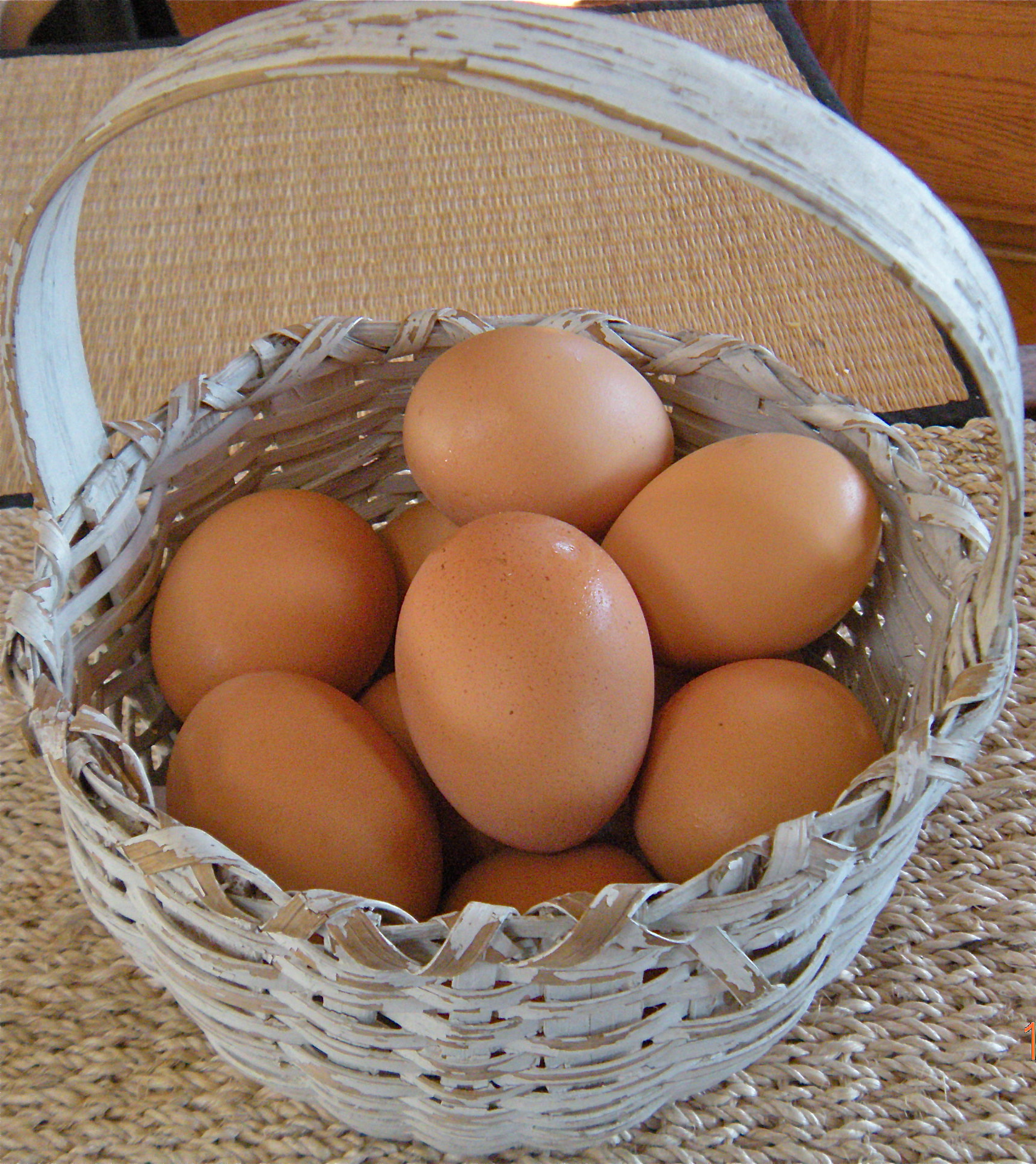
eggs in one basket. . .

Well, you know what they say about having all your eggs in one basket. At my age, I’m happy to have any eggs in my basket at all. There have been times in my life when I thought I had lost the basket along with all the eggs…yeah, a basket case, right?

When I was divorced, it felt like that. Lost the dream of our family staying together. Lost my job. Lost the dog (see “Life is Long” post) But true to the truisms of life, I found myself. When I had no job and knew no one while living in an apartment in one of those Georgian houses on the common in Salem, I was happier than I had ever been. Why was that… or  come again?

Things had gotten so bad that I was beyond bottomed out.  I was burned out from a brutal job, I was unemployed, living off savings. I was alone in life because my ex-husband and my children had all disappeared, avoiding the fallout from the divorce. I didn’t know what would happen to me. Usually a very strong person, I had had it at this point in my life.  I cried “Uncle!” and gave the burden of my fear away.

I looked up and said to the Universe, “Here, take it! It’s all yours! I can’t handle it anymore so I am asking for your help and hoping that you will hear me.” “Please.”

And for the rest of my time in that place, I didn’t worry about the future constantly anymore. I just lived. One day after another.

Little by little, things happened and help was on the way. I got a call from a VP from my last job that asked if I wanted to do some consulting for a start-up biotech firm. When I moved there, my piano needed fixing and I met my future husband to be (see “Life is Long“).

The COO of the biotech company asked me what I wanted to find in a place to live. I said a new contemporary condo with a view of the water. He said “good luck“. The next day, a stranger called me about a condo on a lake that was just listed for rent. I moved in there and loved it. It had more pantry space in the kitchen than I had ever had. Although having pared things down, I no longer needed it as much.

Now that I had a job, I could support myself again. There was a fireplace, a glassed in atrium with a bluestone floor, a small deck that looked out on the lake. There were lots of birds and wildlife too. A large blue heron would stand on the dock near my back yard and preen itself in the afternoon sunlight. Once, I heard a fluttering in the chimney and a bird got into the house, flying back and forth frantically seeking a way out. That same COO answered my distress call along with his wife and two young sons. A graduate of MIT, he engineered a chute with a chair and a blanket draped over it so that the poor bird (who was standing still under my bed by this time) could emerge and fly out the open window.

Then, I became friends with the piano tuner who invited me to dinner at his home, a huge Queen Anne Victorian house where his shop was, and which he renovated with a geothermal heating system drilling a well deep under the house. There was also a handsome stone drywall built around the perimeter of the property, the rock hauled by hand and loaded on over fifty trips in his small truck.

Life went up and down again. The biotech start-up that had such promise sputtered when their clinical trials (which I was managing) failed. We opened the interim results on a Thursday night and the company closed on Friday. I was out of work again. More work appeared magically over the phone. I could never figure out how they knew where to reach me. I was lucky. I also worked very hard for a long time, not always knowing what to do but coming up with ways to solve problems. Finally, I found myself not having to do it anymore.

So, I don’t know about eggs in a basket. My experience is that there is help and all you have to do is ask for it. And to be thankful when it comes. That’s an important part of this whole thing. Ask for help and be grateful when it arrives. It is also important to recognize help when it appears and to go with the flow if your intuition tells you that it’s okay. Just remember to give thanks.

emerson and heart. . .

"Trust Thyself: Every Heart Vibrates to that Iron String"

Ralph Waldo Emerson is one of my favorite thinkers. This is big because I usually gravitate toward the work of women writers like Emily Dickinson (“I’m Nobody! Who are you? Are you nobody too?”)

Emerson’s essay on “Self-Reliance” is one of a handful of admonitions that I have unknowingly subscribed to most of my life. His further exploration of universal energies and relying on your intuition is even more firmly embedded into my consciousness, especially after all the synchronicity that has shaped the direction of my life. Emerson said:

“Trust thyself. Every heart vibrates to that iron string”

and:

“Every spirit builds itself a house, and beyond its house a world, and beyond its world a heaven. Know then, that the world exists for you. For you is the phenomenon perfect. What we are, that only can we see.  Build, therefore, your own world.”

basil toutorsky. . .

Basil and Maria Toutorsky's home on 16th St., Washington, D.C.


I started playing the piano when I was three in China trying to imitate my Aunt Anna, a piano teacher. When my father was finishing his doctorate at the University of Chicago, he sent for my mother and me to come to America. We were living in Peking with his parents until the end of World War II. We travelled by freighter for three weeks, arriving in California. Then we took a train to Chicago, five days sitting up in a train, eating sardines on saltines for our meals. Our first home in Chicago was located in the cement basement of a house belonging to a Chinese family who kindly took us in. When he graduated, my father got a research position at the U.S. Geological Survey in Washington D.C. and we moved to a 2nd story apartment in a small house in Berwyn, Md.

Piano was important everywhere we lived. We had an upright in the Chicago basement which I would practice after I had started the evening’s rice to cook. In Berwyn, we also had a piano. That’s when my parents found a piano teacher named Mrs. Cortez to give me piano lessons. We stood by the highway and took the Greyhound bus to Washington, D.C., then took the D.C. Transit bus to 16th Street for my piano lesson. Sometimes my father would drive us there, reading scientific papers in the back of our old black Ford while he waited for me to have my lesson. Soon, Mrs. Cortez suggested that I take lessons with the Professor instead. She was a student of his as well, her teaching room right off the reception room filled with sumptuous furniture.

Before leaving Russia, Professor Basil Toutorsky was a renowned pianist and friend of both Sergei Rachmaninoff and Alexander Scriabin. He was also one of the nicest persons I had and have ever met. He took me under his wing for about four years from the time I was eight to when I turned twelve. The architecture of the house on 16th street made it a landmark in Washington. Click studio to see the outside and imagine what it must have been like for a Chinese kid to have piano lessons there. Inside, there were twenty-two grand pianos, placed two-by-two with keyboards that ran from one end to each other. Some were coved together as matched pairs in room after room.  We spent many hours playing four-hand pieces together, either on one piano, sitting side by side or on two pianos where we could see each other over the music desks.

By osmosis, this early routine of playing with Professor Toutorsky gave me a deep sense of music and rhythm. He taught me laborious hand and finger exercises that gave me strength and independence. I played a lot of technical exercises: Czerny, Cramer and lots of scales: chromatic through the circle of fifths, natural, in parallel and contrary motion. I later learned that the finger exercises were known as the Leschetizky method. To this day, I owe the development of my technical ability, ear training and musicality to Professor Toutorsky.

me, at the age of twelve, at the piano in Toutorsky's studio


He was also one of the few adults who showed me humor and compassion. One year for my father’s birthday, he recorded me playing Beethoven variations and encouraged me to say “happy birthday” on the ’78 rpm record that he put into a paper sleeve.

When I was twelve, he took me down to the Cosmos Club, an exclusive place where concerts were attended by Washington’s society elite. It was the first time I played a few notes on a nine-foot Bosendorfer grand piano. The tone of the Bosendorfer’s bass notes made a lasting impression on me. Later, I compared its tone to many of the instruments that I played, looking for that elusive and rare depth of sound. He also planned my first recital to be given at his home. As a momento, he showed me a photo of a music lyre in the Encyclopedia Britannica, and then with my assent, had the image of the lyre made into a gold pendant, engraved on the back with my name and date commemorating my”First Recital”.

first recital pendant

To this day, I am ever so grateful to this gentle man who gave me so much technical and musical training so magnanimously. My parents underestimated what he did for me. I don’t think they knew what Leschetizky method was. For sure, they didn’t realize how much Professor Toutorsky cared for me. Nor I for him.

doubled and re-doubled. . .


He was the King of Hearts

I don’t know why I am remembering so much about my Dad these days. This is one anecdote that I am posting because it’s so typical of him and how he behaved.

When I was in high school, I was pretty much a wallflower, a nerd, a geek. In fact one of my best friends in school whom I knew from the 6th grade nicknamed me “braintube”. He still calls me that and I call him “Jimmie” to this day in our emails even though we are both grandparents.

Anyhow, it was the 60’s and my high school friends and I played bridge pretty seriously. At our parties on Friday nights during junior high school, a bunch of us would get together to play bridge. Our parents also played. My best friend, Martha, used to invite me over for sleepovers and her parents would play cribbage or gin rummy by themselves, and bridge when the two of us made a foursome. Sometimes Martha’s brother Joel would spell one of us off. Her parents chain-smoked like chimneys while we played.

My brother, D., is eight years younger than I am, so when I was a junior in college, he was still in junior high. But he played bridge too. One weekend, my parents invited some friends over for dinner. While we were waiting to eat, my Dad asked if anyone wanted to play a couple of hands of bridge with him and one of the guests. My brother and I were partners as we sat down opposite my Dad and his partner. That my father barely deigned to play with me and my brother was pretty obvious. But as the play went on, my brother and I were dealt a lucky hand of cards. We bid a small slam. My father looked at us as if we didn’t know what we were talking about. I saw two tricks that we could lose, one sure one, and one depending on who had the high card for a finesse.

Dad doubled the contract. My brother, who is no slouch at being strong-willed either, redoubled. For those of you who don’t play bridge, what that doubling and redoubling meant was that: a) my father basically challenged us that we did not have a prayer of making the small slam contract; and b) my brother’s redoubling was like saying, “oh yeah, just watch us.” If my father won his double and we lost the contract, his side would have gotten 50 more penalty points. If we did make the contract redoubled, then we would get 100 more points than we would have without all this macho challenging stuff going on.

You know what happened, right, or I wouldn’t be writing about it. My kid brother and I won the small slam contract. The crucial finesse worked to our advantage so we only lost one trick. We got the redoubled score. And my Dad, bless his heart, never played bridge with us again.

making scallion pancakes . . .


hands down "the best EVER"

I was very good in chemistry and almost majored in it in college, at least when I was a freshman. What I mean is that I can follow experimental directions and also have an intuitive sense about mixing things together to see how they will react. In large part, that’s the process by which I approach cooking most of the time. The rest of being a cook for me is also intuitive but more free form, the reason a dish will turn out slightly differently each time even though you are following the same basic steps.

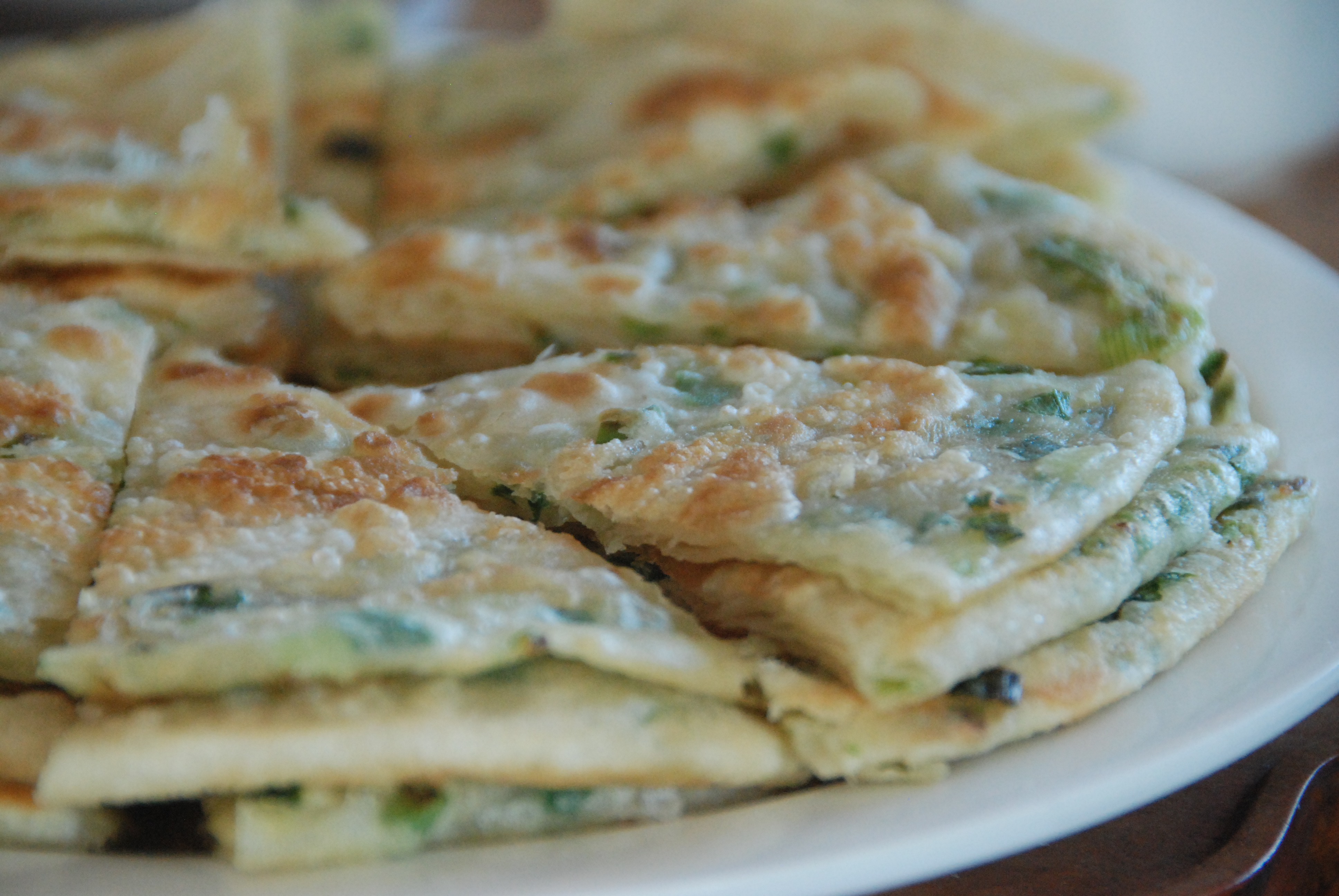
My Dad’s primo cooking dish was making scallion pancakes. He was absolutely rigid about how to make them and that his way was the only way. I watched as he chopped the green onions and put them in a bowl, made the flour dough with hot water and let it rest, shape the dough into a long snake and cut up portions, then roll each one out, spread with soft lard, sprinkle with salt, then onions, roll them up, then make a snail from the rolled up pancake, flatten the snail out again. Then cook carefully in a skillet, pile the cooked ones one on top of the next and then with a large cleaver, cut through all of them to serve them as fragrant, warm, savory wedges of salted heaven.

Recently when family was visiting, I impulsively decided to make them. But I didn’t have Dad’s exact recipe with me so I was a little dubious. I found a recipe online that sounded about right. It didn’t have a leavener like baking powder, which I distinctly remembered was Dad’s “secret ingredient.” I also remembered the last time I had included it that the pancakes were a little spongey to roll out.

I decided to follow the online proportions for flour and water and then go with my instincts. Instead of spreading lard on the surface of the pancake, I warmed a little in the microwave with a dollop of sesame oil. Then I mixed the softened but not liquid lard and sesame oil, spreading it thinly on the pancake. I used sea salt from a grinder. The green onions were washed carefully, slit down the lengths and then chopped finely, the white and the green parts. The fragrance of the raw onions filled the small galley kitchen I was working in. The dough without baking powder was easier to work after resting.

Everyone agreed as we wolfed them down that these were the best ever, Dad’s sacrosanct recipe notwithstanding. I wonder what he would have thought about such delicious scallion pancakes made from a recipe available on the internet. I also wonder if they’ll ever come out as well as this batch the next time I make them. The photo tells the whole story.

If you would like to try the recipe, I will post it next. One word of caution though: don’t try to make them if you are averse to using fresh lard (manteca at any super market) because actually, that is the true secret ingredient!  Let me know how they turn out for you.

ashes to ashes . . .

My father died at the age of 89 in February 2008. My mother died at the age of 89 in November 2008. By that time, they were no longer married. And had lived apart for quite some time before they died. Nevertheless, my mother was there when a Tibetan monk was chanting Prayers for the Dead for my Dad. He had his eyes closed towards the end. My mother walked up to his bedside and his eyes flew open. She looked at him and nodded. He seemed to nod back, closed his eyes and died.

My mother died painlessly in November the same year after being diagnosed with abdominal cancer in August. She had little to say as well. Both of them were cremated according to their wishes. That year, we had ashes from both of them that we took home. For awhile, I held onto them, not knowing where, exactly, to release them into the world. After awhile, I thought that it was not a good idea to keep them wrapped up, and that in order to release their spirits wholly, our little packets of dust needed to be dispersed in a kind fashion.

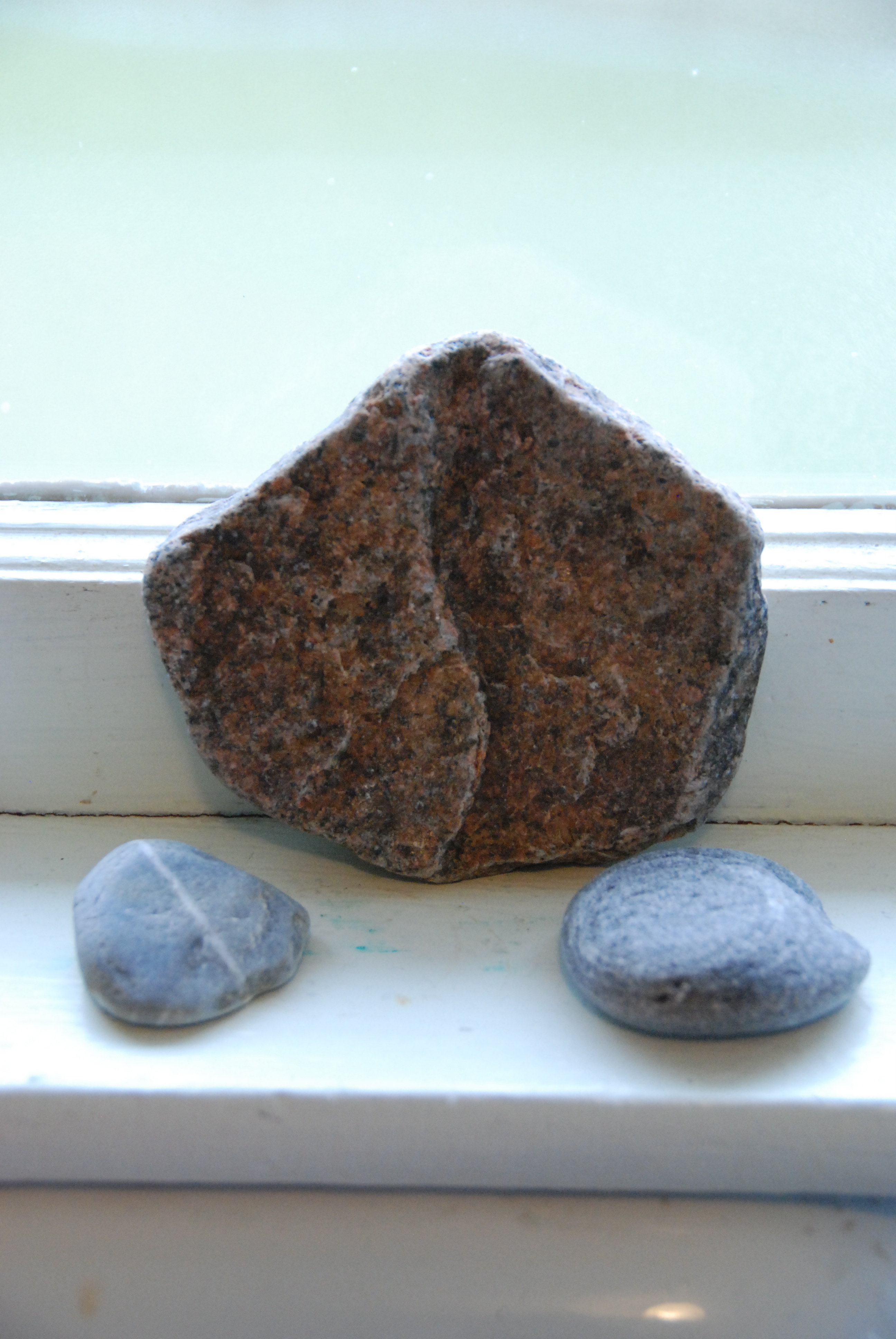
I finally decided to go to a nearby beach on the Atlantic coast of New England. It was twilight, my favorite time of day. Nobody else was there and it was low tide. I walked to the water’s edge and said goodbye as I released each packet of ashes. They swirled in the cold sea water, the dust settling as I carefully shook out the bags. I felt that it had been an okay kind of ceremony. As I turned around to walk back to my car, I took a few steps and looked down on the rocky beach. Not two minutes after I had finished releasing the ashes than there appeared two small rocks that stood out, one next to the other. One had a white straight line through it, and the other, a white circle. I felt that this symbolized my father (the straight line) and my mother (the circle.) I picked them up, feeling that it was an affirmation from them, or from the powers that be.

In about four more feet up the beach, I looked down again and saw a large flat rock with a wave indentation on it. It looked to me like an I-Ching hexagram, or a symbol of Yin and Yang. It felt to me like the Universe was giving me comfort that this release of my parents’s ashes was appropriate and well-received, in some way–or maybe it was just their way of saying a last goodbye.

fitting a puzzle together . . .

Putting jigsaw puzzles takes patience, an eye for shapes, colors and design. Some people are good at it and can spend hours poring over a myriad layout of tiny pieces, sorted by color, the edges already formed, at least if you are experienced at this kind of thing.

I have patience to knit, a sometimes tedious-looking kind of activity, repetitive, requiring counting and the willingness to go back and pick up a dropped stitch, or one that stands out from the tension of the piece you are working on.

My husband, G, could no longer knit than I could do jigsaw puzzles.

playing it “Bach’s way” . . .

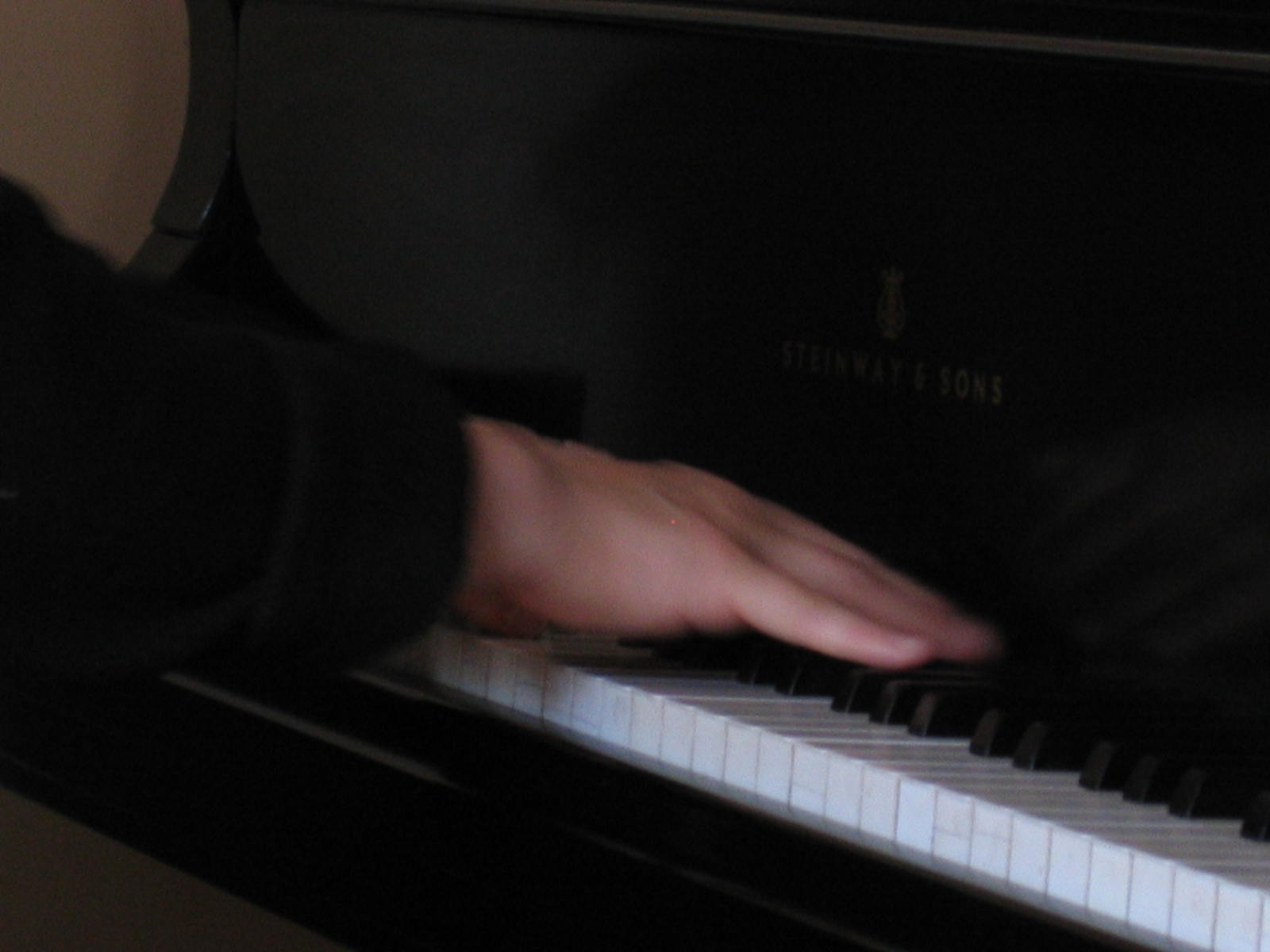
Sometimes I go on music playing binges. Right now, it’s listening to Rosalyn Tureck playing the Well-Tempered Clavier Preludes and Fugues of Bach. She was born in Chicago in 1913 and died in 2003. Glenn Gould, the infamous piano interpreter of Bach hailed Rosalyn Tureck as the only pianist that he revered, which she acknowledged graciously since she never achieved the stardom that he did emulating her playing style. Here are excerpts from an obituary that appeared in the British newspaper, The Guardian, written by Jessica Duchen and published Saturday 19 July 2003.

“You play it your way; I play it Bach’s way.” Addressing the indomitable harpsichordist Wanda Landowska, the equally indomitable Rosalyn Tureck, who has died aged 88, made one of her most famous and characteristic statements. For JS Bach was the composer to whom this strong-willed, demanding and fearsomely intelligent American keyboard player dedicated her life, both as performer and scholar.

She was born in Chicago, the granddaughter of a famous Kiev cantor; she related, with great pride, her father’s tales of a carriage, pulled by eight white horses, taking her grandfather on tour for the high holy days. Her main teachers were Sophia Brilliant-Liven, Jan Chiapusso and Olga Samaroff (the American wife of conductor Leopold Stokowski) and, for harpsichord, Gavin Williamson.

Her talent showed itself early, and she made her public recital debut in Chicago at the age of nine. When, at 16, she auditioned for the Juilliard School of Music, New York, she startled the panel by offering to play most of Bach’s 48 preludes and fugues from memory.

Shortly afterwards, she settled on her future direction during a strange episode in a Juilliard practice room. While working on a Bach fugue, she blacked out for a short time; she came round with an inner revelation that she needed to create a different type of keyboard technique specific to the playing of Bach. Her teacher told her it was a wonderful, but impossible, idea; in response, she changed teachers. She never stopped perfecting this apparently elusive notion.

Tureck’s pianistic style, which (unfairly enough) was a huge influence on the more celebrated Glenn Gould, was uncompromisingly rigorous, intelligent and full of attention to detail: she took, for example, great care over the appropriateness of ornamentation. But what always convinces the listener is the compelling, incandescent, almost evangelical spirit that shines through that detail. She was hailed as “the high priestess of Bach” – and that is how she will be remembered.”

She was the “High Priestess of Bach.” If you have not had a chance to listen to her Bach recordings, you are in for a treat. I introduced them to one of my daughters who wrote back that she had two words to describe her listening experience: “Hubba, Hubba.”