mulberryshoots

"Tell me, what is it you plan to do with your one wild and precious life?" ~ Mary Oliver

Category: Music

expectations. . .


What did we expect with our lives? Are you one of those who had no idea what you wanted to be or do when you were little? I’ll bet most people didn’t. Many of us are still trying things out and figuring out who we want to be. It doesn’t end.

Or maybe if we didn’t know what we wanted to do, we at least had an idea of how we wanted to live later in life after working hard at doing either what we wanted or what we had to do to get our kids grown up, educated, married and settled in their own places, with or without mortgages of their own. Or, if we didn’t have kids or didn’t have a career, we still wanted something in the end, didn’t we? Our own house Read the rest of this entry »

adagio. . .


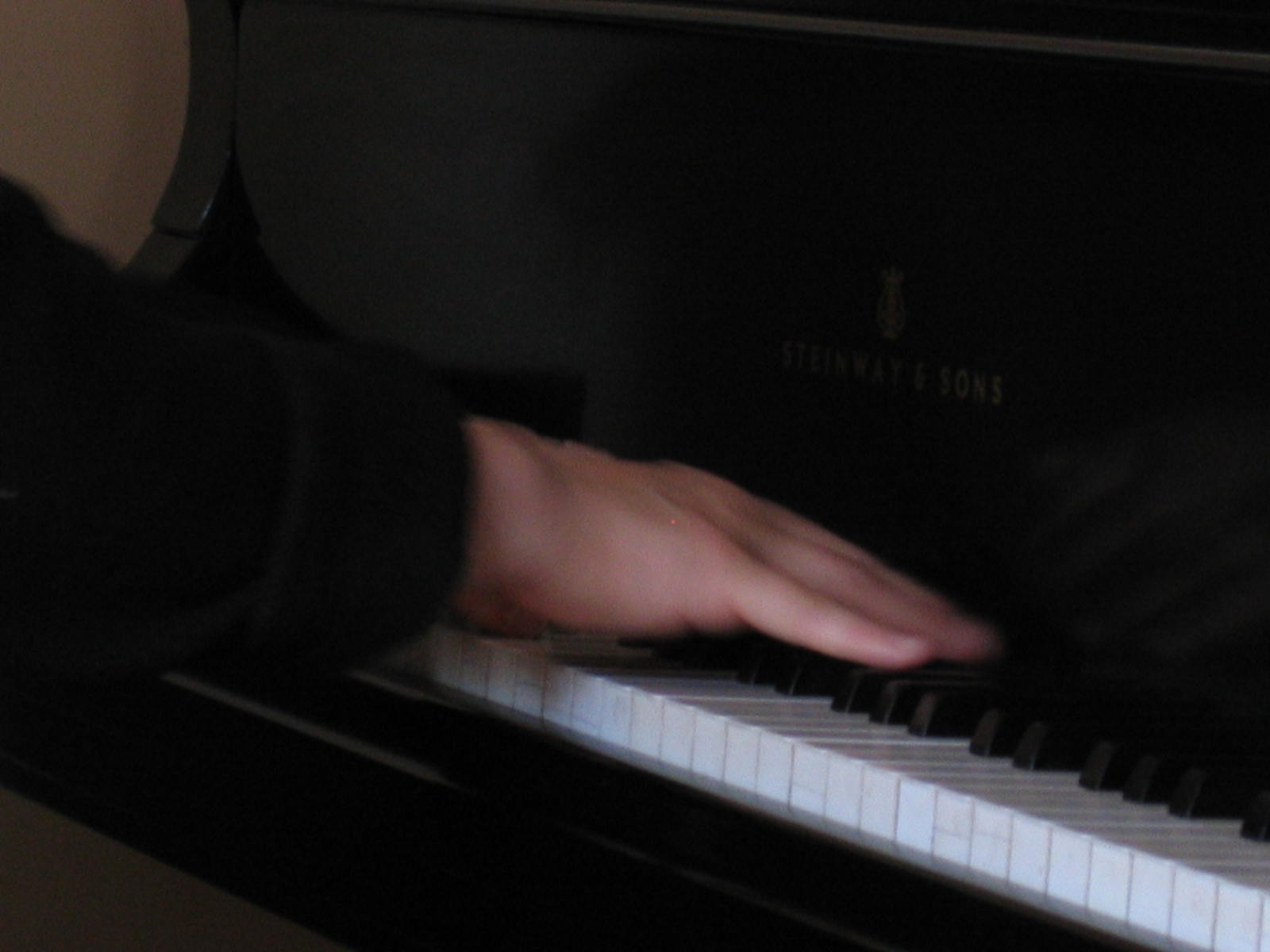
Here’s an interesting discovery I made after reading a novel by Rachel Cusk, a young British writer. (I seem to have artists from the UK in my frame of reference these days for some reason.) In her novel, “Bradshaw Variations,” Cusk describes a character playing an “Adagio” movement from a Beethoven sonata. Although the sonata is not revealed, I was curious enough from the novel’s description to page through my Henle edition of Beethoven’s 32 Sonatas in two thick volumes. As I did so, I sat down at my Steinway grand piano, named “Victor,” rebuilt years ago by my husband, “G”, and began to sightread through ALL of the Adagio movements. I discovered in the process that they are among the most melodic, beautiful compositions that are contained in this oeuvre (not knowing the plural for the word, “opus”!)

Anyhow, “Adagio” means “slowly.” An apt concept for how to spend days when it is so hot and humid outside (now under the heat dome that the weatherman keeps talking about) and as summer days languish. These gorgeous melodies also serve as a musical antidote to all the cleaning up and cleaning out that I’m still in the process of doing (“simplifying. . .”) I’m even thinking of playing (and possibly recording) a program of Adagios when my birthday rolls around next year, perhaps. Because the tempo is “slowly,” the melodies also offer up an opportunity to make beautiful music while not having to kill oneself technically to keep up at this point in my piano playing life.

To my amusement, I discovered that I was already practicing Bach’s D minor sonata whose first movement is marked “Adagio.” It serves primarily as a chordal introduction to a wonderful Fuge movement.

So, I’m blessedly happy, adagio-ing along and am glad to have discovered these wonderful pieces. And for my money, they put Mozart to shame–the Beethoven melodies meatier, more robust, evoking such sweet pathos. Yum!

simplifying. . .

We’re a few weeks into the summer and I’ve been making some headway toward getting things cleaned out (see previous post, “Holding On”.) Yesterday in the muggy heat, I gathered up all the CDs in their plastic holders and many not. I laid them out on the table according to composer and kind of music. Finding the right cases for the loose disks was like playing the game, “Memory,” and I’m relieved that mine seems to be holding its own.

I found a dozen favorite CDs that I hadn’t listened to in awhile: Mendelssohn cello pieces played by Steven Isserlis and Saint Saens piano concerti played by Stephen Hough. All bright, optimistic melodies from the 19th century. The set of Schubert sonatas played by Radu Lupu also made it into my iTunes library on my laptop. I discovered that I buy multiple recordings of the pieces I like in order to listen to different pianists perform them. For example, I have Bach’s Well-Tempered Clavichord recorded by Rosalyn Tureck, Angela Hewitt, Sviatislav Richter, Till Fellner and Glenn Gould. Ditto the Chopin Ballades by Maurizio Pollini, Claudio Arrau and Vladimir Ashkenazy. Beethoven late sonatas played by Alfred Brendel, Maurizio Pollini, and Claude Frank.

Today, I’m going through the rest of the books that I started to weed out last week. There are many books that I value that I don’t look at anymore. I haven’t wanted to just donate them anywhere because I’d like them to be available to others. So yesterday, I talked to someone at the Worcester Public Library who said they’d be happy to take them along with CDs. They also suggested donating books to the local vocational school libary–such as cookbooks. I’m glad these outlets are available for these remainders from my libraries. It allows my conscience to know that they may be part of someone else’s reading and listening life.

There are lots of books to sort through, similar to the task of going through all the CDs yesterday. The result though, is a renewed awareness of not only what I have and want to keep. But also a renewal in appreciating the music I’m going to listen to while I sort through the books, a stack of them growing beside my chair that I want to read the rest of the year.

So, simplifying has been enriching for me in ways I did not anticipate. Meanwhile, the house is stacked with cartons that make the place look like we’re getting ready to move out. When what we are doing this summer is getting ready to move on.

how we met . . .


If my husband and I had met when we were younger, we wouldn’t have paid that much attention to each other. I was a goody-two-shoes dean’s list student at an ivy league school. At the same age, G. had hair down to his shoulders and played keyboard in a local rock band that is still well known in this town to this day.

We were both pianists: I started at the age of three, trained the Lechetiszky method by a renowned Russian pianist, Professor Basil Toutorsky (see basil toutorsky) who had 22 pianos in a mansion on 16th Street in Washington. G. was virtually self-taught, went to Berklee School of Music for awhile and played rock and roll, jazz and rhythm and blues. He didn’t get interested in classical music until he was in his 20’s and then shifted his interest to the complete works of a 19th century French composer named Charles Valentin Alkan. Alkan’s piano works are so difficult that very few pianists can play them. Marc Andre Hamelin, a Canadian pianist, has recorded most of his works. Recently Hamelin composed and recorded his own variations of Alkan’s compositions, if you can believe it.

This is all by way of describing how different and how similar we were at the same time. We both loved pianos. We courted to Alkan’s music played by Marc Andre Hamelin. And we met over a piano.

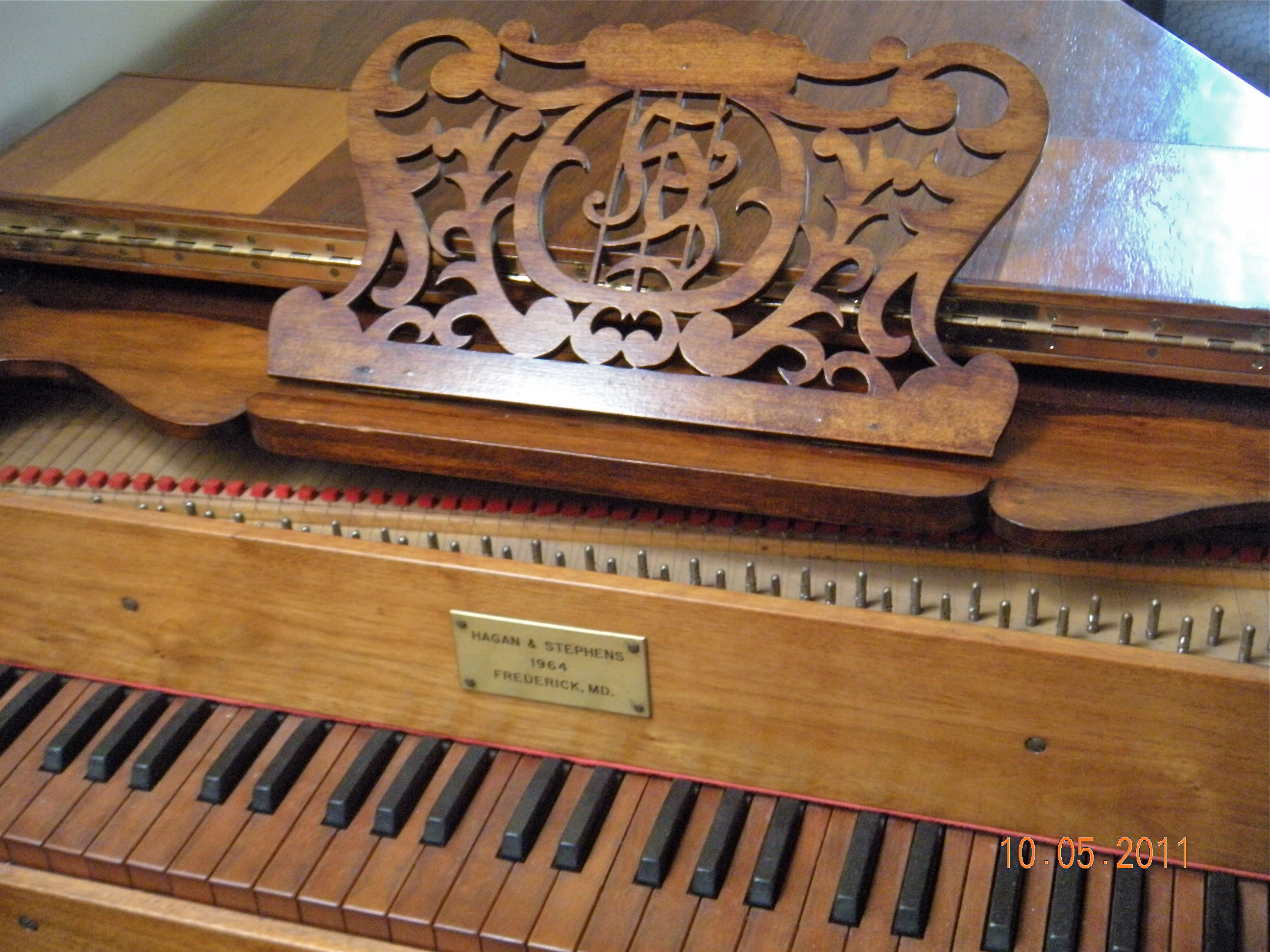
Although I loved the piano, my professional career was in the field of biotechnology (eggs in one basket). Offered a new job, I had just moved to central Massachusetts to a pristine modern condo facing the lake that ran through the town. When the movers put the piano in the living room, they attached the lyre which holds the pedals but forgot to tighten the surrounding hardware.

I looked in the Yellow Pages and found an ad with a handsome logo of a grand piano with the description, “Specializes in Steinways.” When G. arrived at the door of my new condo, I was distracted, on the phone with someone at the office. I was also not interested in getting involved with anyone, having just gotten divorced from my first husband whom I was married to for 26 years.

When we had a cup of tea after he adjusted the lyre, I said, “Let’s just be friends, okay?” He smiled and said, “We already are.” A few months later, I invited a pianist named Ken that I met at a gallery opening to give a piano recital at my house because I was new in town and thought it might be a good way to meet people. It turned out that Ken had been G’s client for over 20 years. The two fell busily to discussing and deciding what to do to improve my Steinway piano for the recital!

Long story short, the recital took place in May. I had put a deposit to buy the condo on the lake when G asked me to think about renting the 2nd floor apartment in his Queen Ann Victorian house. I thought about it for awhile and decided that if there was going to be a chance for a future between us, moving into the house would tell the tale. If it didn’t work out, I could always move somewhere else afterwards. He and his men helped me move out of the condo and got me settled into rooms with a view in the gorgeous house that he had restored for the past twenty years. During this time, an elderly woman who attended one of our piano groups commented enviously to me that living in two apartments a floor apart was ideal–independence and privacy along with the intimacy of being a footstep away from each other.

One day in August, a month after I had moved in, I walked hurriedly into the kitchen, my arms full of groceries. When I turned around, I gasped in surprise because there, in the living room, was a small vintage harpsichord with cherry keys and applied carving on the legs. To paraphrase what Renee Zellweger said to Tom Cruise in the movie “Show Me the Money”: “He had me at the harpsichord.”

We took our time and got to know each other for four years before we married. Once decided, we wanted to marry privately at City Hall, just the two of us. Flowers were delivered to the shop on the first floor of the house. Wedding rings were Fed-Exed from Tiffany’s. Downstairs, none of G’s workmen in the piano shop suspected a thing.

It was a snowy day and I called the Town Clerk to see if he was still there. We read our own vows and returned home; changed our clothes and still the guys were clueless. G. went out to tune a couple of pianos in the late afternoon while I cooked our wedding supper.

Later in the year, we threw a big party with a formal ceremony for family and friends on May 11th. The only way we could keep track of these two anniversaries was to remember that it was the 7th of March and the 11th of May or,. . . seven/eleven.

G had never married and I had been married for a quarter of a century to someone else by the time we met. Whenever I say to G. that I should have left my marriage earlier due to all the trials and tribulations, he quickly disagrees. He believes, and I concur, that had even one thing been different in our pasts, that we might not have met each other at all.

Timing is everything, it seems, even if it takes awhile. We just celebrated our fifteenth anniversary. Together with the four years we knew each other before we were married, we are going on being together for twenty years. Life is long, and we are grateful to share ours together.


american masters. . .


Last night, G. and I watched a documentary on PBS called “American Masters” which featured Carole King, James Taylor and the ’70s music scene at Laurel Canyon. It was fun to hear the songs from Carole’s album, “Tapestry,” a recording I played often when the kids were growing up.

In the documentary, I was flabbergasted to learn that with Gary Goffin, she wrote the song, “Will You Still Love Me, Tomorrow?” at the age of EIGHTEEN!! On wikipedia, it states that Carole King “holds the record for the longest time for an album by a female to remain on the charts and the longest time for an album by a female to hold the #1 position, both for “Tapestry.”

After I downloaded “Tapestry” on I-Tunes, I decided to make a playlist for my daughters, one of whom I’m going to meet this afternoon. I started thinking back on the singers who have touched me as much as Carole King. Here’s my playlist of these American Masters.

Ladies singing folk/ballads and more:

the moon’s a harsh mistress (judy collins)
turn, turn, turn (judy collins)
send in the clowns (judy collins)
diamonds and rust (joan baez)
jesse (joan baez)
i am woman (helen reddy)
I feel the earth move (carole king)
home again (carole king)
you’ve got a friend (carole king)
will you still love me tomorrow? (roberta flack)
stoney end (barbra streisand)
if you could read my mind (barbra streisand)
I don’t know where I stand (barbra Streisand)
the rose (bette midler)
when a man loves a woman (bette midler)
ladies of the canyon (joni mitchell)
both sides now (then) (joni mitchell)
both sides now (now) (joni mitchell)

Who are some of your favorites?

kindred spirits. . .


As a self-described loner, the number of friends I have can be counted on one hand. Most of them are loners too, a few even more reclusive than I am. They are all artists of one kind or another. Their eye, hand and spirit are usually mucking around in what they are making, the instruments they are playing or what they are reading and writing. It takes a lot to go it alone. They share an insistent curiosity that seeks out what sparks their interest, incapable of just letting it lie there.

G. said about me once, “the difference between you and other people is that you pull the trigger.” I guess he’s right. My father was like that too (“My father, myself“.) When he decided to make all of our living room furniture from scratch, he taught himself how to do it. One of our neighbors wrote to me when he died that she still remembers that about him and the simple maple furniture he made for our house. There was a wooden chair in the shape of a Mies van der Rohe chaise lounge that I wish one of us had saved.

During his African violet phase, our entire basement was suddenly filled with aisles of artificial growing lights and metal carts with layers of trays lined with potted flowers. It seemed like an odd choice of plant for him. Later, I remember that he also liked gloxinias and christmas cactus plants. When each “phase” was over, it clicked shut, just like that.

I wonder where these obsessive urges come from. I find myself doing the same thing sometimes. They feel like a binge to me. Whenever I come upon something that resonates with me, I feel it right away. It’s not just what appears on the surface but something else I feel a kinship with, an energy submerged within.

That’s the experience I had on Saturday night when G. and I watched a DVD about Margaret Leng Tan. Born in Singapore, she is a pianist living in Brooklyn who built a following through her performances playing John Cage’s compositions on pianos and on toy pianos. Her dedication to forging her own path and her sense of presence bowled me over. The energy of her performances, her large piano hands, her crisp haircut and the four dogs that kept her company stayed with me long after the documentary wound to a close.

The next day, I downloaded “The Art of the Toy Piano” on I-Tunes. I was glad to find the gorgeous blues-y Satie piece by Toby Twining played concurrently on piano and toy piano. I scrolled through twenty-four pages of toy pianos listed on eBay but didn’t see anything that compared favorably with her collection of eighteen toy pianos. I sat down at my piano and sightread the Beethoven sonata that Margaret adapted for Charles Schultz’s Peanuts character, Schroeder, that was featured in the film. I read about John Cage again. I took out “Wake Up and Cook”, a Buddhist cookbook which describes Cage’s preference for making brown rice the macrobiotic way with spring water that he drove miles to fetch in empty water jugs he brought from home.

I even wrote an e-letter to Margaret because I felt her life was so inspiring and poignant at the same time. Miraculously, she wrote back! She says she now has six dogs!

Take a look for yourself at http://margaretlengtan.com/.

basil toutorsky. . .

Basil and Maria Toutorsky's home on 16th St., Washington, D.C.


I started playing the piano when I was three in China trying to imitate my Aunt Anna, a piano teacher. When my father was finishing his doctorate at the University of Chicago, he sent for my mother and me to come to America. We were living in Peking with his parents until the end of World War II. We travelled by freighter for three weeks, arriving in California. Then we took a train to Chicago, five days sitting up in a train, eating sardines on saltines for our meals. Our first home in Chicago was located in the cement basement of a house belonging to a Chinese family who kindly took us in. When he graduated, my father got a research position at the U.S. Geological Survey in Washington D.C. and we moved to a 2nd story apartment in a small house in Berwyn, Md.

Piano was important everywhere we lived. We had an upright in the Chicago basement which I would practice after I had started the evening’s rice to cook. In Berwyn, we also had a piano. That’s when my parents found a piano teacher named Mrs. Cortez to give me piano lessons. We stood by the highway and took the Greyhound bus to Washington, D.C., then took the D.C. Transit bus to 16th Street for my piano lesson. Sometimes my father would drive us there, reading scientific papers in the back of our old black Ford while he waited for me to have my lesson. Soon, Mrs. Cortez suggested that I take lessons with the Professor instead. She was a student of his as well, her teaching room right off the reception room filled with sumptuous furniture.

Before leaving Russia, Professor Basil Toutorsky was a renowned pianist and friend of both Sergei Rachmaninoff and Alexander Scriabin. He was also one of the nicest persons I had and have ever met. He took me under his wing for about four years from the time I was eight to when I turned twelve. The architecture of the house on 16th street made it a landmark in Washington. Click studio to see the outside and imagine what it must have been like for a Chinese kid to have piano lessons there. Inside, there were twenty-two grand pianos, placed two-by-two with keyboards that ran from one end to each other. Some were coved together as matched pairs in room after room.  We spent many hours playing four-hand pieces together, either on one piano, sitting side by side or on two pianos where we could see each other over the music desks.

By osmosis, this early routine of playing with Professor Toutorsky gave me a deep sense of music and rhythm. He taught me laborious hand and finger exercises that gave me strength and independence. I played a lot of technical exercises: Czerny, Cramer and lots of scales: chromatic through the circle of fifths, natural, in parallel and contrary motion. I later learned that the finger exercises were known as the Leschetizky method. To this day, I owe the development of my technical ability, ear training and musicality to Professor Toutorsky.

me, at the age of twelve, at the piano in Toutorsky's studio


He was also one of the few adults who showed me humor and compassion. One year for my father’s birthday, he recorded me playing Beethoven variations and encouraged me to say “happy birthday” on the ’78 rpm record that he put into a paper sleeve.

When I was twelve, he took me down to the Cosmos Club, an exclusive place where concerts were attended by Washington’s society elite. It was the first time I played a few notes on a nine-foot Bosendorfer grand piano. The tone of the Bosendorfer’s bass notes made a lasting impression on me. Later, I compared its tone to many of the instruments that I played, looking for that elusive and rare depth of sound. He also planned my first recital to be given at his home. As a momento, he showed me a photo of a music lyre in the Encyclopedia Britannica, and then with my assent, had the image of the lyre made into a gold pendant, engraved on the back with my name and date commemorating my”First Recital”.

first recital pendant

To this day, I am ever so grateful to this gentle man who gave me so much technical and musical training so magnanimously. My parents underestimated what he did for me. I don’t think they knew what Leschetizky method was. For sure, they didn’t realize how much Professor Toutorsky cared for me. Nor I for him.

playing it “Bach’s way” . . .

Sometimes I go on music playing binges. Right now, it’s listening to Rosalyn Tureck playing the Well-Tempered Clavier Preludes and Fugues of Bach. She was born in Chicago in 1913 and died in 2003. Glenn Gould, the infamous piano interpreter of Bach hailed Rosalyn Tureck as the only pianist that he revered, which she acknowledged graciously since she never achieved the stardom that he did emulating her playing style. Here are excerpts from an obituary that appeared in the British newspaper, The Guardian, written by Jessica Duchen and published Saturday 19 July 2003.

“You play it your way; I play it Bach’s way.” Addressing the indomitable harpsichordist Wanda Landowska, the equally indomitable Rosalyn Tureck, who has died aged 88, made one of her most famous and characteristic statements. For JS Bach was the composer to whom this strong-willed, demanding and fearsomely intelligent American keyboard player dedicated her life, both as performer and scholar.

She was born in Chicago, the granddaughter of a famous Kiev cantor; she related, with great pride, her father’s tales of a carriage, pulled by eight white horses, taking her grandfather on tour for the high holy days. Her main teachers were Sophia Brilliant-Liven, Jan Chiapusso and Olga Samaroff (the American wife of conductor Leopold Stokowski) and, for harpsichord, Gavin Williamson.

Her talent showed itself early, and she made her public recital debut in Chicago at the age of nine. When, at 16, she auditioned for the Juilliard School of Music, New York, she startled the panel by offering to play most of Bach’s 48 preludes and fugues from memory.

Shortly afterwards, she settled on her future direction during a strange episode in a Juilliard practice room. While working on a Bach fugue, she blacked out for a short time; she came round with an inner revelation that she needed to create a different type of keyboard technique specific to the playing of Bach. Her teacher told her it was a wonderful, but impossible, idea; in response, she changed teachers. She never stopped perfecting this apparently elusive notion.

Tureck’s pianistic style, which (unfairly enough) was a huge influence on the more celebrated Glenn Gould, was uncompromisingly rigorous, intelligent and full of attention to detail: she took, for example, great care over the appropriateness of ornamentation. But what always convinces the listener is the compelling, incandescent, almost evangelical spirit that shines through that detail. She was hailed as “the high priestess of Bach” – and that is how she will be remembered.”

She was the “High Priestess of Bach.” If you have not had a chance to listen to her Bach recordings, you are in for a treat. I introduced them to one of my daughters who wrote back that she had two words to describe her listening experience: “Hubba, Hubba.”


music and memory . . .

Last night, I downloaded songs from the ’40’s and ’50’s for my Uncle Tim in Beijing, making a CD that my brother, Dan, wanted to send to him. Our uncle is now 92 and likes to listen to romantic ballads sung by Andy Williams and Tony Bennett.

Tim learned English at an early age and served with the U.S. Army during World War II as a translator, stationed in Hawaii. My father joined up also. After the war, my father came to the States to get his PhD in geology at the University of Chicago. My Uncle Tim returned to China and the Cultural Revolution which would soon unfold thereafter. Luckily, Dan is still able to visit Tim and his wife Dora on frequent business trips to China.

During this nostalgic search down memory lane on behalf of Tim and Dan, I also found myself seeking out music that I hadn’t listened to in a very long time: piano jazz by George Shearing and Don Shirley. Each played introspective arrangements of songs like “It Could Happen To You” and “It Never Entered My Mind” interspersing song melodies with riffs from classical music. I remember how “neat” I thought that was when I was in college since I’m a classical pianist myself. I used to go to sleep with this music playing softly on my phonograph (that’s what they were back then.)

These piano sounds have had such a Proustian effect on me! Whole scenes of my life back then, from the very poignant to the mundane, flash in and out of my consciousness. You know how when you come upon a favorite pair of earrings that you wore a long time ago and love how they look when you put them on again? That’s how listening to this music makes me feel, uncovering that true self again…it’s still me.