mulberryshoots

"Tell me, what is it you plan to do with your one wild and precious life?" ~ Mary Oliver

knitting . . .

sweater 1

I taught myself how to knit when I was ten years old, sitting in my bedroom, following a Vogue knitting pattern and emerging triumphantly with a white bed jacket, of all things.  It had a seed stitch border on it and ever since that first project, it’s been my favorite go-to pattern for most of my knitting projects including this one.

Knitting serves to while away time that one might be spending idly by and also as an outlet for one’s ideas. I challenge myself by knitting from scratch – that is, without a pattern which usually entails numerous do-overs until the sweater is finished to my satisfaction. And truth be told, I almost gave up on this one and put it away without sewing it up!

But, listening to “Bluebloods” seasons 3 & 4 on my laptop to keep me company, I decided to take it on, revamping the sleeves so that they morphed into a dropped shoulder dolman sleeve that was just the right length to the wrist after retrofitting the armhole opening once the fronts and back were sewn together. See what I mean?

It always amazes me how much time and steps are still required even though you think you’re done after the main pieces are knitted (fronts, back and sleeves.) For example, this neckline was finished with knitted ribbing first, then attached to the cabled ribbed collar (that started out as a bottom cuff) so that it would stand up properly.

The pockets were knitted in a moss stitch (double seed stitch) to contrast with the allover seed stitch pattern of the sweater. The front ribbing for buttons and buttonholes were knitted during this phase also and sewn edge to edge with the fronts so that they would lie flat. I’m waiting for the buttons to arrive (olive green tortoise shell with a raised edge) and will sew them on next week.

Knitting is sometimes carried out as a waiting game. I wouldn’t say that I was fatalistic while knitting this sweater, but I had a hunch it would provide many challenges before it was completed.

But it was the beauty of the yarn itself, a soft wool, silk and cashmere blend in a moss green tweed color that kept me going. I used to have a brown cable knit sweater that I wore while the girls were growing up and we lived in Lexington. Long gone, I’ve tried to replicate it a few times either by finding one used or knitting another one.sweater 2
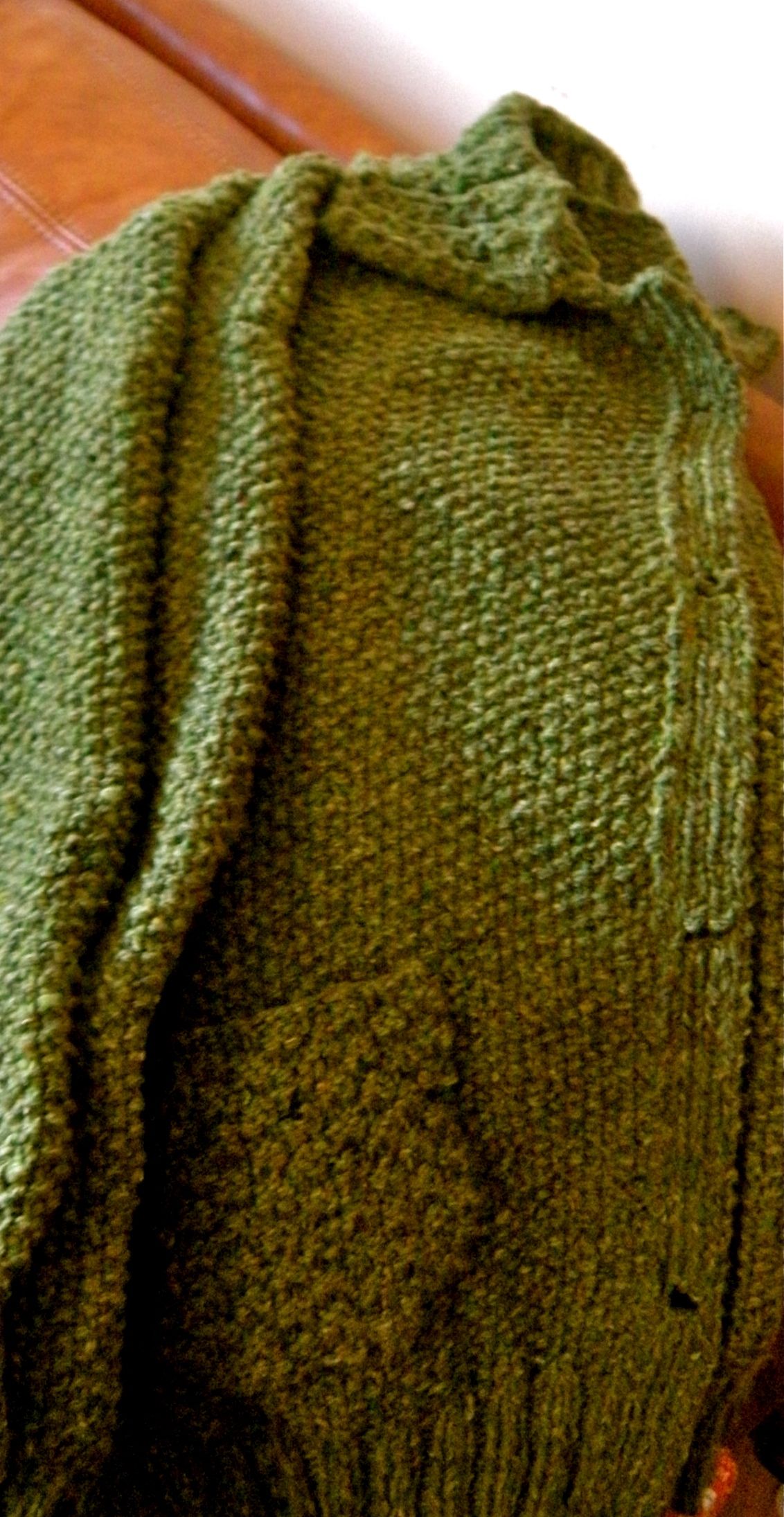
But today, I have decided that this will represent that sweater to me during this next phase of my life. Good to change colors and to wear something a little different, just as it will be to refresh my outlook with a sweater knitted from this beautiful yarn called “Wintergrass”.


“have as much fun as you can” . . .


clematis %22Montana%22

This morning at breakfast, I read a quotation to live by from Ruth Reichl, cook and former head of Gourmet Magazine:

“At this point in your life,” she said, “you have to have as much fun in life as you can because you don’t know what’s coming down the road.”

She is 67 and her husband, Michael Singer, is 75. They live in a vast glass house they built eleven years ago in New York State. More can be found at this link:

sunday supper . . .


baked potatoesTwice-baked potatoes are a favorite of a friend of ours. He’s joining us for dinner tonight and everything on the menu can be eaten easily with just a fork: roast chicken, yellow beans and the baked potatoes. I put them in the oven midday, oiling the skins with a little vegetable oil after pricking the skins all over – having had a burst baked potato in the oven when I forgot to do that.

They came out of the oven beautifully baked, slightly soft to the touch and yielding their tender insides to the mixing bowl, beaten gently using an electric mixer, the milk, butter and salt combining smoothly into a thick, creamy mixture. Scooped back into the baked skins, I mounded them high and sprinkled grated cheddar cheese on top.roast chicken

When the roast chicken is done, resting after its own high-temperature stint in the oven, unsalted butter slathered all over the golden skin anointing the bird at the end, I’ll place the potatoes to bake its second time, melding the flavors and melting the cheese on top. The yellow beans take awhile to cook so that they are tender to the bite.

And so this meal is our supper on a cool, September Sunday.

Ronald Smith, English pianist . . .

DSCN8167

Ronald Smith‘s playing of Alkan‘s “Concerto for Piano” is so thoughtfully wrought – majestic, musical and just plain gorgeous. We came upon a snippet recording of it on YouTube David Dubal’s 30 minute interview of RS and were astonished that we had never heard this performance before. Up to two nights ago, my husband and I had thought only Marc-Andre Hamelin’s two recordings of it stood as the gold standard of this piece which, truth be told, was the composition which embraced the early days of our courtship.

Now there’s room for this beautiful recording. I had to track it down in a 2004 EMI remastered compendium of Ronald Smith’s ALKAN PROJECT on Amazon.com and download it as a MP3 recording. (I tried to find it again to link to this post but was unable to locate it.)

My husband was an Alkan “nut” when we first met over twenty years ago and although the Internet was not around then, he had amassed almost all of the Alkan scores and CDs of pianists playing Alkan at the time: John Ogdon, Raymond Lewanthal, Marc Andre Hamelin and Laurent Martin. He also had a copy of Ronald Smith’s two-volume biography of Charles Valentin Alkan.

When we travelled to England to visit my daughter who was a graduate student at Cambridge University in 1994, my husband was able to contact Ronald Smith on the telephone, a gracious encounter – and we also had dinner with the Secretary of the Alkan Society in Salisbury when we first arrived.

Ronald Smith has done the musical world a service worth its weight in gold by promoting the music of Charles Valentin Alkan. There is none other as poignantly beautiful. Thank you, Ronald Smith!

a nice vinaigrette! . . .


vinaigrette photo

Last night, I tried out a new way to make vinaigrette. It included Alice Waters’ process of macerating a clove of garlic with salt in a mortar and pestle before adding vinegar and oil. Here’s the recipe with tweaking suggestions. It’s a combination of Alice Waters’ garlic process and my own vinaigrette ingredients.

Its success depends on tweaking the amount of vinegars, sugar and garlic – the macerated garlic tends to make it a little bitter, I think.

1. Peel a good sized clove of garlic. cut into pieces to make pounding it easier.

2. In a mortar with a pestle, scrape and press the garlic with 2-3 pinches of Maldon salt (sea salt) until the garlic is pureed.

    This is not as easy as it sounds and I’m thinking you could do it in a small food processor too.

3. Add 2 tablespoons red wine vinegar and 2 tablespoons Marukan gourmet seasoned Japanese vinegar.

4. Whisk in 6 tablespoons of olive oil until well combined.

5. Add 1 teaspoon of sugar and 1 teaspoon of Poupon Dijon country mustard

6. Add cracked pepper and zest/juice of a wedge of fresh lemon to taste.

Now, you’ve got the basics and the tweaking begins – let it sit for a few minutes, whisk it again and dip a leaf of lettuce in it.

If it’s too bitter, I added more Marukan vinegar and more lemon. If it’s too sour, add a dab more sugar.

It’s very important to empty your greens into a salad spinner and soak it in very cold water. Rinse well and spin it thoroughly. Then store the spun greens in the fridge. This cleaning and rinsing step provides a freshness and the cold air a crispiness to the greens. Doing this ahead of time makes it so much easier to put the salad together when dinner is ready.

I like to keep a salad simple without too many ingredients since the dressing is complex. A handful of fresh thyme, basil cut up in strips goes with anything you want to include: fresh tomatoes, cucumber, red onion.

If I’m making a salad with fruit (fresh orange sections or pears with or without pomegranate seeds) I would omit the garlic macerating step and just make the vinaigrette with some chopped up garlic pieces marinating in the dressing ahead of time. The vinaigrette keeps in the fridge and also at room temperature if it’s not too hot.


a new chocolate cake! . . .

chocolate cake

There’s been a sour cream chocolate cake made with cocoa that has been a favorite in my family since my kids were young. It was called Ethel Bruce’s Grandmother’s chocolate cake. Yesterday, I couldn’t find the recipe and looked online for a “chocolate sour cream cake recipe.” I found one and decided to make a few changes to it and make it for dessert tonight.

We are having a dinner celebration for someone who has just passed his Ph.D. exams and the cake will top off a dinner menu of wild Atlantic salmon, farm stand corn on the cob and a big green salad with garden tomatoes from next door and fresh thyme, chives and basil.

I’ve discovered that if I cut dessert recipes in half that there’s more than enough for four (with enough left over for tomorrow night too!) and that it’s more fun to make a good-looking cake in an antique cake tin too! So, here’s the recipe I followed:

Dark Chocolate Sour Cream Cake:

1/2 cup Ghiardelli unsweetened baking cocoa (already had some in the pantry!)

1/2 cup boiling water

1 stick unsalted butter softened (in the microwave)

1 1/4 cup turbinado sugar

2 eggs

1 teaspoon vanilla

1 1/2 cups flour

1 teaspoon baking soda

1/2 teaspoon baking powder

1/4 teaspoon Maldon sea salt

1/2 cup sour cream (I used Oikos Greek plain yogurt)

Boil water and combine with powdered cocoa to blend. With mixer on low, add butter, sugar and eggs gradually and mix at medium speed. Combine dry ingredients and add slowly while mixing. Lastly, add the sour cream or yogurt and combine.

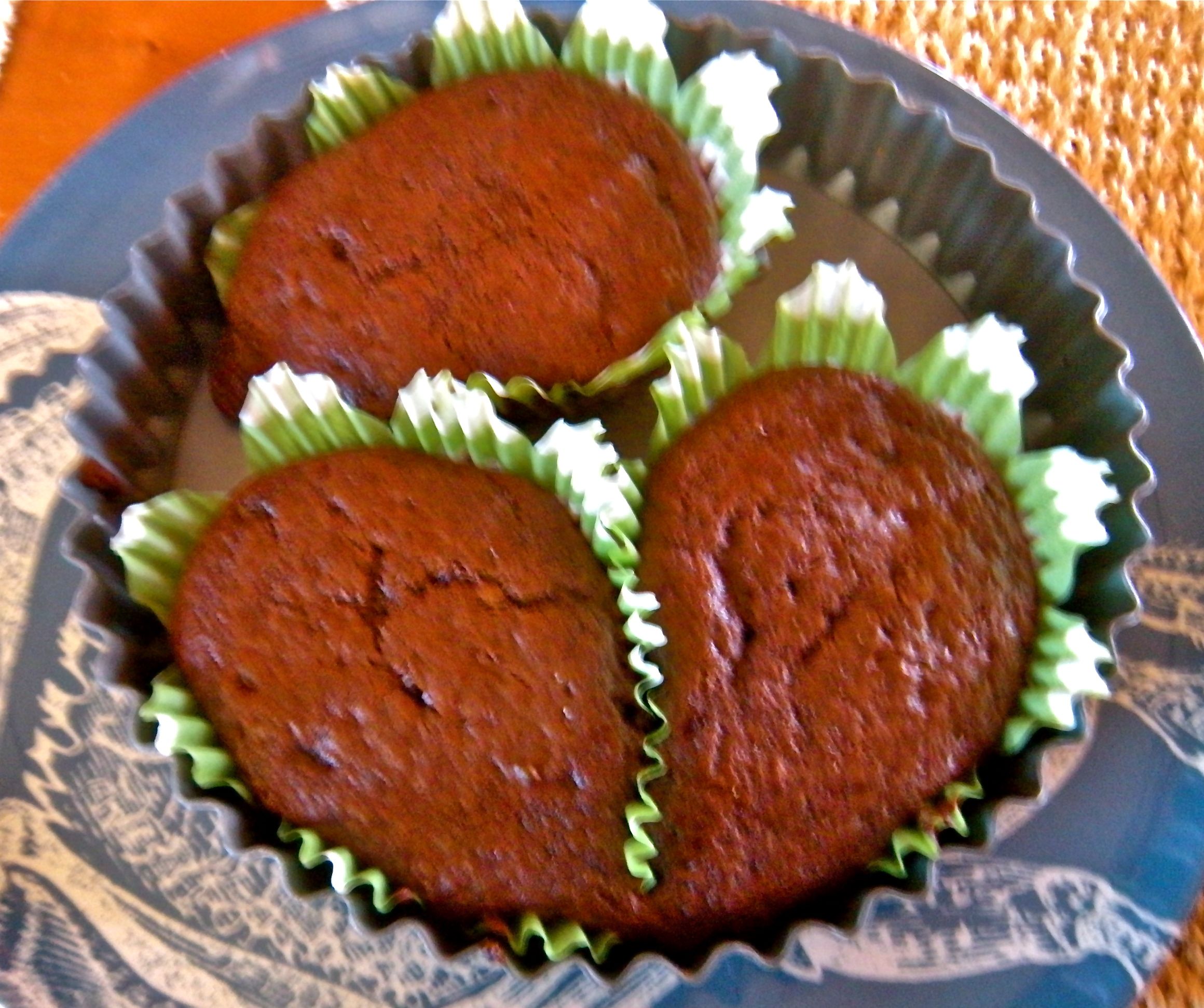
I used a 9 inch fluted antique cake pan which had an indented bottom. I buttered it thoroughly making sure all the ridges had butter on them. Filled the pan with the batter and found it was too full. Spooned out three paper muffin cups with batter to bake in a separate pan. cupcakes

Preheated the oven to 350 degrees. Baked the cakes with a sheet of aluminum foil underneath to catch any overrun drips. Thankfully, the batter held in the fluted pan.

Tested at 25 minutes and left in for another 8 minutes. When toothpicks came out clean, turned off the oven, opened the door and slid the rack halfway out of the oven. Let sit for 10 minutes so cake would not fall. Moved to a plate and countertop to cool.

Chocolate Sour Cream Frosting:

I’ve made very thin chocolate chip cookies before with cut-up bars of Lindt or Ghiardelli chocolate and toasted macadamia nuts before with yummy results. So instead of using semi-sweet chocolate chips for this frosting, I’m using a 3.5 ounce bar of Lindt dark chocolate (smooth texture,) breaking the chocolate into small pieces.

Melt chocolate with half stick unsalted butter in the microwave. Stir to combine.

Add 1/2 cup sour cream (no substitutions here) and 1/2 teaspoon vanilla. With mixer, add 1 cup confectioners sugar and taste. Add a little more up to 1 1/2 cups total so that it is not too sweet. Chill.

When cake and frosting are cooled, frost the cake (and cupcakes) leaving the edges showing to make it easier to loosen the cake from the fluted edge of the pan.

So, this goes to show that one can move forward from the past and that there are no hard and fast rules that one has to follow to make something delicious and a little different. Making the frosting from a dark chocolate bar as a departure from boring semi-chocolate chips elevates the flavor of the frosting (and the cake) to another level.

I guess that’s what they mean when they talk about letting go of the past and taking life to the next level, right?


“social media” . . .

a reclaimed wood-fired soy bottle with sprigs of dill from herb planter

a reclaimed wood-fired soy bottle with sprigs of dill from herb planter

Well, I’ve tried Facebook a couple of times now. For someone who is basically a LONER (in capital letters) it was a social experiment that I followed out of curiosity at first and then, out of habit. I guess that’s the way it gets to you.

For any of you who haven’t partaken being on FB, there is a subtle and very sophisticated system of “likes” that people you know (or don’t know) can put on things that you post or comments that you make. You can also be in or out with people depending upon whether they reply to your “friend” request or not. Simply put, it’s like being in junior high school again when some people like you for the shoes you wear or ignore you in the lunchroom because they’re, well, ignoring you. Despite the superficiality of this “likes” system, it does grab you and you start to care about it because as a human being, everyone wants to be “liked.” But being on Facebook puts you in the crosshairs of being “liked” or not – by people you don’t even know very well. Or being ignored by people that you do know well! See how subtle the passive aggressive nature of the “likes” system can be?

At first, it’s easy to get caught up in assembling “likes” on to photos that you put up or posts that you make about what’s going on in your life. Then, there are the die-hards who post weird things and then get caught up in one-on-one exchanges in public for all the world to see. One FB thread included a comment from his friend on EVERY post he made, as though he had a FB babysitter who would compliment him on some really far-out nonsense. I felt like telling them to “get a room.”

On another note, I’ve noticed that Facebook has gradually and insistently inserted advertisements from vendors on to one’s Facebook page. First, they appeared on the right side column where you could choose to ignore it or not. Recently, free form ads now pop up in the main column of your “home” page: ads selling bras, clothing, etc. When you click the “X” to hide or delete the ad, there’s a nervy four item questionnaire asking you why you want to delete it. Really?

The proliferation and expansiveness of the ad campaigns were enough to turn me off of Facebook. But it was an inconsequential annoyance compared to the time-consuming and fatuous entries made by people, trivializing our culture even more than it already is: “national dog day,” for example and arguing about politics with each other in a long stream of “comments” as though they mattered to anyone else but themselves. It’s more of the narcissistic trend for the narcissists. And since we are all susceptible to that too, or maybe we wouldn’t even be on FB at ALL, it’s a self-propelling prophecy.

Anyhow, I turned it off after I discovered how much I had allowed myself to be roped into that part of the culture of Facebook. So it wasn’t anyone else’s fault that I left, it’s because I found myself wasting so much time on stuff that was trivial, entered by people whom I’m not even friends with but only know slightly. I asked myself, “what am I doing? and why am I doing it?” There were no good answers. So, it was time to log-off.


cutting loose! . . .


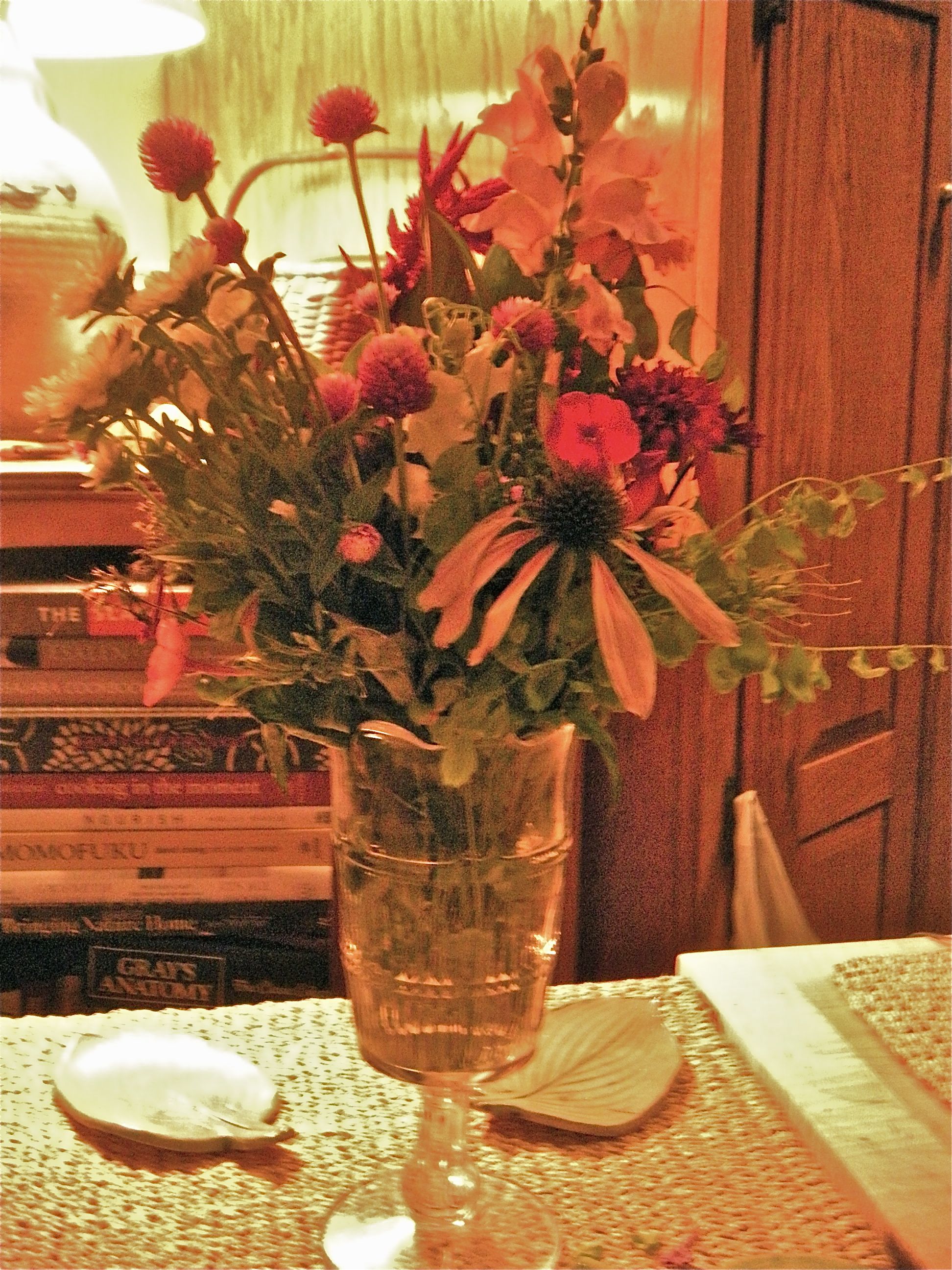
a sweet bouquet given to me by my daughter. . .

a sweet bouquet given to me by my daughter. . .

Sometimes, I realize that I’ve been in a rut. But funnily enough, I didn’t know I was in that bad of a rut until I’m out of it! Has that ever happened to you? If so, you’ll know that it just feels like nothing will ever change and it’s easy to get depressed and feeling hopeless about things. Then, suddenly, when the bottom doesn’t feel good anymore, the cloud suddenly lifts.

Maybe it’s because you get tired of yourself finally and find that you’re ready for a change. Maybe it’s because feeling worried or bad about things gets just plain boring anymore. Whatever it is, I’m over it, whatever “it” is, or was. I’m ready for a change. And that doesn’t mean getting in the car and taking a drive to Albuquerque either (I live in Massachusetts.) Even though I’ve had ideas about maybe visiting a friend who sounds like she could use some company. Or, maybe just change my routine, big time. Whatever it is, I’m ready.

And, I’ve got some good ideas about what’s going to be different too. It’ll be fun to see how it all turns out too! Sometimes, I think the human psyche has its limits for feeling a certain way. Maybe it helps to unload on some poor hapless listener. Being resilient means snapping back from being stretched too thin for too long. Maybe not. It doesn’t really matter, does it?


national peach pie day! . . .


peach pie with pastry wheel

Someone said that today is National Peach Pie Day.

So, here’s our contribution, made with a shortcrust lattice edging and woven top; no bottom crust; peeled fresh peaches from our local Concord farm stand, Verrill Farm. To sliced peaches, added a tablespoon of flour, heaping teaspoons of cinnamon and nutmeg, 1 tablespoon of agave nectar, dotted with unsalted butter before weaving lattice top (like a potholder when I was 7!)

Shortcrust pie crust made this a.m. in small food processor: 1 cup flour, 1/3 stick cold butter, 2 Tablespoons cold lard; 4-5 tablespoons ice water. Whirred dry ingredients until blended, then added ice water until blended into a ball– wrapped and refrigerated until ready to use.

These lattice strips were cut with a vintage handmade wooden pastry wheel. Brushed with egg wash and sprinkled with turbinado sugar. Baked at 375 for 15-20 minutes until brown and bubbly. Will serve with a scoop of Haagen Daz vanilla ice cream on warm pie after supper tonight.

living the good life . . .

DSCN8335_2

I’ve just finished reading “Loving and Leaving the Good Life,” a memoir written by Helen Nearing after the death of her husband, Scott Nearing (at the age of 100.) She died in 1997 and their books remain classics of the “back to the land” movement before others lived a life of self-sufficiency in a modern culture.

Their books are not just a chronicle of hard labor to be self-sufficient, theirs is a story of a deep partnership between two individuals who also happened to be married. Together for fifty years, they homesteaded in Vermont, building nine stone buildings and maple sugaring for income. She selected and placed the stone while he mixed the concrete to hold them together. Then, they relocated in Maine along the Penobscot Bay where they raised blueberries as a cash crop.

In today’s fast-moving culture, brutal politics and anything-goes environment of people wanting their 10 minutes of fame, it is refreshing just to READ these books, “Living the Good Life” and “The Good Life.”

Makes me want to think about what’s really good about our lives and to value it by improving relationships, simplifying food, playing and listening to music and reading books.

This one volume edition of Living the Good Life and Continuing the Good Life brings these classics on rural…
AMAZON.COM