mulberryshoots

"Tell me, what is it you plan to do with your one wild and precious life?" ~ Mary Oliver

“joy luck club” . . .
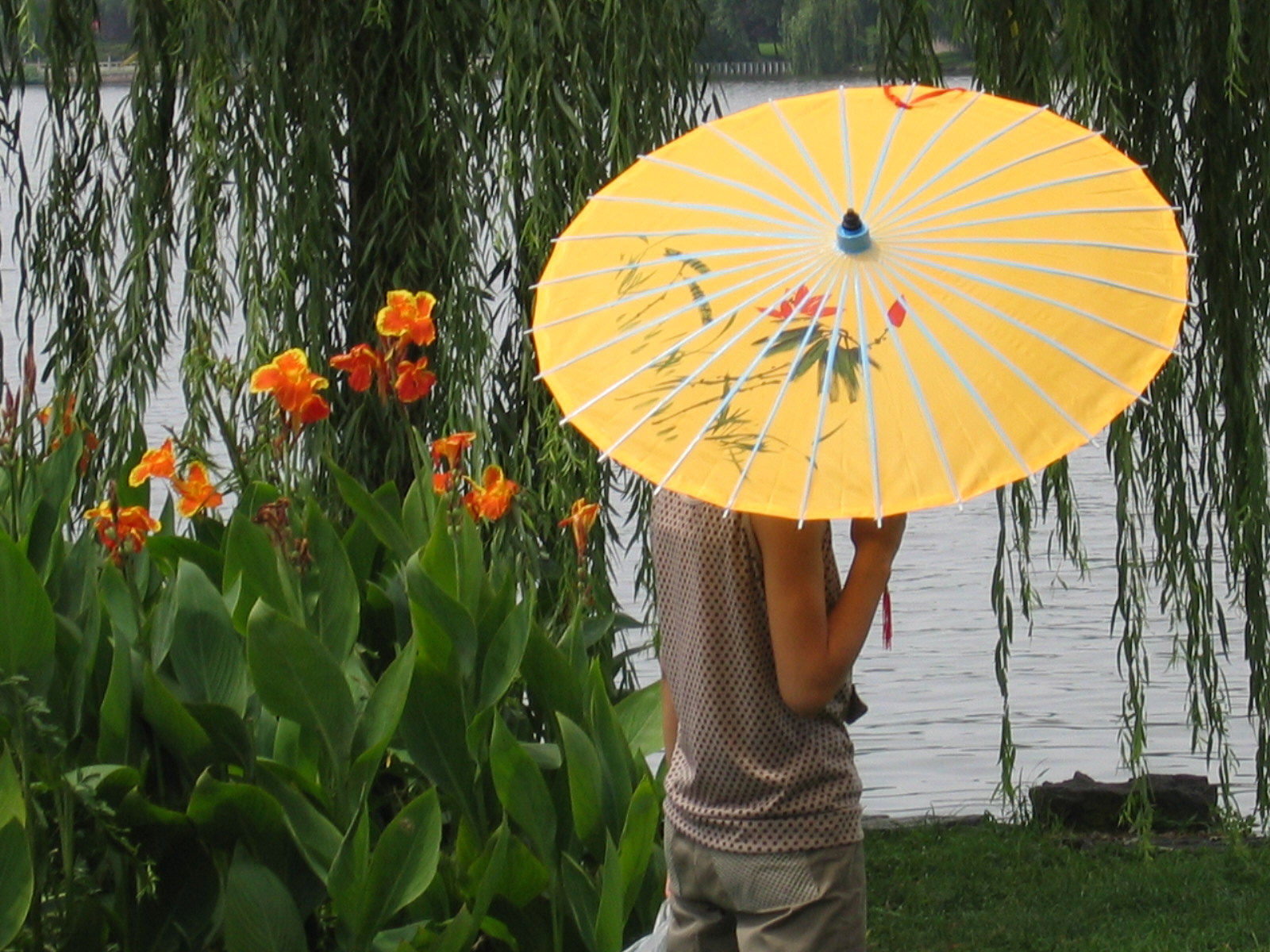
IM000320Have you ever seen this movie? It came out in 1993, the book and screenplay written by Amy Tan. In interviews with Tan, it’s evident that Tan’s mother both spurred her on and drove her crazy with her enigmatic attitudes. This quixotic combination of Chinese mother-daughter patterns is played out by four sets of Chinese mothers and Americanized daughters in this film, “Joy Luck Club.” For some odd reason, I’ve had it in the back of my mind to see it again and I’m glad I did.

Flashbacks to life in China illustrate the plights of multi-generational women who suffer due to the war, to unfaithful husbands, concubinage and the limited options for women with no means for supporting themselves if widowed or cast out by their families. This history and lessons learned endow these Chinese mothers with an urgency to see that their Americanized daughters do not share the fate of being devalued or unhappy, even if they unwittingly do it to themselves.

One of the most poignant passages for me was a mother who explained to her daughter that she was “trained to be a girl the Chinese way” according to three rules:

~ “desire nothing,
~ swallow everyone else’s misery,
~ eat your own bitterness.”

Rose, her daughter, realizes that she’s subjugated her own identity in her marriage because she felt less worthwhile than her husband. Lena feels inferior because she doesn’t excel in anything. Waverly confronts her mother’s pride in Waverly’s achievements as a chess prodigy only to lose her self-confidence and gives up playing altogether.

Does this sound very Chinese? Maybe or maybe it reflects life all over. As for me, I’ve learned something from watching the movie again. And that’s the realization that I don’t have to be a safety net for everyone all the time. And that there’s still lots to do!
perspective . . .

blue bestYou know how sometimes you go along for YEARS thinking that your life is or has been a certain way? Then, a conversation happens and it flips your perspective upside down? This happened to me yesterday when I was talking with someone I had known quite a long time, but not all that well. She is single and manages her own small business but is doing better, especially now that the economy seems to be shifting forward in a more positive direction.

We were talking about being lucky about our lives. I had thought about myself as having been “unlucky” in love because my first husband and I had a mostly silent marriage for over a quarter of a century before we parted ways and I didn’t marry my “first love” whom I had sporadically kept in touch with for decades, knowing he loved me in his own way all that time. Then, I met G., my second husband and we have been together for over 20 years. That is why I say on this blog that “life is long,” and that dreams eventually come true if you can wait long enough. At least that’s what happened to me.

“Meant to be” (MTB) is a good way to think about things, I think. My granddaughter has a very nice boyfriend who is a year ahead of her in school and going off to college soon. I wrote to her that if it’s “meant to be” then, no matter what they do to mess it up, they’ll still end up together eventually. And if it’s not “meant to be,” then no matter what they do to try to stay together, it won’t work. So, they might as well enjoy their time together since it’s largely out of their hands. She agreed, I was happy to read in her note back to me. I wish that I had known more about this “MTB” perspective when I was her age!

The other thing that I noticed to my friend is that I’ve also been extraordinarily lucky about the homes I’ve managed to find throughout my adult life. Luck played a large role each time in finding: the rent-controlled 12th floor apartment on West End Ave. with a river view in New York City during graduate school; the Lexington Victorian house with herbaceous border and apple trees where the kids grew up; the Georgian townhouse in Salem on the Common when I was newly separated; the contemporary condo on Lake Quinsig where I moved in a strange town before I met G. Then, moving to our Queen Anne Victorian home which he has restored for the past couple of decades. Serendipity had mostly to do with each of these finds and life transitions, it seems to me.

At the end of our visit, I realized, really for the first time, that I’ve been LUCKY in love, (not unlucky,) having loved and been loved by three great guys for long stretches of time and that I’ve landed on my feet in environs that are just as extraordinary. That I worked my butt off in a career that was extraordinarily stressful for a very long time may have been a way of paying my dues for part of my good fortune.

Luck, good fortune and “meant to be” were combined in my life as it unfolded. Thanks to any and all Helpers in the Universe for providing for me along this Unknown Way. Many…many…thanks.

a quiet day . . .

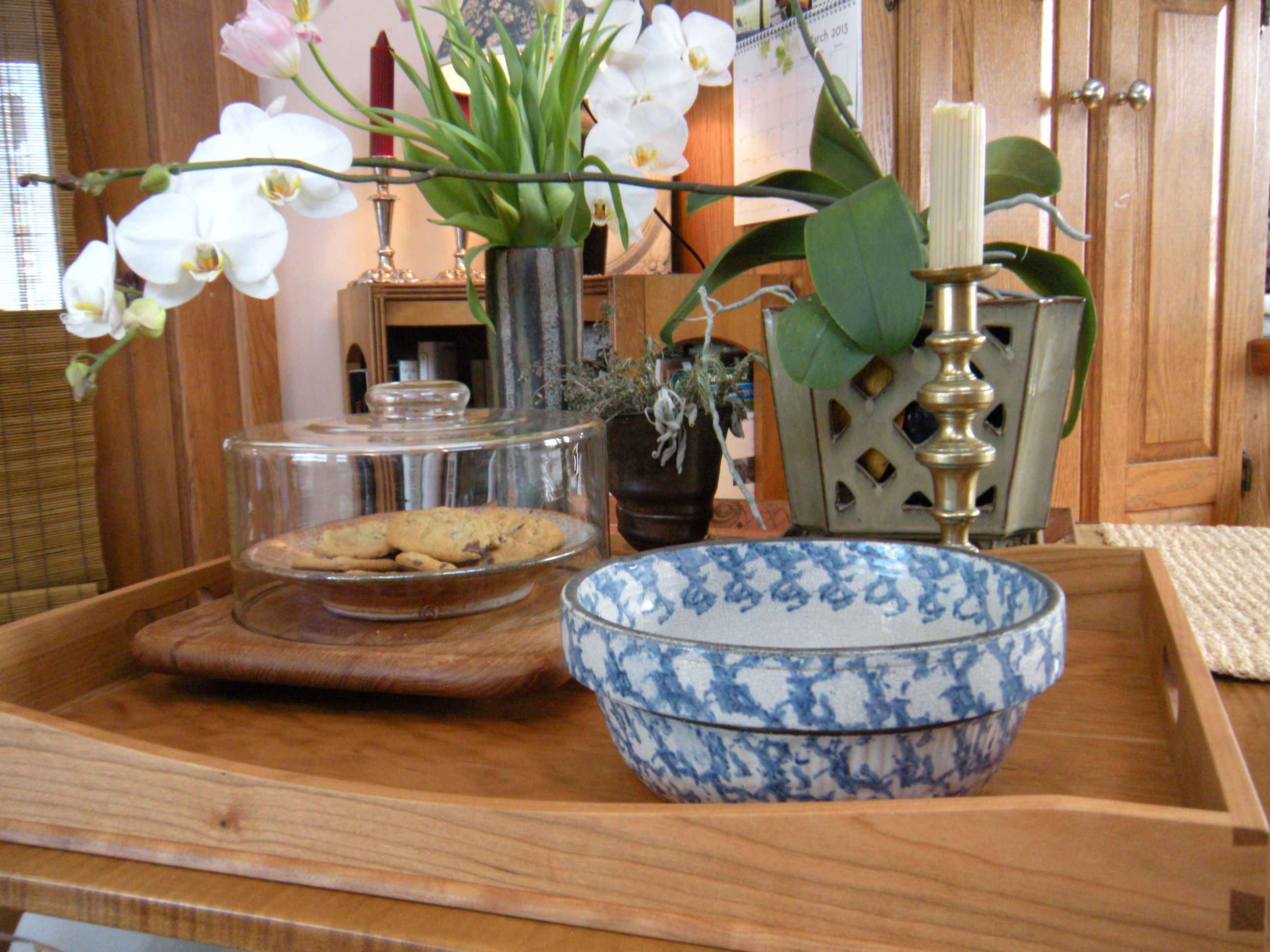
flowers with rice cookerHere it is, almost the official day of Spring this week, and it’s gently sleeting outside. One of the heaters is on the fritz downstairs (we have geothermal heat pumped up from a well underneath the house) and sometimes the compressors of the individual units decide to act up. It’s the vagaries of living in a complex of living units that needs to be tuned up just like pianos, some of the time.

I’ve been experimenting with cooking rice, Japanese style, as introduced to me by my daughter, M., who lives in Minneapolis. She gave me the idea of mixing different kinds of rice and keeping a rice cooker humming so that dollops of rice can be had any time of the day, even for breakfast with a soft-boiled egg on top. After trying different combinations including chicken broth, I think my favorite mix at the moment is half Chinese sweet rice (sticky) and half Lundberg’s short grain brown rice. I heat up some dashi broth and add about four short bursts of Ohsawa soy sauce. Mix it up and add twice the amount of broth as rice. Turn the cooker on, and soon afterwards, I can smell fragrant steam rising from the pot.

Yesterday for lunch, I had a small bowl of rice along with one preserved salted duck egg (from the Asian market) and a few pieces of pickled cucumbers. Satisfying, simple and low in calories. Last night, I cooked a dish I made up combining pieces of raw shrimp, minced green onions, baby spinach, stemmed and sliced beaten into fresh eggs. I heated up a skillet with grapeseed oil and made small pancakes with shrimp, spinach and onions in each patty. Turned them over when crisp and served with a dipping mixture containing oyster sauce, Japanese seasoned vinegar, a little soy and a tiny bit of agave nectar. Bowls of the sticky rice with these crisp shrimp and spinach fritters and some pickled cucumber made up our table. Filling and enough flavor to satisfy our appetite. Sometimes, I also add fresh bean sprouts and fresh cilantro to the shrimp mixture. Good both ways!

Afterwards, I came across the Schubert four-hand Youtube clip that I appended to the last post. G. reminded me of another piano duo, Anderson and Roe, that we have enjoyed listening to in the past. Their arrangement and rendition of Michael Jackson’s song, “Billie Jean” is fun to watch and listen to, as is their playful outdoor medley filmed at a Texas University campus.

“Billie Jean” link: http://www.youtube.com/watch?v=yioMN-meE0o

“Viva la Vida” link: http://www.youtube.com/watch?v=5SobrVBFwJo

My life seems to revolve around food and music. I guess that’s not such a bad thing, is it? The other day, I heard about a recipe for making huge black pepper and gruyere popovers from an Austin, TX restaurant clip on the Food Channel. I’ve written about making popovers earlier and can’t wait to try these out, served as a meal with a salad. Maybe I will make them as the main feature for Easter dinner, along with an arugula endive salad with glazed walnuts and pink grapefruit segments. Yum!

meaning. . .

DSC_0567
What gives meaning to a life? I have been thinking about this since returning from visiting my 92-year old relative this past weekend who is weak and yet still lucid enough to send me off with an instruction to “take care of my family, take care of myself. . . and be happy.”

Is that all it takes? I take care of my family all the time, probably a little better than I take care of myself. But I think that last part about being happy is both the simplest and the hardest to carry out.

For example, I think one can DO lots of things to make yourself happy–and only we know what those things are that we especially treasure and enjoy. One of my discoveries of late is a “Rondo” movement of a Beethoven sonata played so tenderly and beautifully by a British pianist named Paul Lewis. (It’s the fourth movement of Sonata #4 in E-flat major, Op. 7.) G. and I went to a concert at Jordan Hall in Boston and heard Lewis play Schubert sonatas this January. Listening my way through these Beethoven recordings, I am amazed and taken aback by the freshness of the interpretations, so musical, clean and touching in its beauty of melody and line. Rapture is one way to describe it, I think.

[Here is a link to the piece on Youtube played by Daniel Alvadaras, someone other than Paul Lewis, but you can get a sense of the piece. Lewis’s rendition is available in the collected Beethoven sonatas.)

Actually, it has made me think about my mother and how important music was to her, all the way to the end. When asked why she went to the Unitarian Church that she had belonged to for decades when she said she didn’t believe in the afterlife, she answered simply, “for the music!” She sang in the choir and played recorder too, although she didn’t think that counting beats or measures was that important. I think one of her greatest wishes in life would have been to play an instrument as well as my sister played the violin and viola and I played the piano.

So, listening to Paul Lewis play this Beethoven “Rondo” makes me very happy today. DO-ing something like this makes me feel that BEING happy is a state of grace, whenever it appears. I am also struck by how individual our moments of happiness are. Someone else might not hear or experience what I am when I’m listening to this music. So many of the things around us that we cherish and enjoy are mere objects to other people. A line in a book or poem, flowers in a vase tilted in a certain direction; a meal, simple and warming may have meaning to us and make us happy but might not suit anyone else. But, if we’re happy, that’s a good thing.

Has something made you happy today?

Postscript: Icing on the cake tonight! Finding a YouTube clip of Paul Lewis and Imogen Cooper playing Schubert’s Fantasie in F minor. Luscious! Here it is!

DSC_0564

remembrance. . .

May-July 2007 354_2Last week, I received an email forwarded to me, telling me that my favorite cousin, PF, had had a stroke. Today, I visited her on her 92nd birthday, her three sons, their wives and children congregating at the family home, taking turns coming to see the matriarch in her hospital room on her birthday. They said she had fallen last night on the way to the bathroom, taken to the ER for an MRI to see if she had injured her head, keeping her up until 5 in the morning. Already weak, I was told she was very tired and might not be awake enough to recognize me.

Not to worry, as she said my Chinese name as soon as she saw me: “Sung-mei,” and held my hand, her wrinkly hand over mine. It took awhile before I gave her gifts that I had brought her that I thought she might like: a soft mohair taupe knitted capelet from Glasgow, Scotland, which she immediately took in her gnarled hands to warm them up, not caring if the soft thing went over her shoulders or not. She whispered in Chinese that she “liked it very much.” A deep mulberry fluffy throw went over her knees replacing one that had kept her lap warm. I attached the tiny earbuds to my Apple Ipod shuffle and turned it on to play music I had downloaded last night. It was a movie score, composed and conducted by her late husband, a famous clarinetist and composer who had died in 2003.

Pei fen
Of all my Chinese relatives, PF was the one I held closely as a role model. Unlike my mother who revered convention, PF and I were free spirits, fiercely independent and not afraid to experiment with food, making things or using things in different ways. She would use some pottery bamboo tools as hair sticks, winding her long dark hair quickly into a twirl on her head. Now, her hair was cut to shoulder length, but I brought a cherry burl hair stick to show her, because she had loved natural things like it in the past.

Back at the house, her three sons were busy behind closed doors discussing family business while the women sat in the kitchen doing a crossword puzzle. The dark red brick linoleum in the entryway and kitchen was an identical pattern to the one that was in my Lexington kitchen when the kids were young. I remember washing and waxing it to a dark shine so many times. It was a fond remembrance and an amazing coincidence that our kitchens had had flooring in common all those years.

As I leaned over to say goodbye, PF said slowly but very clearly to me: “Take care of your family, take care of yourself. . .and (a pause) be happy!” I’m glad that I went and had a chance for us to visit one more time on her 92nd birthday today.

artful recluse(s) . . .

DSC_1308This morning as I sat at the table with the sun streaming through the kitchen window, sipping my freshly made smoothie, I came upon the art section of the NYTimes which had a full page painting from 1644 of a Ming dynasty painter. The Asia Society has just opened an exhibition featuring works by reclusive artists so many years ago.

I was taken by the concept since it resonates with so many of my values and perspectives, including the search for Taoist hermits in the mountains of Sian that I had read about earlier. William Porter, nicknamed Red Pine, described his travels seeking reclusive Taoist priests and priestesses who lived alone in huts, subsisting on very little food, rainwater and sitting among pine needles. It was a romantic search, buffered by humorous encounters with some hermits, “hiding in plain sight.”

Living in solitude has long held an appeal for me and the journals of May Sarton, especially “Plant Dreaming Deep” and “Journal of a Solitude” struck a familiar chord with me when I had three kids at home and no solitude as such at all. I tired of reading Sarton after awhile because her writing became more whining and complaining amidst a lifestyle that included a home in New Hampshire and then on the coast of Maine, a multitude of flowers, inside and out, her loyal pets and friends who showered her with care and gifts of food, even as she continued to wring her hands about not being recognized sufficiently as a poet. That’s probably because her journals were her tour de force with women readers during her generation of writing–not poetry. In any case, her writing about the everyday was different from Anne Morrow Lindbergh’s but there was a common theme of domesticity around houses, flowers, food and gardening that appealed to many of us at the time.
DSCN3686
I don’t ask myself any longer why living inwardly is appealing. It just is. I have no desire to go on a cruise (esp. when many of the ships keep breaking down) where you’re trapped with hundreds or thousands of people whom you can’t avoid running into. Henry Beston wrote many years ago about living in a small shack which he wrote about in his famous book, “The Outermost House” during the 1920’s in Eastham, Cape Cod. To preserve those areas, the Cape Cod National Seashore reserve came into being in the 1960’s.

I guess if you’re artful or not, taking time alone can allow for a space for reading, rumination, creating and making things that reflect one’s inner senses and individual skill. At least, there’s a possibility to nurture and inform one’s spirit if taken.

For me, the last few weeks of winter have been filled with knitting, the amaryllis and orchids blooming, the canary singing, and I’ve even taken upon myself to (finally) read Proust’s “Remembrance of Things Past,” having picked up a used, boxed three-volume Pleiade edition. Come to think of it, Marcel Proust was a reclusive artist too, writing 4000 plus words in his dimly lit cork-lined bedroom describing the mores and human vagaries of French society which are so universal that they may mirror our own.

Let’s see how far I get with THAT while being grateful for peace and quiet, and most of all, time.

doing our best . . .

DSC_0157_2Do you feel down and out sometimes? Even after you’ve made things for other people, helped your spouse when he’s wet and cold from blowing snow for the second blizzard in two weeks, watered the plants, sweeping up the dried leaves and feeding the canary fresh seed and water?

Are you ever hard on yourself when you read about what others have done, especially if it’s something you would like to have done yourself? Well, here’s an antidote to all that:

The fourth (and final) agreement in Don Miguel Ruiz’s book, “The Four Agreements” is “Always Do Your Best.” He writes:

Just do your best–in any circumstance in your life. It doesn’t matter if you are sick or tired, if you always do your best there is no way you can judge yourself. And if you don’t judge yourself there is no way you are going to suffer from guilt, blame, and self-punishment. By always doing your best, you will break a big spell that you have been under.

Fine. I think it’s easier to always do your best than it is to stop judging yourself. So, maybe a change in emphasis to always doing our best is to also remember just not to judge ourselves all the time. That might be the key to happiness, don’t you think?

Amen.
DSC_0637_2

winter windowsill . . .

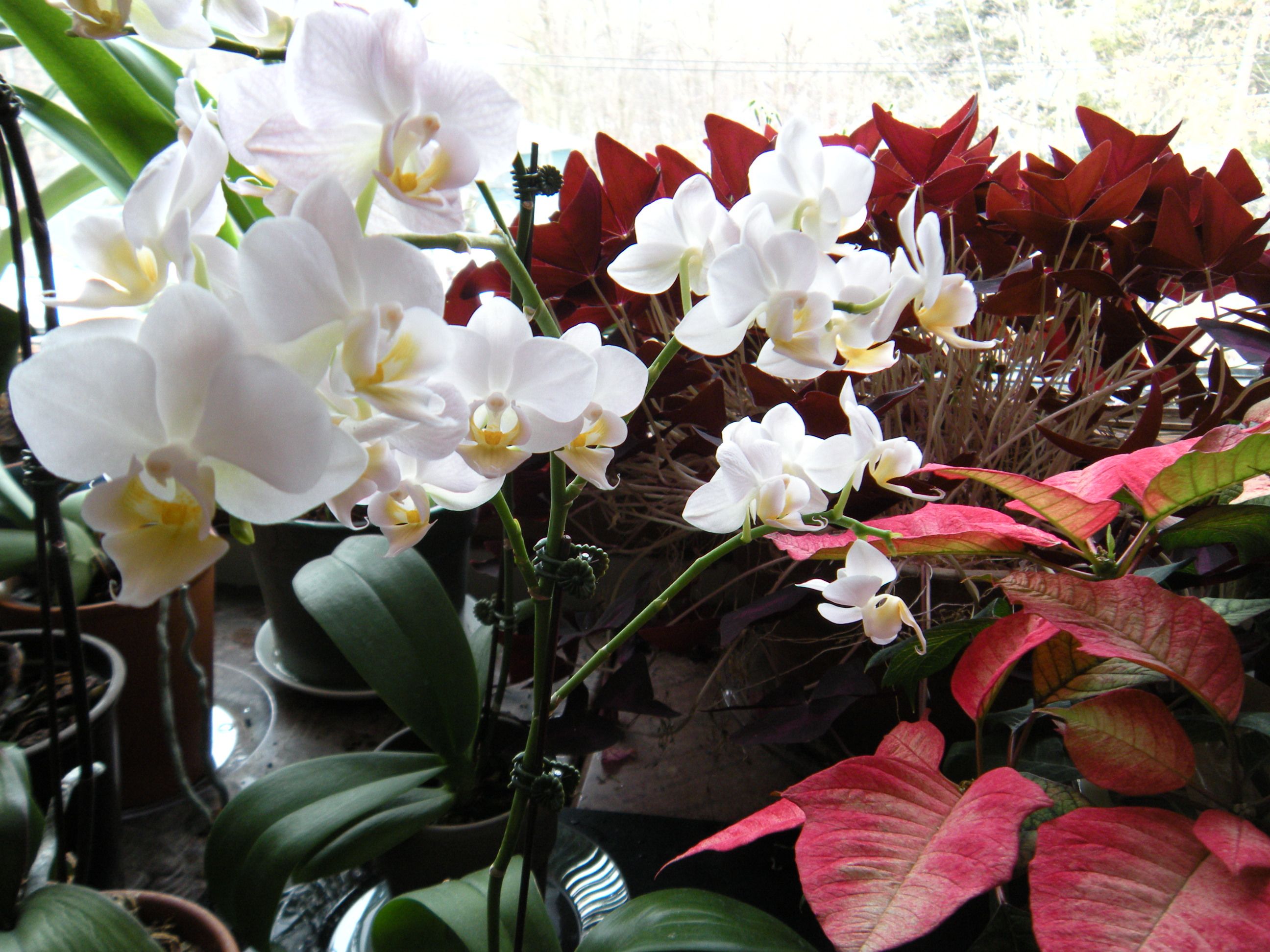
orchids 1It’s March, the Ides of Spring but it still feels like winter outside. This is the first weekend in a long time where we have not had a snowstorm and we are told that daylight saving time will be upon us next weekend!
orchids with oxalis
As I watered the plants this morning, it seemed like a good idea to capture some of what’s going on there: the amaryllis blooms are heartening since I forgot all about these summered-over pots during the Christmas bustle. Discovered hidden on the inside porch and given a little water, they appear in full regalia. It never fails to amaze me when amaryllis bulbs come back year after year. These neglected late-bloomers are a nice boost during the quiet early months of the new year.
orchids and amaryllis
amaryllis

During this quiet hiatus between the seasons, we are thankful for all the orchids, amaryllis and other plants humming along on our winter windowsill.

the middle way . . .

Have you ever overreacted to something and then felt sorry afterwards? I was thinking about this and have come to the conclusion that disappointment is directly proportional to expectation. And you know what a rocky road that can be, right? Sure, the Buddhists and the Taoists and just about everybody else, Zen and otherwise, caution us not to have expectations. To tamp down our ego so that we can take the middle way. That would be nice but difficult sometimes because we are also human. Oh yeah, I forgot about thatIMG_9691!

Being human, we get excited, pouring love into things that we give those whom we care about. Sometimes their reaction is lukewarm, or delayed or whatever it is that didn’t meet our anticipation of what we had hoped for as their joy.

I’ve learned an important lesson which is kind of embarrassing at this stage in my life. And that is, that other people are not like me. In other words, the way that I might react to things is not the way other people do for the simple reason that we are different. Or there are other things going on. Or, whatever. I wonder where my naivete came from and how it has lasted this long?

Acknowledging to myself that I can be human and that others can be human differently, expands my little window on life. Somewhere within, the middle way runs through it.

(woman)kind . . .

DSC_0127For a long time, I’ve been thinking about how we women are, that is what separates us or makes us different from men: or mankind. For one thing, I wonder if women have really changed all that much from the days of our mothers or grandmothers. Surely, our daughters’ generation is more outspoken in their ways and in their choices, aren’t they?

At the same time, I also see many of us still putting our needs behind those of our partners, our children or our work. Sure, there are new visible women who have made it, like Sheryl Sandburg of Facebook who has just written a book counseling other women on how not to hold themselves back. Not that many have the resources that she does (help and money) to take care of children and households while forging their professional pathways in life. Will changing our body language and how we present ourselves to others make that much of a difference?

I was just reading from Anne Morrow Lindbergh‘s memoirs, “Locked Rooms and Open Doors – Diaries and Letters 1933-1935” in which she describes being terrified as Charles Lindbergh, her infamous husband, pilots their plane through a dense fog for over an hour, not speaking to her, looking for a place to land. Another one describes how she puts together a small study area for him, with his favorite books in the bookshelves, a standing lamp from the main house to create a space to please him, even though he doesn’t seem to notice when he sees it. And that’s all right with her, she says.

I don’t know, you know? Doesn’t this ring a bell like Jennifer Lawrence’s Oscar-winning character in “Silver Linings Playbook” where she complains about “waking up feeling EMPTY” because she does things for others, all the time? Maybe there is a compulsion gene that is in our female DNA that propels us to do things for others in order for them to be happy (at least in our way of thinking?) Or is this just our culture from the time we were young and took care of our dolls and stuffed animals?

There’s been a fuss recently about the 50th publication anniversary of Betty Friedan’s book, “The Feminine Mystique” and columnists writing about how they miss Bella Abzug. Gloria Steinman is still being interviewed, but I never felt personally that any of them represented me during the first wave of the Feminist movement.

I still feel that our issues as women are personal to the degree that we each have things to work out based on our individual situations. And that somehow, nothing much has happened to keep ourselves from constantly wanting to please those around us, to be accepted and acceptable by those we want approval from.

Perhaps it is just part of the human condition that what we do and care about others is also likely to be taken for granted some of the time. Maybe there will never be a movement that will transform or free us because this is just the way things are. Whenever I’ve brought up these thoughts with other women, they nod their heads in recognition and say, “yeah, that’s big.” Even so, I’m glad that I have daughters and granddaughters–a woman kind of family.

Postscript: By an amazing coincidence, PBS is airing “Makers: Women Who Make America” a three-hour documentary on the women’s movement. Here is a link to the trailer: http://video.pbs.org/video/2273015711/