mulberryshoots

"Tell me, what is it you plan to do with your one wild and precious life?" ~ Mary Oliver

Category: Food

good things . . .

eggplant parmigiana ~ the best ever!

eggplant parmigiana ~ the best ever!

I’ve had a craving for tender, crisply fried eggplant recently and bought a medium sized one at the store last Friday on the way home from my hospital visit to have the sutures taken out.

The first step I took this morning was to make some enriched panko breadcrumbs: melting a dollop of unsalted butter in a skillet, pouring in a fresh packet of panko crumbs, stirring gently to distribute the butter; a couple of sprinkles of Lawry’s garlic salt from the gigantic container I bought at Sam’s Club, and dried parsley to provide some nice color. On low heat, I stirred the crumbs until they turned slightly golden and smelled fragrant from the garlic salt. Cooled and then transferred to a plastic container for future use.
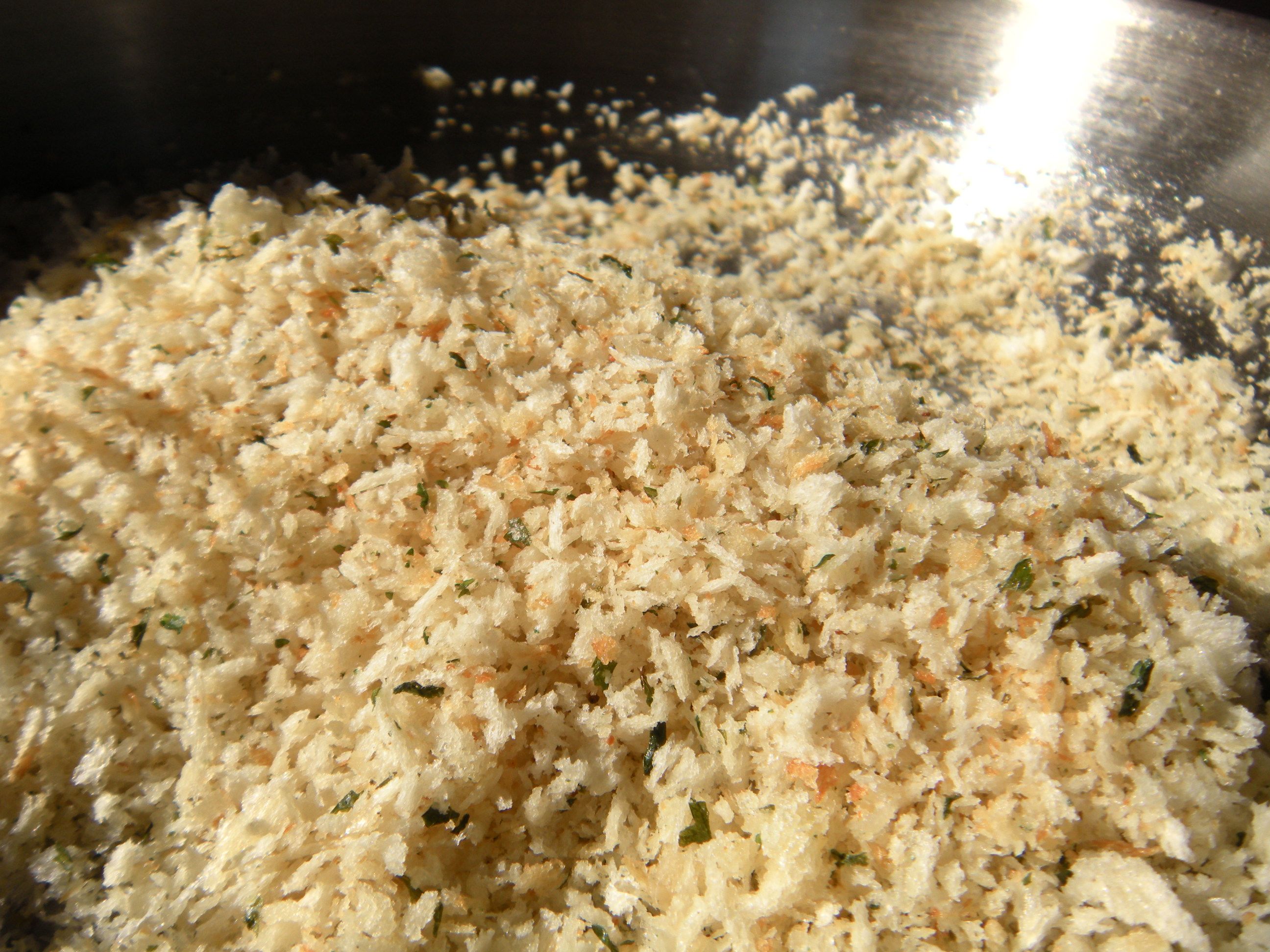
panko bread crumbs toasted in butter with garlic salt and dried parsley

panko bread crumbs toasted in butter with garlic salt and dried parsley

In the afternoon, I washed and sliced up the eggplant into slightly thinner slices than usual so as to ensure tender crispiness and also to avoid having to fry thicker pieces longer and then have to drain the slices of fat. Sprinkled the raw eggplant with Maldon salt. Let sit for an hour or so on the kitchen table. Then wiped the salt and liquid clean, drying the eggplant slices. Then, the three-fold dredging steps, dipping each slice of eggplant in flour, beaten eggs, and prepared panko breadcrumbs. Oil simmered over medium-high heat in the skillet, a quick fry, turning the slices over when golden and then draining the fried slices on paper towels. I had to clean the pan halfway through to avoid burning the eggplant and started over with clean oil, not smoking. I set the slices aside to rest.
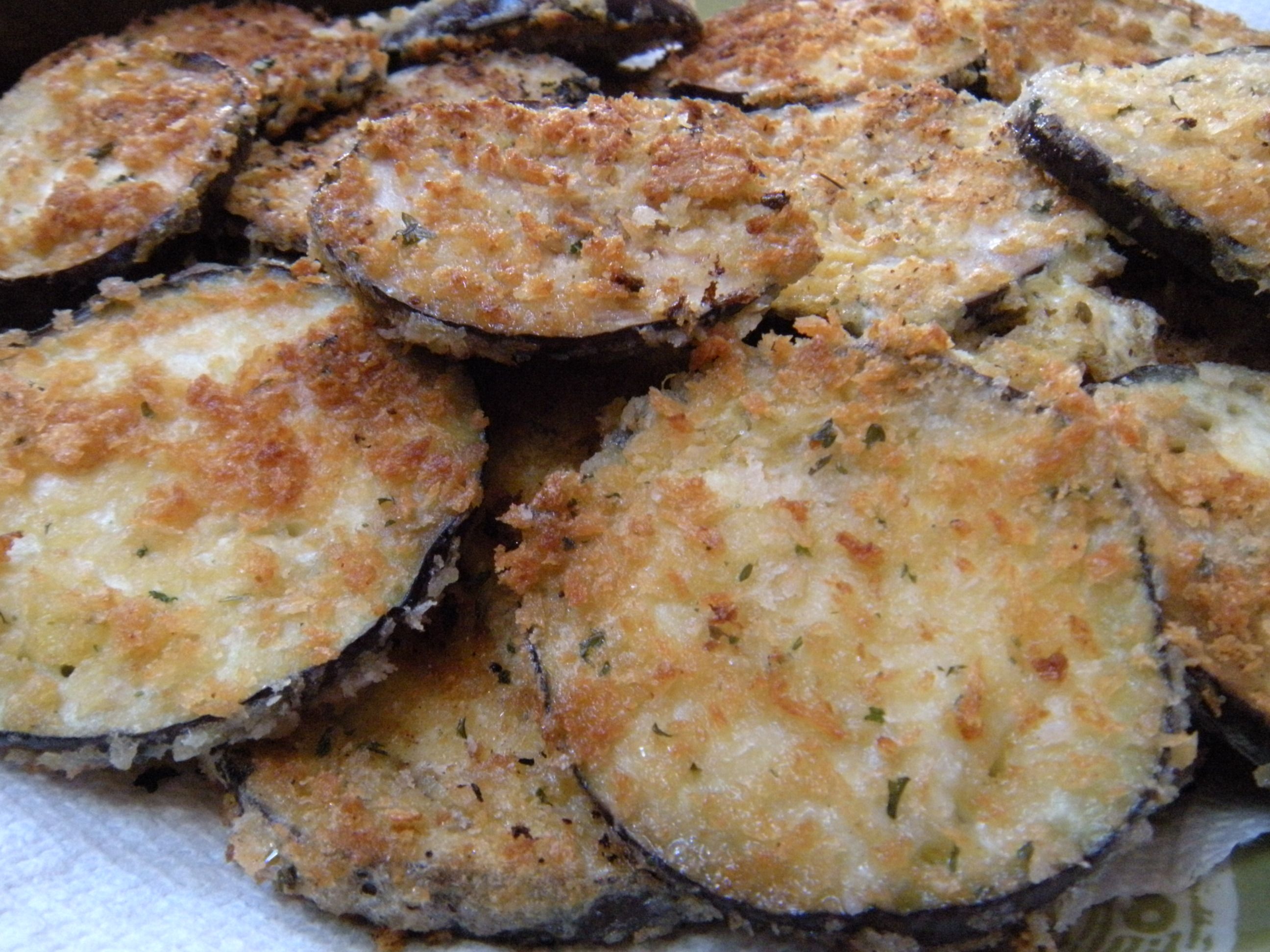
breaded eggplant slices . . .

breaded eggplant slices . . .

Then, I opened a can of San Marzano tomatoes and ran them through the Vitamix, adding some leftover diced tomatoes that were in the fridge used earlier in vegetable soup. Tasted the tomato puree for seasoning. It was simple and free of additives found in brand name sauces, just Italian tomato taste. Spread a thin layer on the bottom of an old oval copper au gratin pan. Placed eggplant in a thin layer, added scant layer of sauce, fresh mozzarella cheese and hand-grated fresh parmesan cheese.

San Marzano tomatoes. . .

San Marzano tomatoes. . .

Turned oven to 375 degrees. When almost time for supper, slid the copper pan into the oven and baked for about half an hour until golden brown on top. Made a salad of lettuce, cucumber and red onion.

While i was dredging and frying the eggplant slices, I had a fleeting thought that maybe making this dish was too much trouble. Later, however, G. and I agreed that this was probably the best eggplant parmigiana we’d ever had. I think it might have been due to a) thinner eggplant slices encased in tasty breadcrumbs; b) very little unprocessed and simple tomato sauce that did not drown the eggplant nor made it soggy;  and c) real parmesan cheese hand grated at the last minute, added to the mozzarella cheese.There was no salt at all except for what had been wiped off the raw eggplant after curing it of its innate bitterness. We’re so glad there’s enough left over for us to eat again tomorrow!
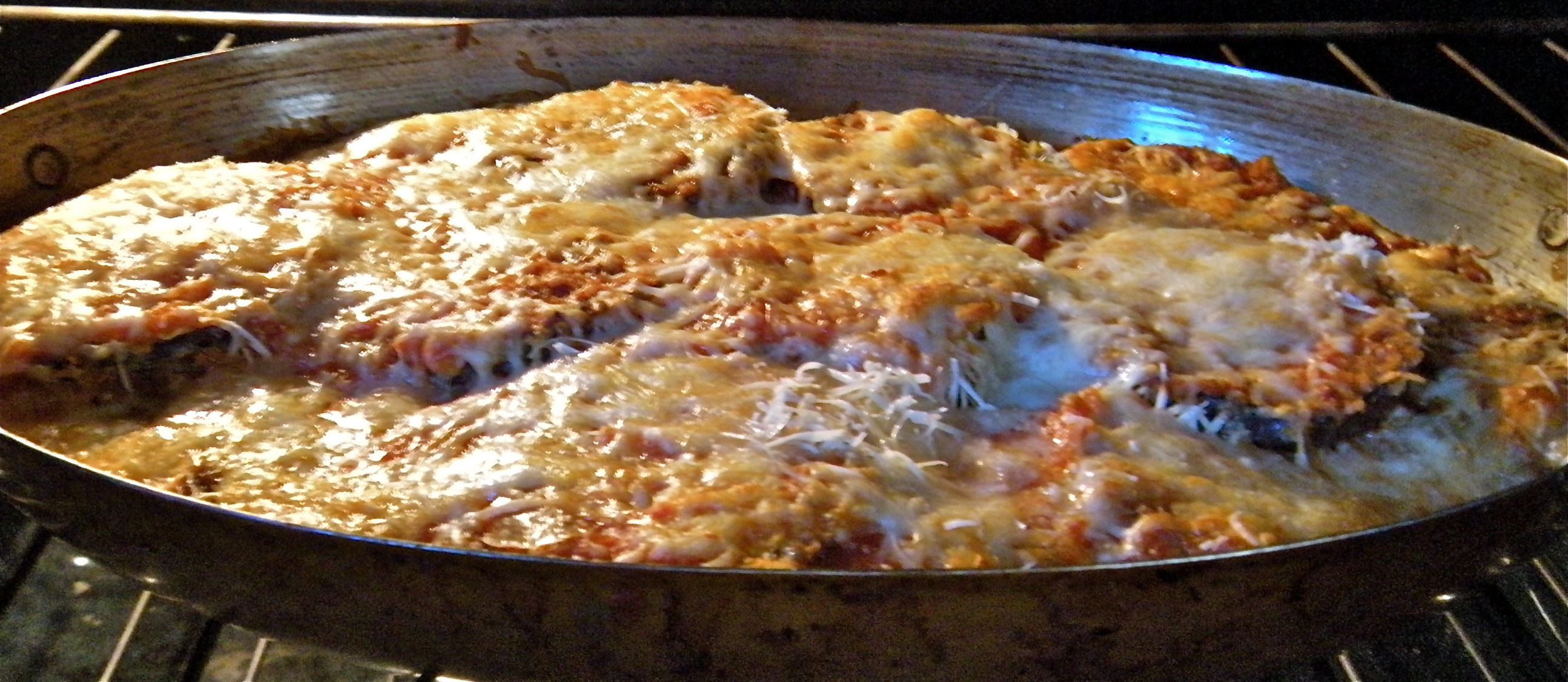
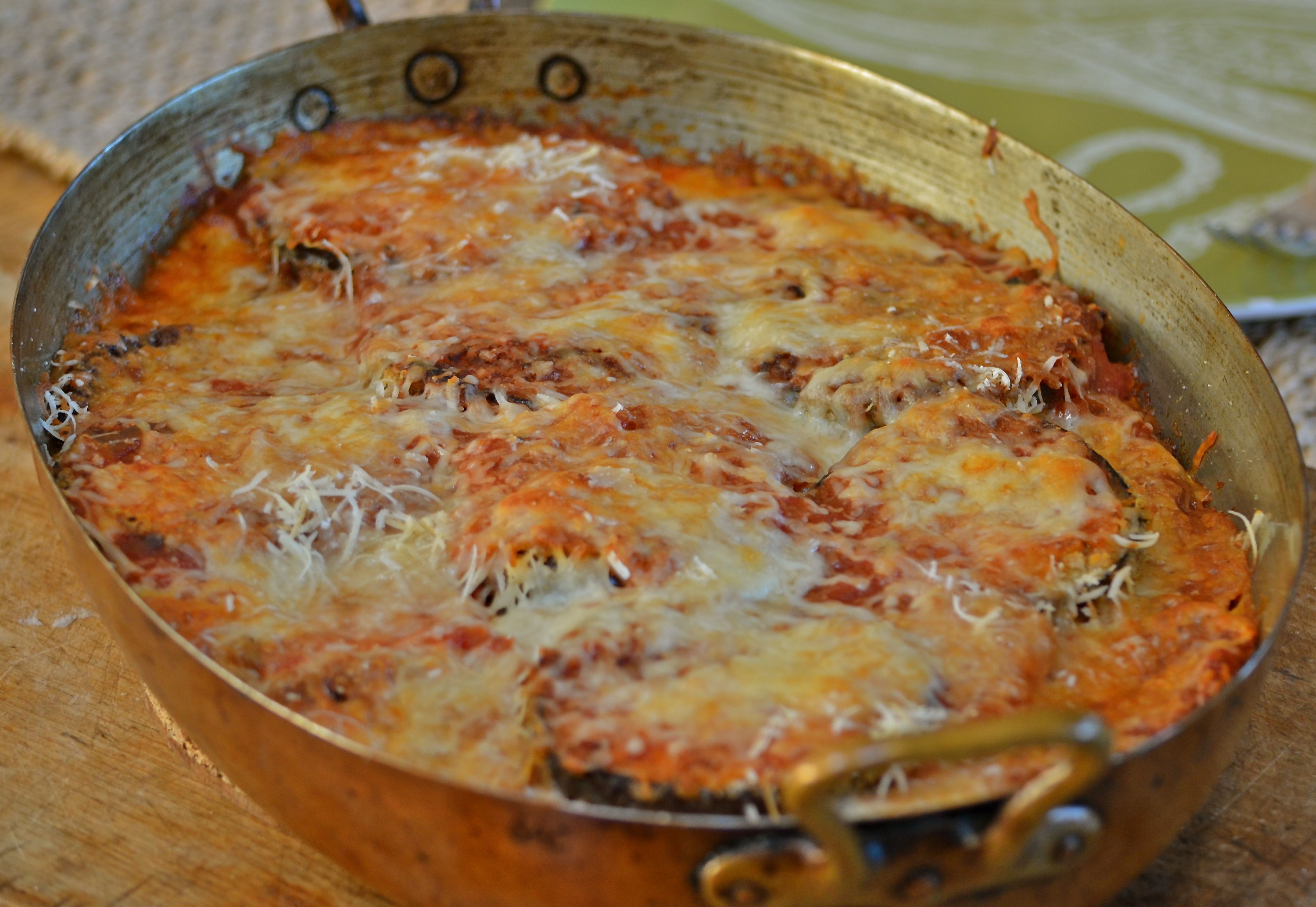
eggplant parm in the oven. . .

eggplant parm in the oven. . .

For dessert, there were still two pieces of the sour cream chocolate cake that I made the other day–half a recipe in a small square pan, frosted with ready-made chocolate icing. “Delicious!” G.’s mother commented after they finished theirs last night. His mother is ninety-five and lives across the street with G.’s brother, J.

This afternoon, G. handed me his Nikon to download photos of the cardinals who sing outside our home and flit around in the trees and bushes. We feel they are a positive sign from the universe and protect us with their colorful presence. G. maintains there are two pairs of cardinals whom he has observed squabbling with the chickadees for territory. Here are some images to enjoy!

Cardinal 2cardinal 3

sunday . . .

leek and potato soup . . .

leek and potato soup . . .

It’s a calm, sunny Sunday today. No snow. No rain. The sun shines through the windows and the skylights, shimmering on the wooden floors in the kitchen and our sitting room. The sun basked, warming our backs as we sat at the kitchen table, reading the newspaper and finishing our breakfasts.

Today is a slower cooking day: this afternoon, I’ll peel some russet potatoes, rinse a bunch of leeks carefully separating the leaves to make sure that dirt goes down the drain and not into the soup. Chop the leeks into small pieces and brown gently with a generous dollop of unsalted butter in a heavy pot; then add the cut up potatoes, stirring in some chicken stock. Simmer the whole thing with the lid on top, the fragrant soup finished off with light cream after it has been pureed in the VItamix and cooled on the kitchen counter. I’ve been looking for some vintage silverplate soup spoons with rounded bowls which we will use for the first time with tonight’s supper.

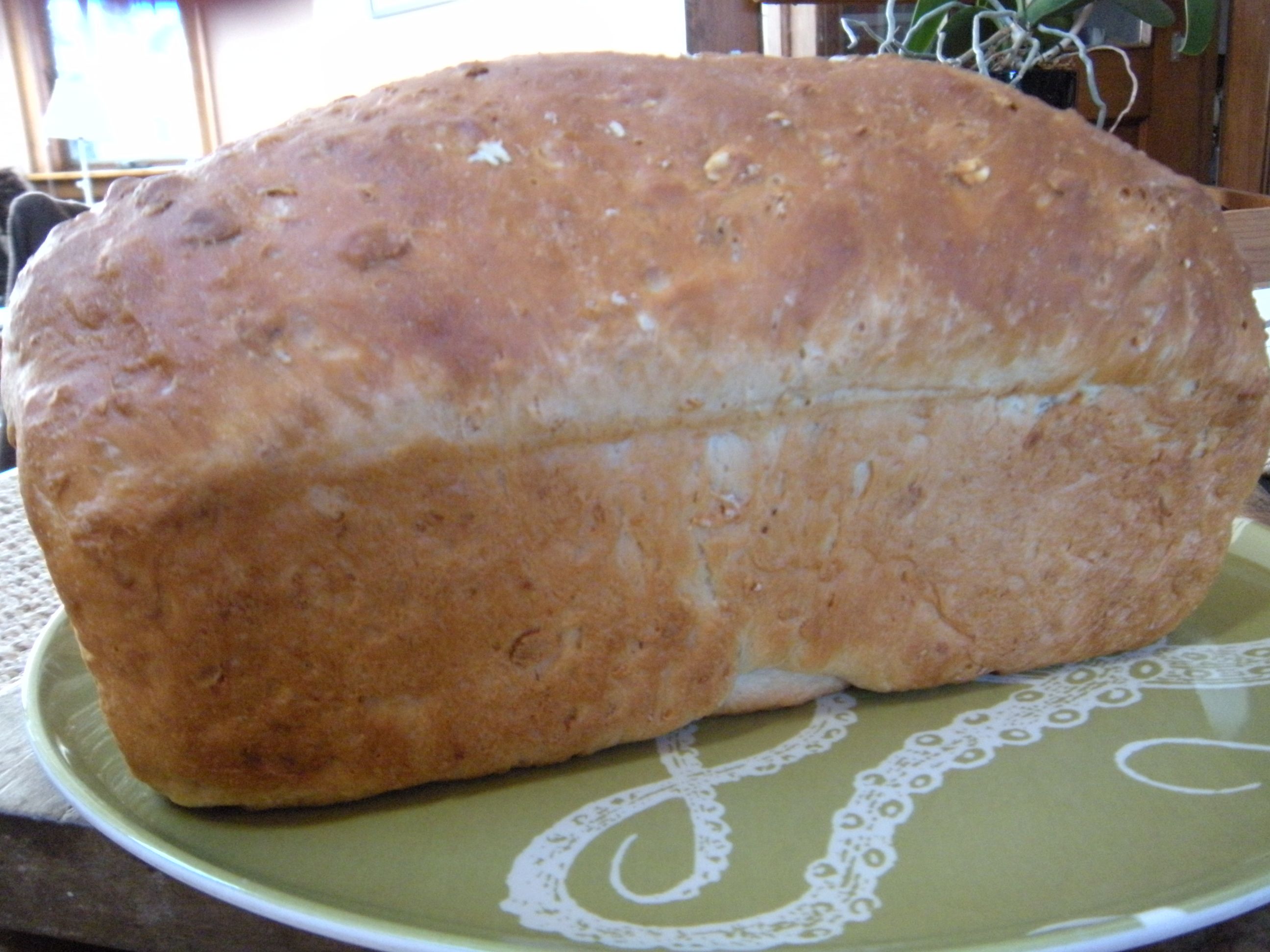
fresh out of the oven!~

fresh out of the oven!~

In the meantime, I’m mixing yeast, milk and honey with oats, flour and butter to start a loaf of oatmeal bread. I’ll time it so that the loaf will rise once, then shaped, risen again in the white stoneware loaf pan, baked to a golden hue, topped with a sprinkling of oatmeal. Resting for ten to fifteen minutes or so to slice thickly, spread with cold unsalted butter and a little honey, sliced into triangles, eaten with bowls of leek-potato soup.

I’ve been trying a different soporific (translate sleeping aid) every night and so far, the vexing pattern of tossing and turning, trying dreams and flopping my heavy cast back and forth has continued unabated. I’m hopeful to try a different regimen today/tonight that may result in more rest. Side effects of pain medication and insomnia have plagued me more than the amount of pain emanating from the ankle injury.

Noro "mossa" yarn . . .

Noro “mossa” yarn . . .

To while away the three week wait to have my cast removed, I’ve ordered some musky taupe Noro Mossa yarn with purple, green and brown colourways which should arrive this coming week. Planning to knit a simple garter stitch cardigan that will pass the time and give me a project that I can wear outside once my leg gets better and as Spring showers bring May flowers.

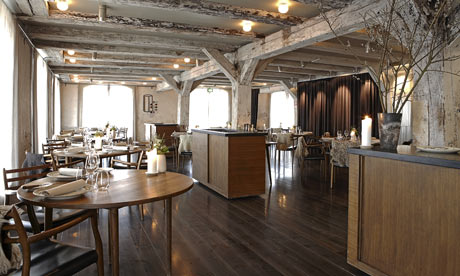
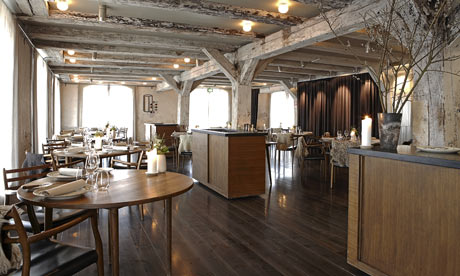
noma . . .

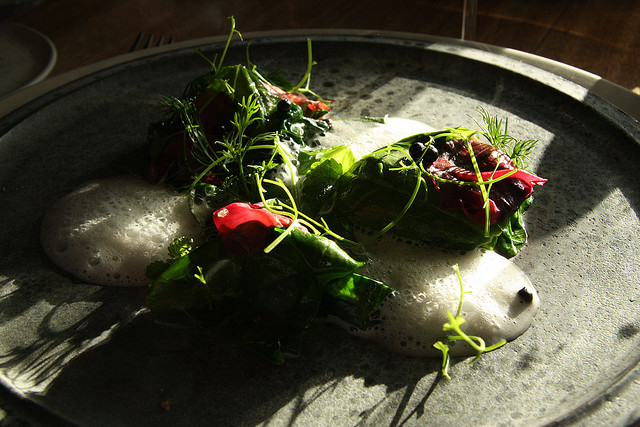
I don’t know if you’ve ever heard of Noma, but it’s reputedly the “best restaurant in the world,” located in Copenhagen, Denmark and run by a young chef named Rene Redzepi. My daughter, M., surprised me with a gift of his latest publications by Phaidon, a journal, photos and recipe book of a year spent developing new recipes for the restaurant after being named “the best. . .” for three years running.

His initial offering, a large album book called “Noma” was already in my bookshelves, my having opted to purchase it when it first came out due to the unusual and unusually beautiful photographs of food that you could not ever fathom tasting. Even so, I find it rather inspiring to read and look at, if only because it is so independent of mind in the development of flavor and taste which is supposed to equal, food.

Maybe it’s whimsical of me to partake in the experimentation that this kind of culinary pursuit takes, but it appeals to my sense of other-li-ness that I welcome in anything that is tried and true. I mean, of course, people can go and treat themselves to a tasting menu at Daniel Boulud’s restaurants in NYC. or, for that matter, go ramen tasting at Momofuku, David Chang’s hangout that is now being challenged by other ramen spring-ups all over town.

In fact, Redzepi writes fondly about a visit by David Chang to his restaurant when Rene’s second child was born–the very same weekend–and he seems much more interested in how Chang unpacks his cooking knives than belaboring the fact that he’s become a father of two at the same time. It’s an inside look at how cooks, or at least this cook, thinks, nay, is absolutely obsessed with developing something novel and delicious.

In the Journal that Redzepi keeps, he is alarmed that the restaurant is spending more than it is bringing in. For a few months in a row, the ink runs red. Then, he begins to gather the facts that:

a.  They serve 20 dishes to each customer.

b.  Each dish has at least five ingredients–most of which require advance preparation.

c.  There are 111 purveyors from whom they buy supplies; keep track of, pay and store ingredients from.

d.  They also forage, clean and store a huge amount of ingredients.

e.  Sometimes they are surprised by their suppliers who bring in fresh snails or seafood on a Saturday that is inconvenient because it won’t hold until Monday and the menus are already set for the weekend.

f.   Besides preparing menus of 35 plus dishes for 500 customers a week; there is a staff of 70 to feed and clean up after everyday.

One late night after the flow of new ideas from the 35 cooks has gone well, Redzepi noticed a foul smell in one of the rooms downstairs. Someone has neglected to clean fish remains in one of the sinks. Another area was unscrubbed. In a good mood, he starts to clean it up by himself and then blows a fuse, calling every cook at 1:30 in the morning to gather in the kitchens, the whole crew cleaning up EVERYTHING until the place sparkles. This kind of story about how nudging a group to a higher level of teamwork can at the same time also result in backsliding for the most basic of tasks (cleaning things up after yourselves) is apocryphal and amusing.

And Rene Redzepi is only in his mid-thirties. Honestly, I can’t see myself cooking reindeer moss. Or cooking something to resemble or remind one of reindeer moss. But the very stark, austerely beautiful platings that adorn his books, and that same aura which permeates his restaurant are a treat and a treatise for one’s imagination.

So, today, after my hospital ankle appointment when the cast was taken off so that the sutures could be removed, then a new cast put on for another three weeks, I was a little more restrained than usual when we went to do the grocery shopping afterwards. I picked out a couple of endives and a radicchio to make a bitter salad with a honeycrisp apple, walnuts and golden raisins. Maybe a little sour cream and honey in the vinaigrette. Bunches of beets to roast, leeks to cook with potatoes for a creamy Sunday soup; parsnips to accompany a small boeuf bourguinon cooked in the new pot that our friend, B. gave us last week, with some tiny yukon gold potatoes, boiled, sliced in half and slowly browned with a little garlic salt and dried parsley. These ideas are in no way anywhere close to let’s say, experimenting with lamb’s brains but, c’est la vie!

What I have taken away from these armchair adventures of food developed in the cold and wintry land in Scandanavia is to concentrate on flavors, small portions, beautiful settings, eating less, eating better, having fun trying new ways with old habits that still work. All this from reading a few books! Voila!

comfort food . . .

wonton soupAfter a miserable day yesterday, tired out from not sleeping well for almost a week, I decided to start taking Tylenol again (just a half pill) to take the edge off of my ankle pain. G. also went out last night and rounded up some Sleepytime herbal tea which we brewed up and I drank with a spoonful of honey before going to bed. Although the night was unsettled and I had to get up a few times, there was a discernibly rounder edge to the way I felt when I woke up this morning. Translated, that means I woke up feeling more clear and a little more rested than I have for a week.

Resolved to have a better day today, I washed my hair and changed to lighter weight Spring pants and top. I sewed up the tear on the back collar of my favorite lightweight sweater and wound my freshly rinsed hair into a loose knot and put a clip to hold it off of my neck to dry.

We had some freshly ground pork in the fridge and some frozen shrimp in the freezer. I felt so much better than I had yesterday that I decided to make some of our favorite Asian comfort food for dinner: shrimp and pork wontons.

G. bought some wonton wrappers, scallions and napa cabbage at the store and we’re now good to go. Here’s the recipe if you’d like to try making them yourself:

Shrimp-Pork Wonton Soup:

1. Clean and peel 4-5 large (16-20 count) shrimp; chop into small bits

2. Mix 1 lb. fresh ground pork with minced shrimp.

3. Chop 3 green onions into small slivers, add to meat mixture;

4. Finely chop 3 leafy parts of Napa cabbage and add to meat mixture.The cabbage all but disappears in the filling but adds moisture and sweetness. Without it, the wonton filling shrinks and is less tender.

5. Season mixture with 2-3 tablespoons Ohsawa soy sauce and  1-2 tablespoons mirin.

6. Sprinkle about 2 tablespoons corn starch lightly over the mixture and work in with your hands until mixed well. The cornstarch tenderizes the filling.

Let marinated meat/cabbage/shrimp mixture sit for about an hour or two before wrapping.

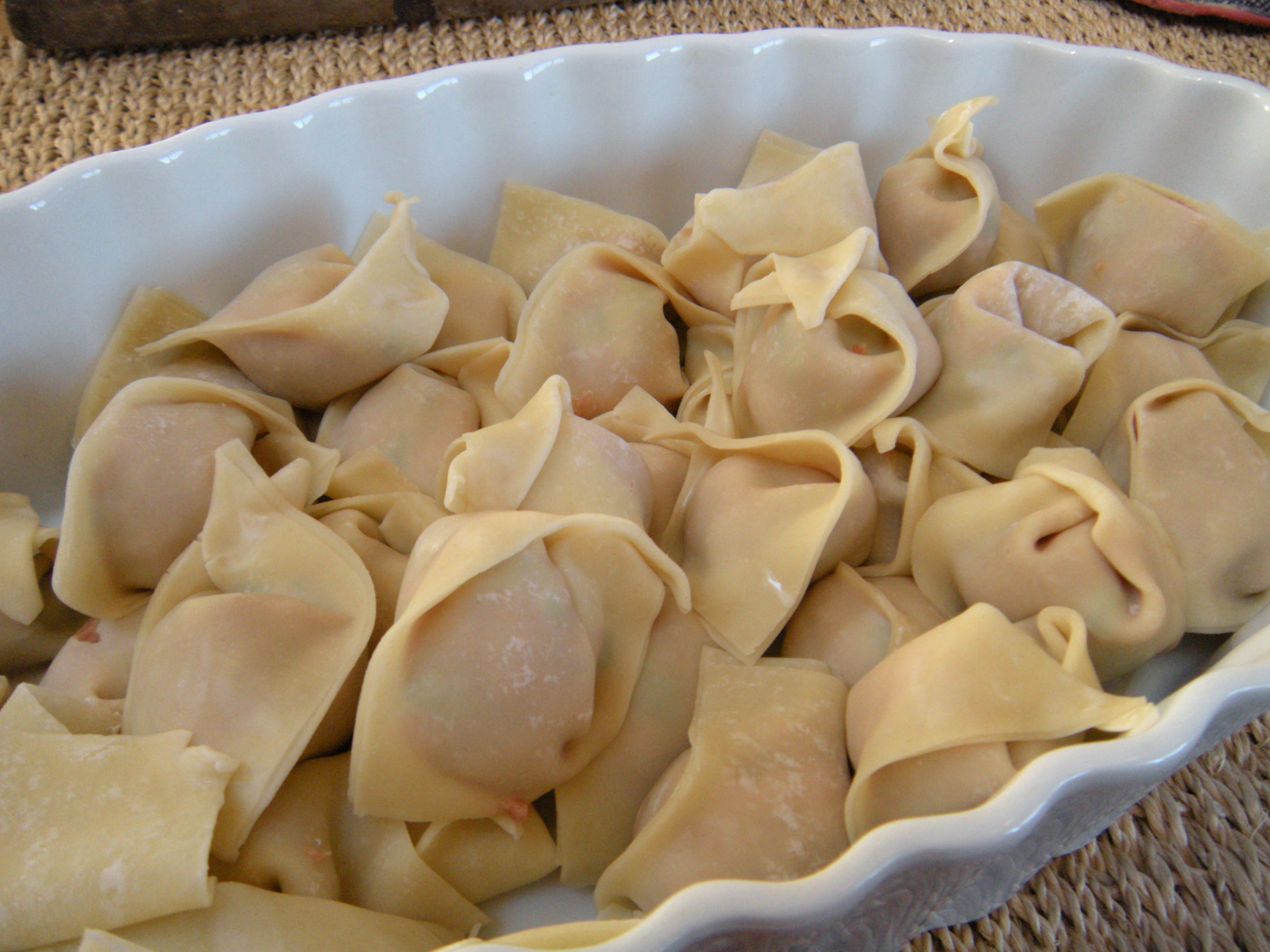
7. Take a wonton wrapper and put a dab of filling in the center; wet two adjacent edges of the wrapper with cold water and fold, press the edges together of the dumpling so that you have a triangle. Take the right end of the triangle and fold it under the left, securing with a dab of water. It should look like a little bonnet. Set the folded wonton onto a plate and cover with a clean dishtowel. Fold the rest of the dumplings so that edges are sealed.

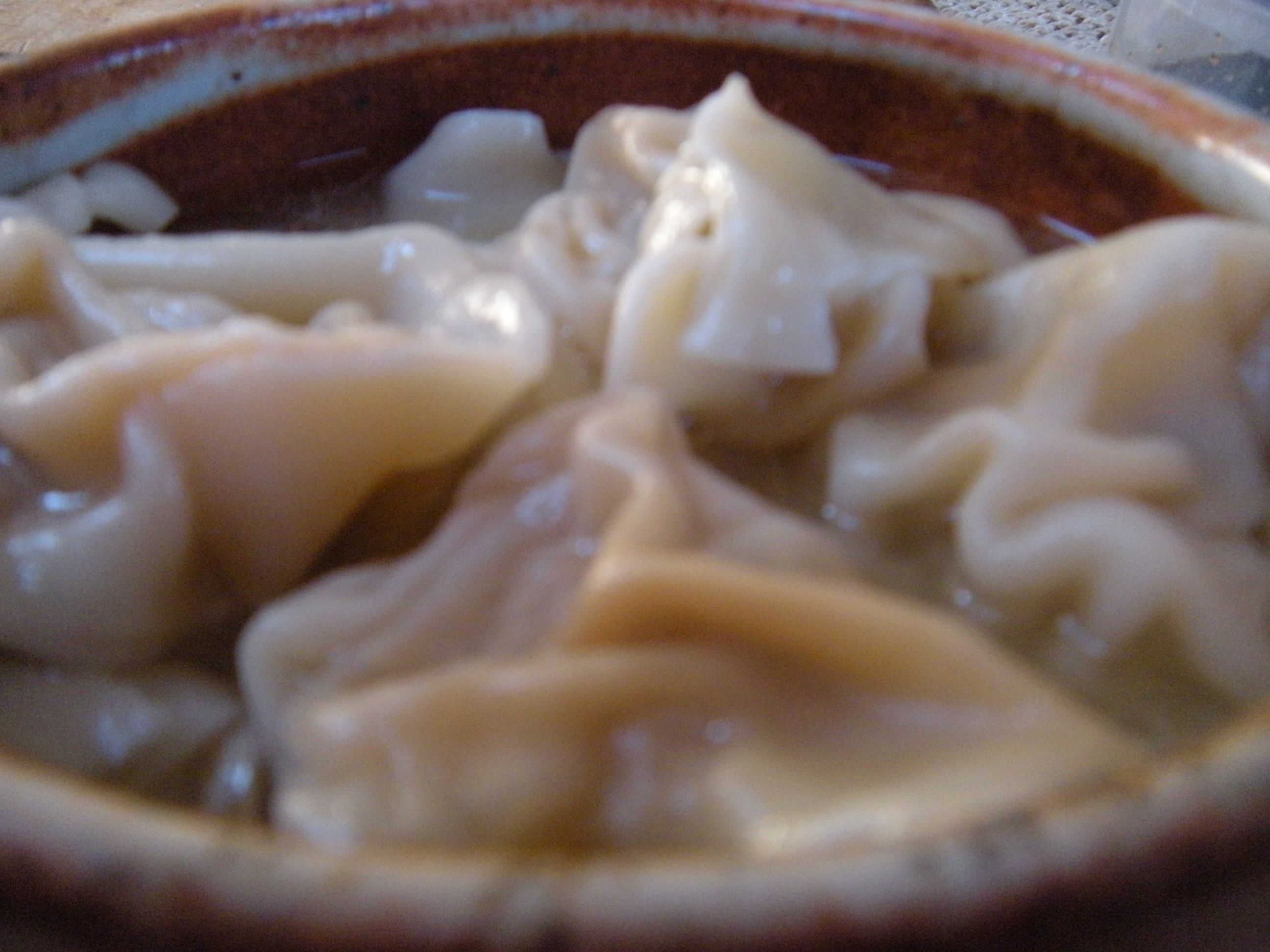
folded wontons ready to cook . . .

folded wontons ready to cook . . .

8. Bring a pot of water to a boil. When boiling, drop the wontons one at a time, stirring gently so that they don’t stick to each other. When the pot comes to a boil again, add a glass of cold tap water. Then bring to a boil once more. Add a second glass of cold tap water. When the wontons come to a boil a third time, they’re done.

9. I sometimes make a separate pot of soup consisting of chicken broth, a little water, 2 tablespoons soy; 2 tablespoons mirin. Transfer the cooked wontons into this broth, adding a little of the cooking water to enhance the soup.

Serve big bowls of the steaming hot wontons, providing chopsticks and chinese soup spoons. You can also add some baby spinach at the last minute when serving the soup.

These shrimp/pork filled wontons will make your heart sing, never mind that they’re also very tasty and easy to eat!


banana cake . . .

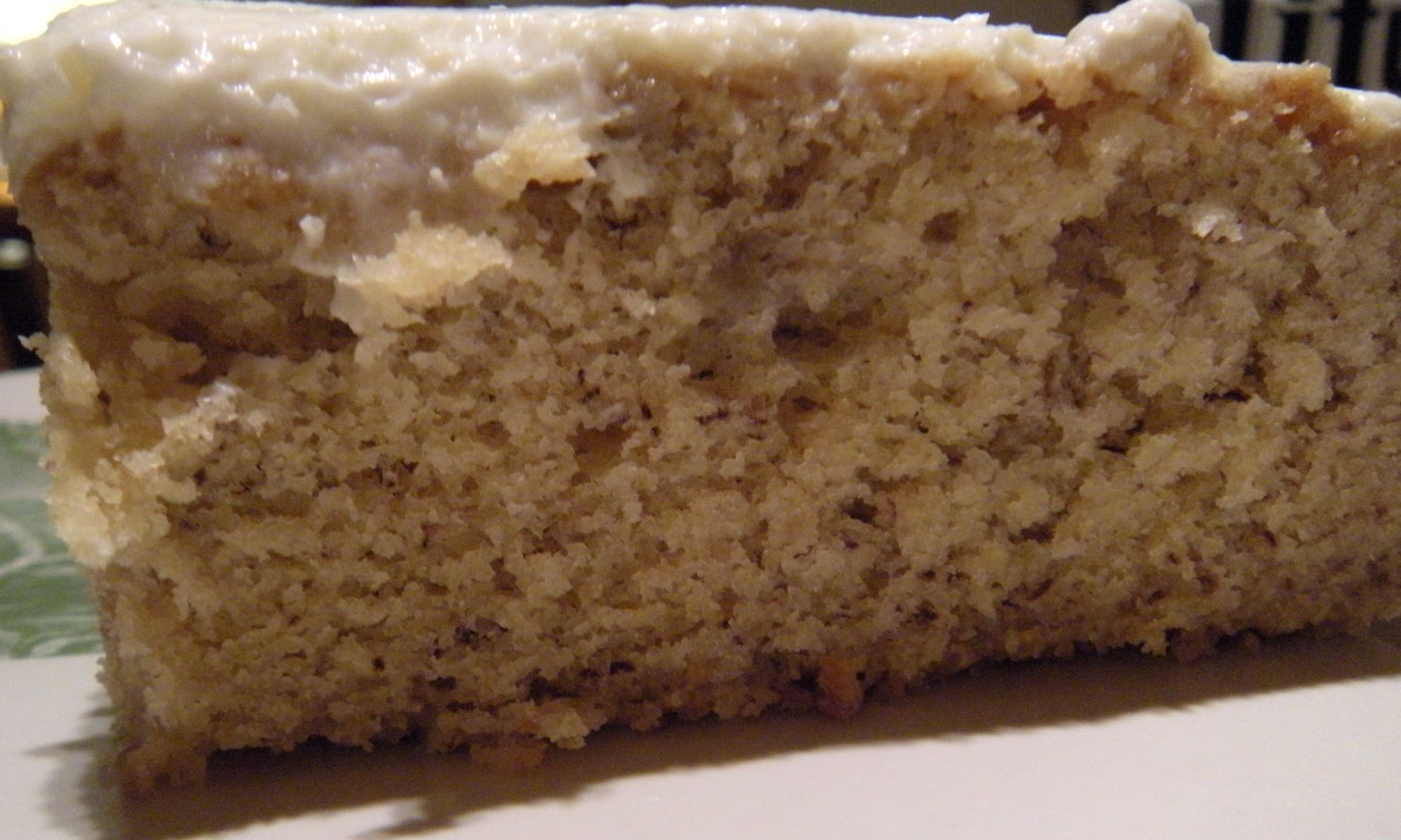
banana cakeWhen we can’t keep up with eating the bananas we’ve bought, they sometimes edge up on us and then I’m thinking about making a banana walnut bread or, in a recipe I found online, a “very moist” banana cake. What attracted me to this recipe were: the promise of moistness after settling the cake down in the freezer for 45 minutes straight out of the oven; the inclusion of fresh buttermilk and the idea that the cake got better as it aged in the refrigerator.

So this morning, I peeled four bananas and mashed them by hand with a fork in a bowl, adding two teaspoons of freshly squeezed lemon juice. In another bowl, I measured out three cups of flour, salt and baking soda. Finally in a large bowl, I placed a stick and a half of unsalted butter and nuked it so that it was soft but not melted. Two cups and an eighth of turbinado sugar were beaten into the butter with an old hand mixer, adding three organic fresh eggs one at a time plus two teaspoons of vanilla. Then, according to the recipe, I alternated adding the flour mixture with one and half cups of fresh buttermilk into the creamed mixture. The bananas went in at the very end. The batter looked rich and smooth. I poured it into a 9 X 13 prepared baking pan, then into a 275 degree oven for about an hour and twelve minutes. That’s when a toothpick inserted into the cake came out clean.

In the meantime, I had reconnoitered in the freezer and positioned a cookie sheet so that I could transfer the freshly baked cake right on to it and placed in the freezer for 45 minutes. I had not heard of this before but the recipe swore by this step as a way to ensure the cake would be very moist. After I took it out of the freezer, I waited about a half hour at room temperature before I mixed up a cream cheese frosting to spread on the top. Half a stick of room temperature unsalted butter with eight ounces of Philadelphia cream cheese and about a half cup of confectioners sugar mixed together with the cleaned beaters of my little mixer produced a not very sweet frosting that just covered the top of the sheet cake. Carefully topped with plastic wrap, I set the frosted cake into the fridge to await our first tasting after dinner tonight.

Honestly, the recipe took a long time to prepare. I followed it to the letter including adding fresh lemon juice to the bananas and alternating the dry and wet ingredients culminating with the bananas at the end. The frosting always turns out well–I resisted adding either lemon juice or vanilla, wanting it to be rather austere in its cream cheese-ness. I’m curious to see what kind of alchemy the freezer cooling step produced and will let you know in a little while.

Later: We cut a large piece for G. to take across the street for his 95-year old mother and brother, J. After dinner, we ate our first piece. It was very moist and had a not-sweet banana flavor. The edges of the cake were not dry nor crusty. The frosting was just right, thinly spread along the top. We’ll have it for dessert tonight also when B. joins us for a supper of shepherd’s pie, asparagus and crescent rolls.

Even Later: Just had a nice square of banana cake for dessert tonight, and the recipe was accurate: tastes even better a day later. The cake was moist, tender, flavorful. Worth the time and trouble to follow the recipe ~ a keeper!


french onion soup . . .

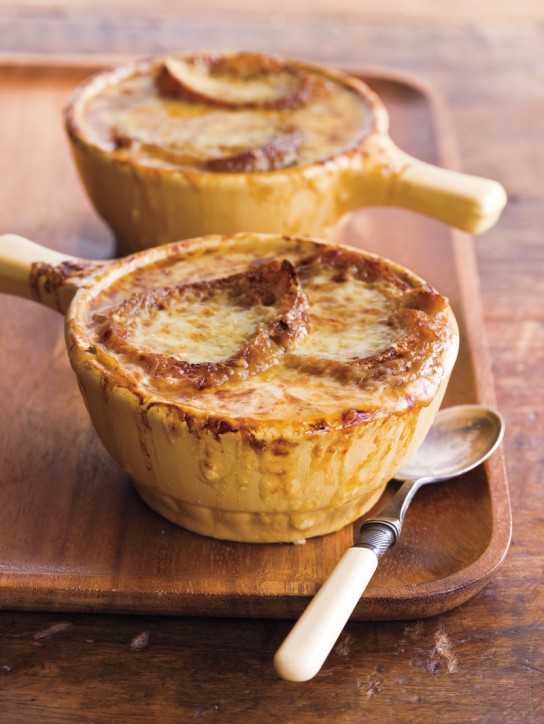
This morning after I got dressed, I thought I’d make some soup for lunch. Since the cupboard is rather bare, I picked up three Vidalia onions from the pantry, peeled them, sliced lengthwise and then into thin strips. Half a stick of unsalted butter went into a skillet and then the onions simmered until golden brown. I don’t know what it is but the fragrance of onions cooking on the stove makes the kitchen wake up even when it’s a couple of hours before lunch.

I transferred the golden onions into a new stainless pot with a glass lid that our family friend, B., had dropped by the other night after he heard about my mishap. The compact wheelchair I’ve been using, the two walkers and the chair that the guys have been transporting me up and down the stairs came from him years ago, lying fallow here until the accident brought them to the fore. They have been a godsend and are much appreciated.

loon and babies bpHe told us about seeing a pair of loons camping out by the local pond near one of the campuses in the town we live in. Apparently, they are not that commonly found (even though I have learned since then that they are the official bird of the state of Minnesota where my daughter M. lives.) In any case, as a thank-you, I ordered a book on Amazon.com called “Fascinating Loons” that contains a myriad of photographs and descriptions of loon-y life! Look forward to giving it to him when he comes by for supper some time soon.

So back to the soup: after browning and softening the onions, I transferred them from the skillet to the small stockpot and added two cans of beef broth, then put the soup on a low simmer. Before serving, I plan to toast up some Thomas’s English muffins, sprinkled with some grated gruyere cheese under the broiler to add on top of the soup when we sit down to eat. G. bought some steamship ham from the grocery store last night and we might have some small sandwiches to go along with the soup.

OUR soup for lunch. . .

OUR soup for lunch. . .

Everything seems to slow down when I’m slowed down so that accounts for the detailed description of the soup, its background and our plans for it. Actually, the aroma of the soup has settled our morning down to a satisfying pace. J., one of the workmen who comes a few days a week, is due late morning and will probably have some lunch with us.

This afternoon, I’m assembling the four ripe bananas from the fridge and letting them come to room temperature; then after some business that we have on the phone, will try out a banana cake recipe that promises to be very moist, kept in the fridge and graced with a cream cheese frosting. A good accompaniment to have on hand for our weekend suppers.

Postscript: here’s the recipe for this soup which is delicious when the cupboard is almost bare:

1.  Slice three Vidalia (sweet onion) onions after peeling and slicing in half lengthwise, into narrow strips.

2.  Melt 1/2 stick unsalted butter in skillet; brown the onions over medium heat until they are soft and golden, turning occasionally (half an hour.)

3.  Transfer onions into a pot and add two cans of College Inn Beef Broth (not bouillion cubes because they are too salty and sharp tasting rather than mellow and sweet.) Simmer for 45 minutes and turn heat off until ready to serve.

4.  Broil two thin halves of Thomas’s sandwich size english muffins with grated gruyere or swiss cheese under the broiler until golden brown; cut into fourths. Ladle out the hot soup and add pieces of cheesy muffins on top. Enjoy!


soba noodles . . .

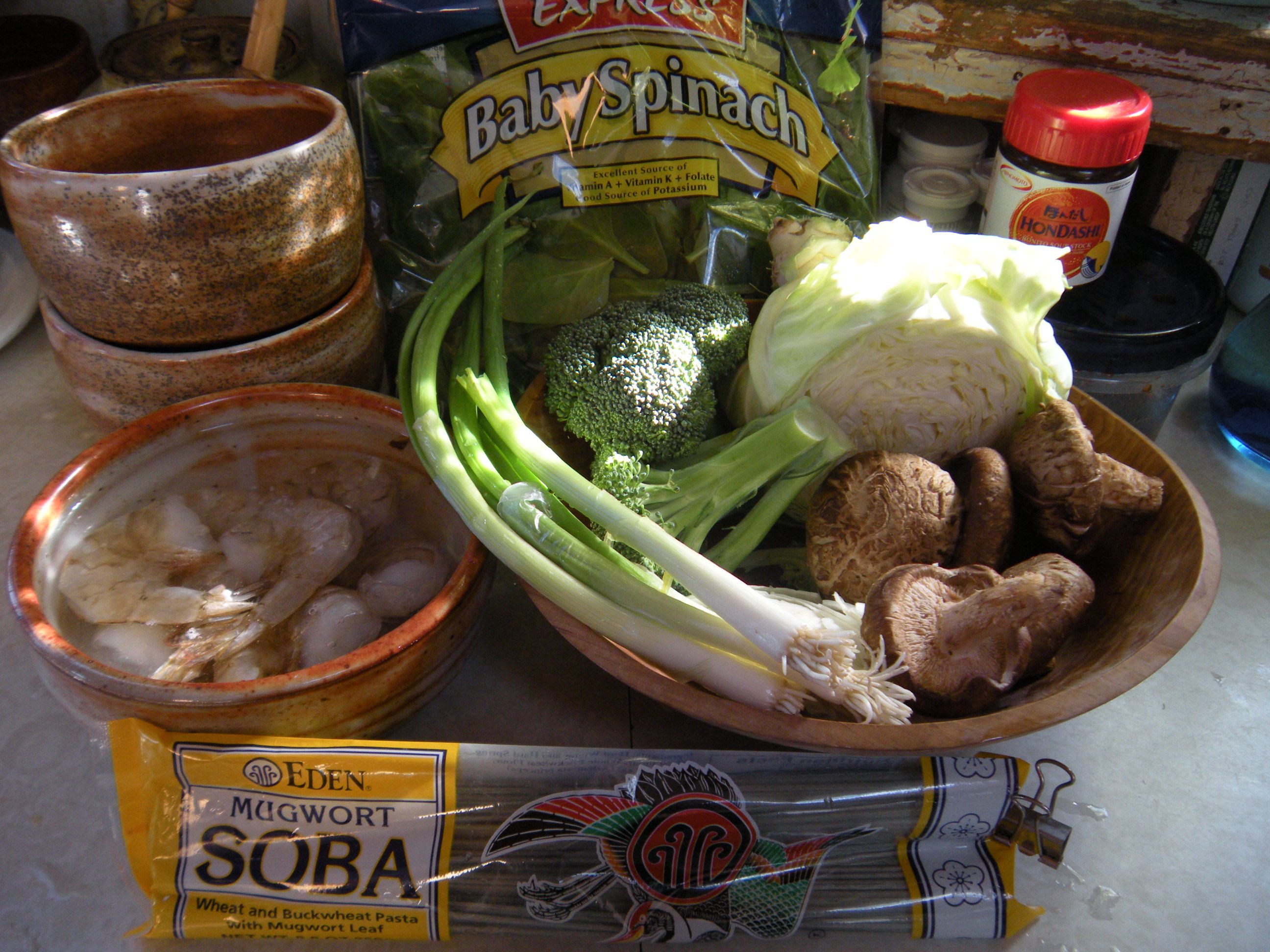
soba noodles 1We’re having a cold snap this week with temperatures hovering around zero outdoors. When this happens, I start rummaging around in the pantry and fridge to see what I can make for dinner that’s appetizing and filling so that I won’t have to go to the store. I found myself back on Pinterest last night, after a few months away and came upon some scrumptious looking photos of soba noodles. They’re Japanese noodles made from buckwheat. Sure enough in my pantry, I found a sleeve of green soba noodles made with mugwort (whatever that is.) On another note, I have a friend who has been writing to me about making herbal infusions with herbs such as nettles and oatgrass so I was right in the mood for using these mugwort soba noodles (turns out mugwort is an artimesia family herb with tonifying qualities.)

In the fridge, I found a package of fresh shitake mushrooms, baby spinach, scallions, two good sized florets of broccoli and half a head of baby cabbage. I knew that I also had a treasure trove (to me at least!) of large frozen shrimp in the freezer that I draw from in times like this. I took out about half a dozen shrimp and set them in a bowl of water to defrost. Now, I had a melange of appealing ingredients (see photo above.)

Next, I went to Pinterest and typed in “soba noodle recipes” in the “Search” box. Scrolling through numerous tempting combinations, I soon recognized that I had too many ingredients to make one dish. I could make the shrimp into crispy tempura and serve on the side of a simpler soba noodle dish; or I could cook the noodles and then add lightly cooked shitake mushrooms, broccoli and scallions–or have a cleaner tasting, simpler shaved raw cucumber and raw shitake mushrooms atop soba noodles dressed in a light sauce. I was happy to see that the teriyaki sauce that I made a couple of weeks ago which I still have a little bit left of, would be a tasty condiment to add to dashi broth. I also remembered a NYTimes clinical article months ago about a rare allergic (appeared neurological!) reaction to undercooked shitake mushrooms.

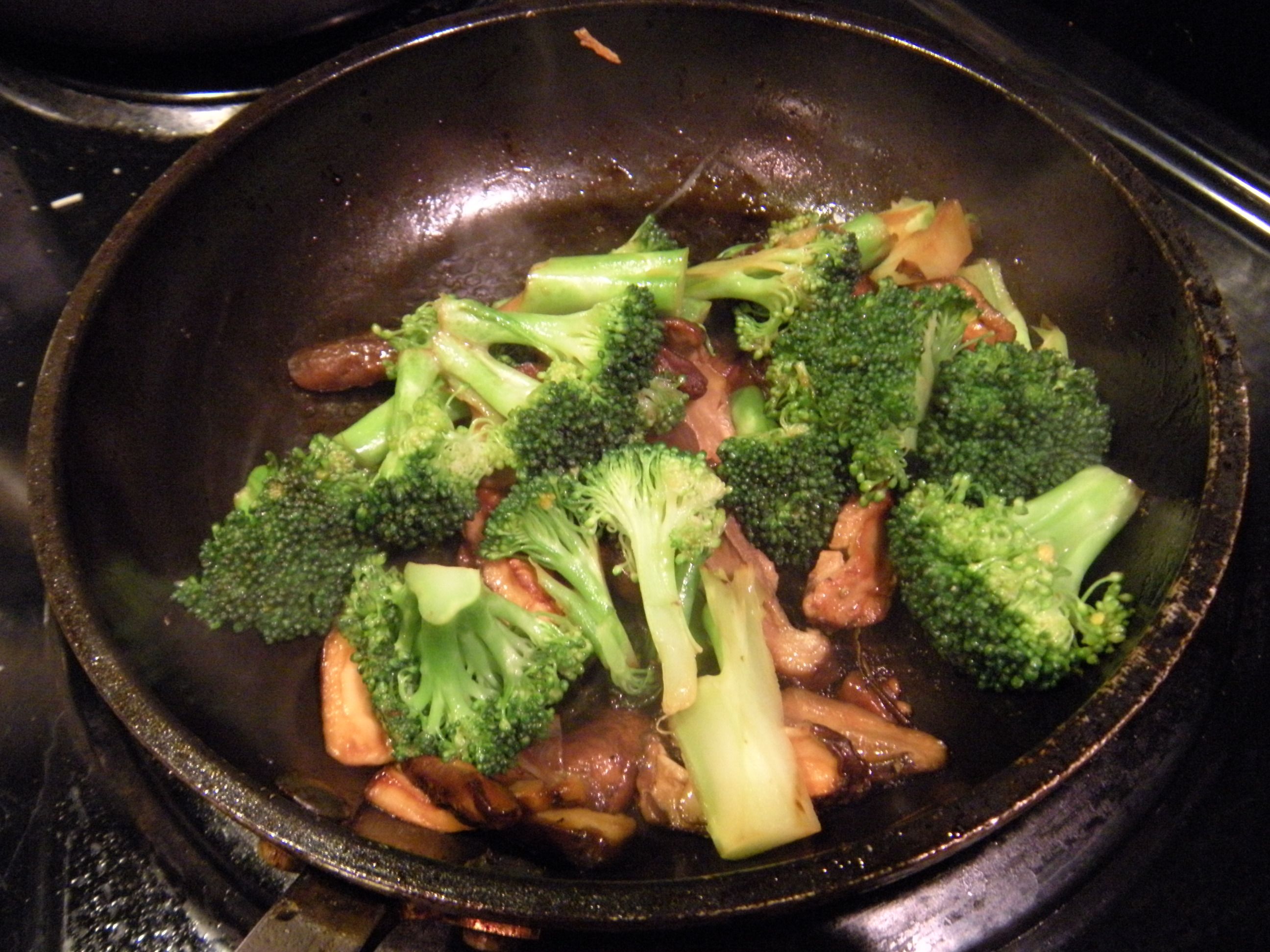
broccoli and shitake mushrooms

broccoli and shitake mushrooms

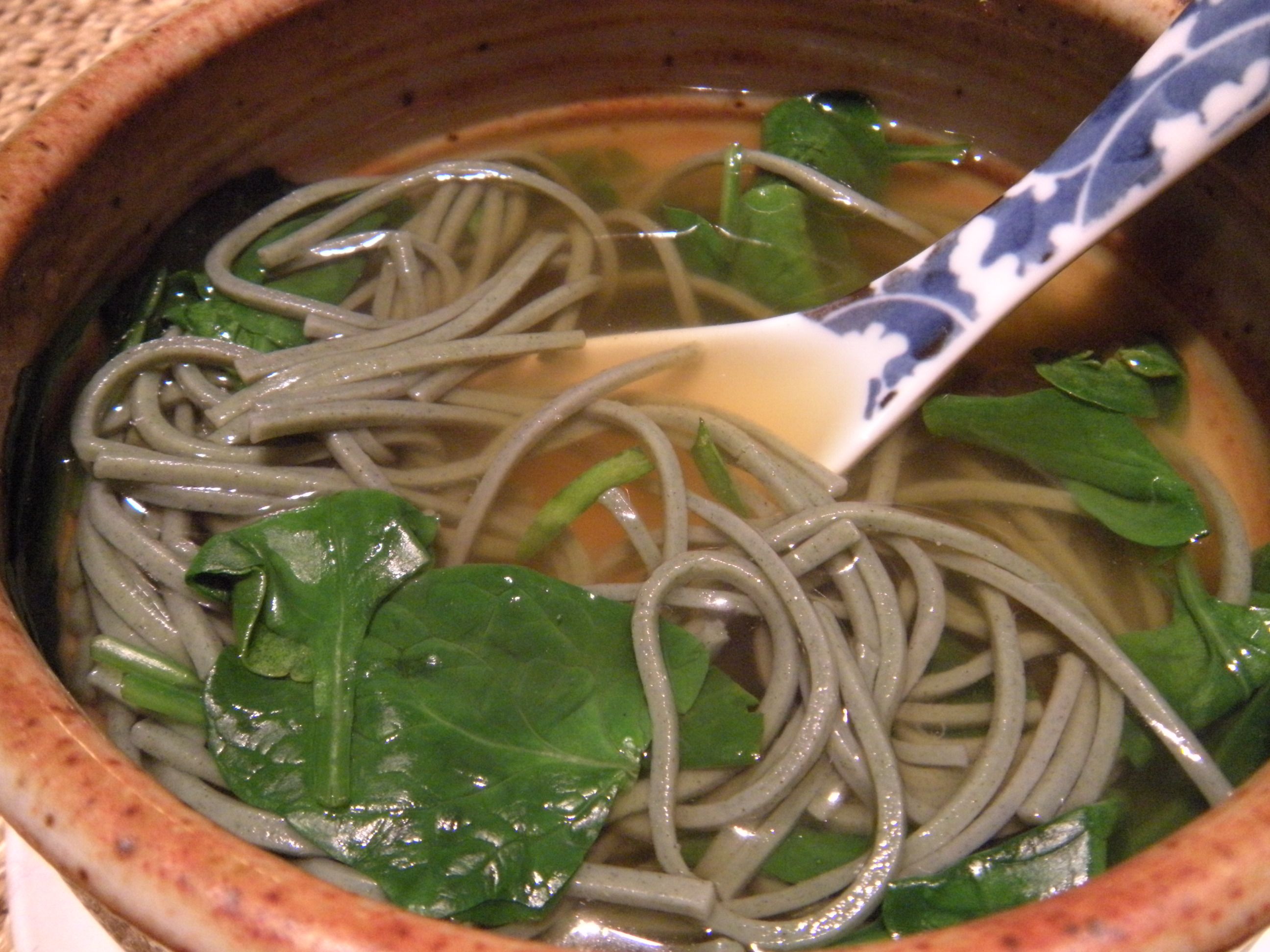
So, here’s what I think I’m going to make: leave the shrimp in their shells, dry them and saute them briefly with garlic, ginger and scallions with a little teriyaki sauce added just at the end. In a separate pan, saute sliced shitake mushrooms with broccoli and shallot, chopped thin. Make a dashi broth and add a little teriyaki seasoning. Cook the soba noodles in boiling water and drain well. Slip the soba noodles into individual large soup bowls filled with the dashi broth and fresh baby spinach. Serve the shrimps on the side to be eaten in their savory sauce.

shrimp with garlic, scallions, ginger and mirin

shrimp with garlic, scallions, ginger and mirin

All this just to keep from going outside and going to the store! I’ll bet there are a few more variations that we could try in a few days: a broth with cooked spinach and cabbage, and so on.

soba noodles in dashi broth with fresh baby spinach

soba noodles in dashi broth with fresh baby spinach

Oh, and while the afternoon sun was still shining in through the skylights, I decided to use a half bag of Macoun apples from the pantry to make an open faced apple pie for dessert.

apple pie

cold weather noodles . . .

noodles 2It’s been frigid here and elsewhere (so many minus degrees below zero where M. lives in Minneapolis that they closed the schools!) This morning, I straightened out the books and magazines on my small Chinese table and came upon the “healthy” recipes that Bon Appetit was promoting in its January issue.

Leafing through, there was a teriyaki sauce recipe from a restaurant called “Canal House.” Three simple ingredients of the same measure:

1 cup packed light brown sugar;

1 cup mirin (Japanese rice wine); and

1 cup Ohsawa soy sauce (or low-sodium soy sauce):

simmered until the sugar dissolved and then cooked at very low heat for 40 minutes until the sauce thickened slightly. Good in the fridge for a month, the recipe said.

I paused midway through the thickening of the teriyaki sauce and tasted it with the tip of my spoon. The flavor was so rich and delectable that I imagined right away using a dollop of it to flavor fresh shitake mushrooms, softened in a pan; or glazing a piece of salmon or chicken thighs on the Le Creuset “Soleil” grill pans my daughters and I received as Christmas gifts from Santa (that’s me!)

So here’s the recipe for cold weather noodles I made for supper tonight:

1. Boil fresh Chinese wide egg noodles, drain and rinse with cold water, shaking out excess water. Defrosted a frozen pack of noodles tightly zipped in a plastic bag set in warm tap water and used two coils worth of noodles (see top photo.)

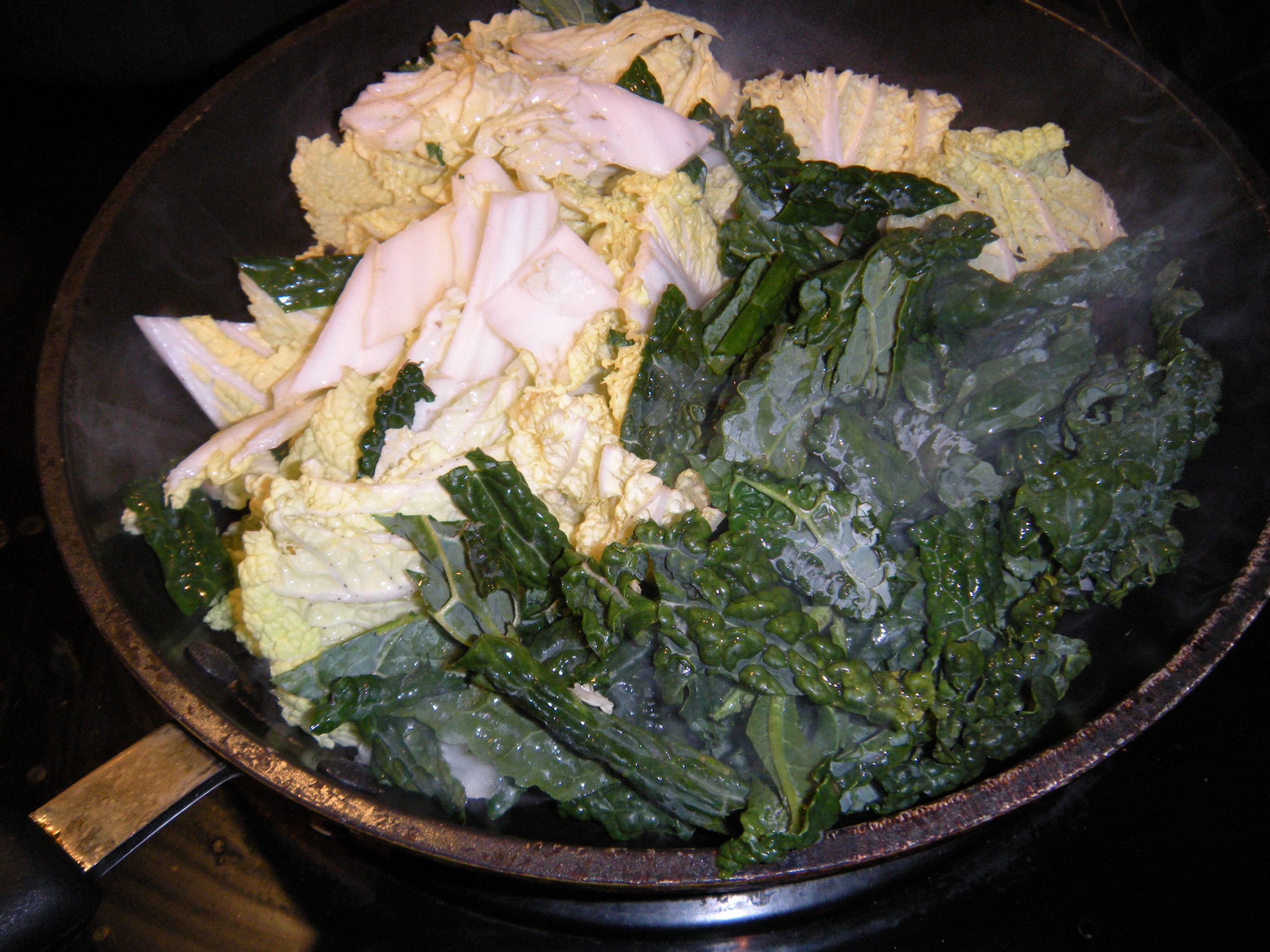
2. De-rib some lacinato kale and chop the leaves into two inch diagonal pieces.

3. Chop up some napa cabbage including leaves (same diagonal slice.)

4.  Saute 2 cloves of garlic in a pan, add greens above and take off the heat when just wilted. Drain and set aside.

kale and napa cabbage

kale and napa cabbage

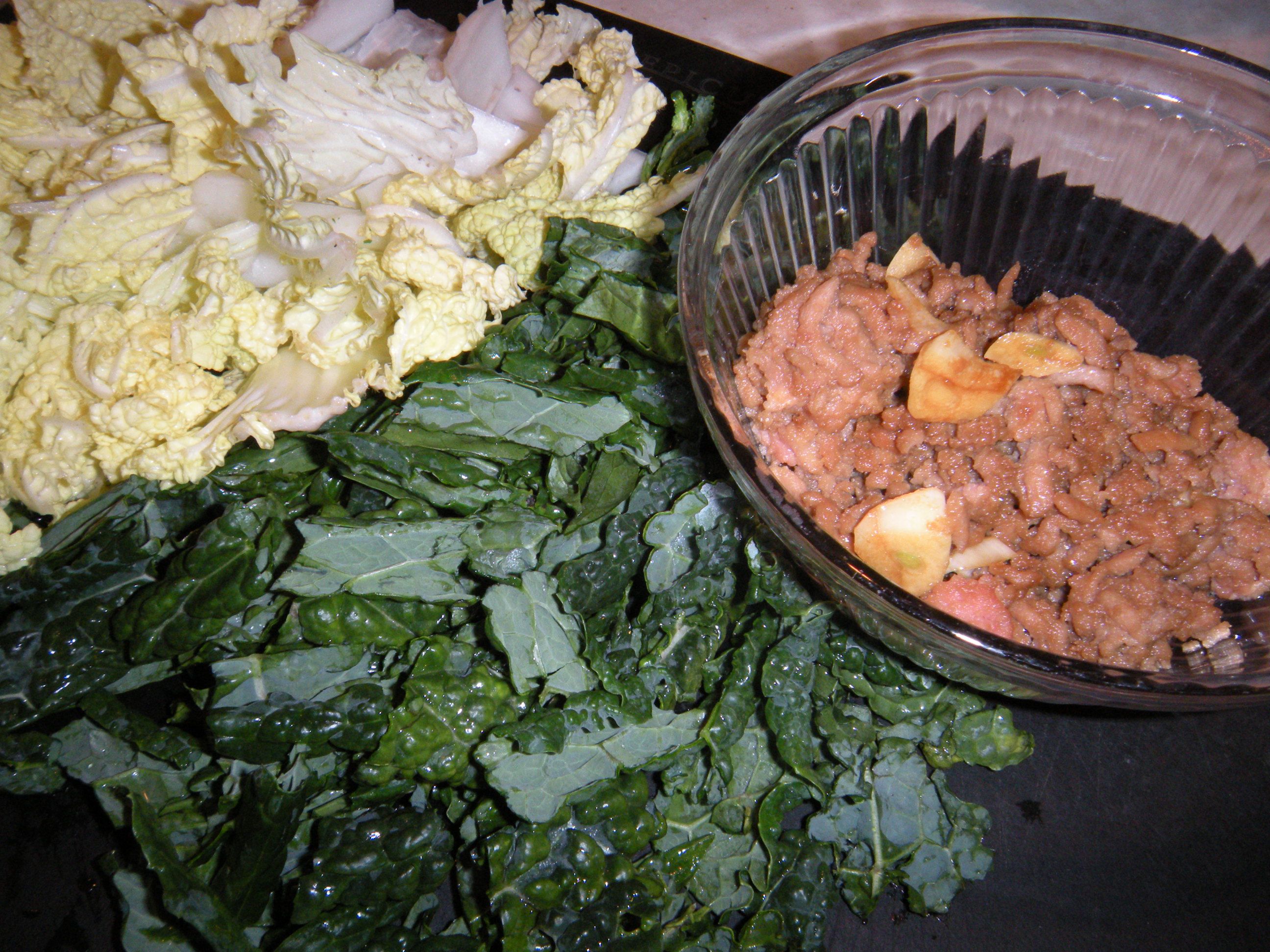
5. Combine 1/2 pound of fresh ground pork with scallions, ginger, and brown in a saucepan, adding a little teriyaki sauce when pork is browned.

cooked pork with garlic, kale and cabbage

cooked pork with garlic, kale and cabbage

6. Make a dashi broth in a sauce pan (either instant powder or with kombu and bonito flakes); add browned pork, cooked greens and stir. Cook gently for soup flavors to combine. To taste, add a spoonful of teriyaki sauce to the broth.

7. Add cooked noodles to soup and simmer.

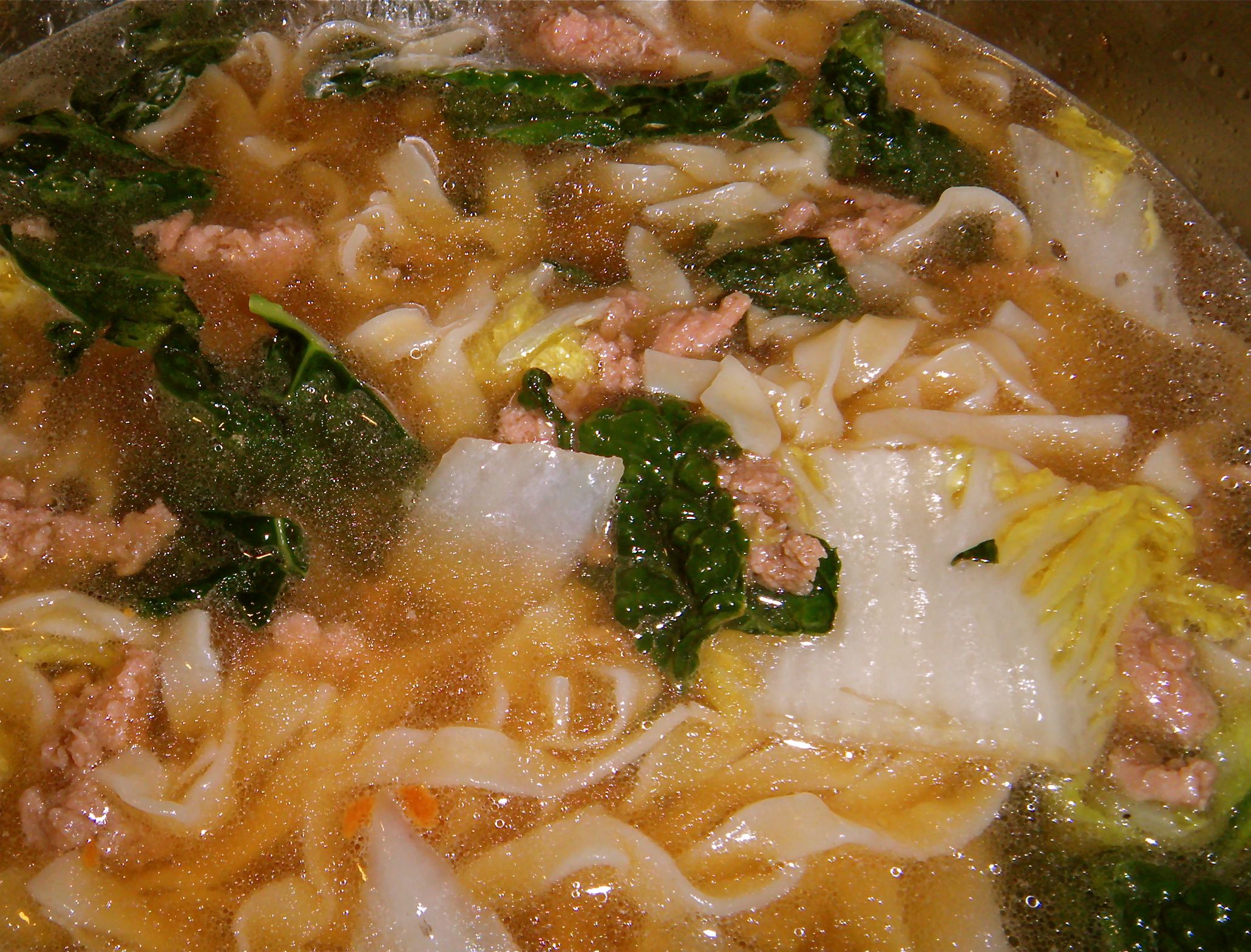
dashi broth, kale, cabbage, pork, noodles flavored with teriyaki sauce . . .

dashi broth, kale, cabbage, pork, noodles flavored with teriyaki sauce . . .

8. Ladle into soup bowls and add a poached fresh organic egg on top or sprinkle with scallions.

It’s still pretty cold out there. But in here, it smells like heaven.

Judy Rodgers postscripts . . .

Please see “Judy Rodgers” post which described how we decided to make her famous recipe, “Roast Chicken with Bread Salad.” Here is a photo postcript  (taken by C.) of the dish which we prepared and ate for Christmas Eve Dinner.

roasted birds just out of the oven . . .
testing doneness . . .
bread salad . . .
bread salad . . .
roast chicken on bread salad . . .

December 26, 2013 postscript: As intended, we followed Judy Rodgers’s recipe to the letter: I bought 3 birds: 2 1/2 to 3 pound fresh organic Bell and Evans chickens at Idylwylde Farm (the ONLY place that had them); brined with Maldon Salt along with fresh marjoram, rosemary and thyme sprigs slipped between the skin of the breast and thigh of each bird beforehand; left to rest in refrigerator for 24 hours covered with paper towel and clean dishcloths. Taken out two hours before roasting; my daughters, Megan and Caitlin read the bread salad recipe which said, “begin several hours ahead” in the 2nd floor kitchen. I had bought three different loaves of bread, hoping to find one with the kind of open and chewy crumb “without being sourdough or Levain bread which would have had too strong a flavor.” The last loaf bought the day before, a crusty large Italian bread loaf turned out to be perfect. The crusts were cut off, the bread torn into bits, brushed with olive oil, browned in the oven, dressed with Champagne vinaigrette; the currants soaked in red wine vinegar, mixed with fresh rocket and mesclun after it had been steamed in the hot oven after the birds were taken out; pan drippings added to the bread salad and spooned over servings of light and dark meat servings of the roasted chickens. I am giving this detailed description because every step and ingredient was worth it.

Everyone agreed that the dish was spectacularly delicious and distinctive, festive and just plain wonderful for our Christmas Eve dinner. As with many things, we don’t think the experience will ever be the same the next time we make it, but will certainly be added to our best meals ever memories!

Postscript 5 January 2014: I wanted to add a note that because the chicken had been brined (I think,) the leftovers were still appetizing to eat for lunch today, the very last bits cut up in chunks, a tender sprig of celery or two chopped finely and Hellmann’s mayonnaise to bind it together for about a half hour before putting together sandwiches with toasted oatmeal bread accompanied by split pea soup.

Earlier, we had transported leftover roast chicken for sandwiches on the 27th of December to Brewster on Cape Cod, accompanied by a big pot of hearty soup made of stock from the carcasses, onions, carrots and barley. For frugality, I’m amazed that these three little birds fed and nourished us over the course of, what, eleven days!?  

judy rodgers . . .

JUDY RODGERS FLOWER

This morning, inside the back of the second section of the New York Times was an obituary for Peter Graf, the tennis father (read ogre) of Steffi Graf who escaped her tyrannical father by marrying Andre Agassi.

Then, I glanced at the opposite side and gasped (literally) to see that Judy Rodgers had died. It’s not as though I ever met her, you see. But I have her beautiful cookery book called “The Zuni Cafe Cookbook” which won the James Beard Award when it was published in 2002. In the article, her cooking was described as “refined simplicity.” Her famous recipe for roast chicken with bread salad has circulated far and wide and was even published at the bottom of the page of her obituary today.

Still stunned, I went to the bookcase looking for her book and found her large, thick volume with the beautiful cover photo of nuts, nectarines and ham. THIS, dear reader, is why it is so gratifying to have a large library of books that I love, ever flowing throughout the house, in stacks on the floor, in old baskets, on the credenza waiting to be put away. To me, these books are like old friends who awaken to have a conversation once again.

Although my family eschews red meat for the most part, most of the time, somehow, I”ve had it stuck in my mind that we should have something beefy, English or some type of roast in order to feel “Christmas-y.” Last year, I roasted a filet of beef which was delicious although it’s not my favorite cut of meat. It also fed my granddaughter and her boyfriend the next day too. To be honest, I thought the homemade beef gravy was what made the meal so tasty. The depth of flavor entailed hours making homemade beef stock, offsetting the supposed benefit of being able to roast the filet in a short amount of time.

But this morning, struck by Judy Rodger’s untimely death (she was only fifty-seven,) I read more about her life and about her work. At the age of sixteen, living in St. Louis, she somehow ended up on a student exchange to France and was assigned to live at the home of the best chef in France: Jean Troisgros, “who happened to run one of the greatest restaurants in the world, Les Freres Troisgros, in Roanne.” As though Fate and Destiny had anything to do with her life’s calling?

Then, I turned my attention to looking through her cookbook, marvelling at the gorgeous photos of dishes. Paging through the book to the roast chicken and bread salad recipe,  I resolved, or settled my mind at least, to make it for our Christmas dinner this year. Although it may seem like a sentimental gesture (it is) and although I didn’t even know her, nor especially cooked from her book prior to this (I didn’t) my strong feeling today is to honor her memory by creating a very different kind of menu for this year’s Christmas Eve repast. I can’t wait to go looking for small, organic chickens under three pounds that are a requisite for this recipe. Brining them a day ahead with salt is an essential step. I think I will roast three birds in my beautiful old French copper roasting pan. And I will serve them placed on top of the bread salad with the vinaigrette recipe she suggests.

As a starter, her recipe for “Prosciutto and White Rose Nectarines with Blanched Almonds” sounds like a lovely beginning to the evening. Kale, prepared with garlic, onion and red pepper might be a robust side vegetable to have alongside the roasted chickens and bread salad. A modest cheese plate, according to Judy, and then a dessert such as “espresso granita with whipped cream,” (who cares if we can’t fall asleep, there are still plenty of presents to wrap, right?) Or, a toasted almond panna cotta with saba (whatever that is!) or a fresh peach crostata, served warm from the oven?

Perhaps I am reacting over-emotionally to the surprise of reading about her death, and I am kind of surprised at the intensity of my reaction to it all. I feel strongly that a menu of her recipes is just the kind of food that I would like to serve as a celebration of Christmas this year.

Godspeed, Judy Rodgers. And thank you!

Note: for a follow-up photo essay and description of how the roast chicken with bread salad turned out, please click here.