mulberryshoots

"Tell me, what is it you plan to do with your one wild and precious life?" ~ Mary Oliver

Category: Life & Spirit

“happiness is a choice”. . .

As some of you may know, I’m participating in NANOWRIMO (National Novel Writing Month) to write a novel of 50,000 words in the month of November. So far, it’s been a blast! I started out on November 1st with a vague idea about the setting, four characters and some of the events that occur to them. I was a little nervous because that wasn’t a whole lot to go on to generate enough steam to write a story of 50,000 words in a month.

Although the wordcount sounded daunting, the process was JUST to write the story: to get it on paper and not worry about editing or whether the words were perfect. December was for editing. And in my experience with my first novel, what I discovered is that getting the story out was the really easy part. The re-writing part is when the real writing effort hits the road (and takes a lot longer time, sometimes bogging down the work.)

The pacing that NANOWRIMO set out (there’s a whole website and populist movement to support writers and to spur them on with well-intentioned humor and cheerleading) was for us to try to write 1600 words a day in order not to fall behind the goal of reaching 50,000 words by November 30th. I was a little dubious also because, well, there’s life going on with my daughter visiting me for the weekend and there’s Thanksgiving and stuff like that. But, I was game to do it nevertheless. Mainly to learn from doing it.

For example, I viewed a very helpful and cute video about pacing that showed a graph of action based on the plot line of “Star Wars.” It was the most succinct guide to pacing I have ever seen–humorous and very easy to “get.” Okay. So I knew more about how to start out my book with a bang, draw back, fill in, and build more climaxes until the big one, teasing, backfilling and enticing your reader all along the way.

The other thing that I had learned from reading about David Foster Wallace was his opinion that it’s your job to make the reader feel smart while he/she is reading and to pat them on the back when they have figured out things that you have carefully crafted along the way. These two concepts–that of pacing and the relationship of the story to the reader as it unfolds were things I had in mind when I started out last Tuesday with a handful of plot elements in my idea grab bag.

Well, dear reader, the thing just took off. I just sat and typed while a story unfolded on my MacPro. By the end of two days, I had a wordcount of over 22,000 words! Not only that, I had a theme! I heard a radio clip in the car where the announcer glibly said, “Yeah, pain is inevitable, but suffering is optional!” Then he laughed. G. also happened to hear it and mentioned it to me while we were getting supper ready that night.

As many of you know, that’s a boiled-down version of the Buddhist Noble Truths: that pain is inevitable and that suffering is optional. Pain happens to us all, in various settings with various cast of characters. But it’s HOW and whether we handle that pain and/or choose to suffer our whole lives through with that pain–that is ultimately up to us.

The plot of the book is about four characters who have different kinds of pain, how they deal or wallow in it, and how they come out of it on the other side, some more successful than others. In fact, one of them fails abysmally. The setting is in a small New England seaside town. The title is simple and I like it a lot. I know what happens to each one of them, how their lives intersect and entwine, the lessons that they learn from their pain, etc. etc. etc.

I wrote an update to a friend of mine, including the quote. And she wrote back saying that she and her husband had attended a forum taught by people whose theme was parallel and similar: that “happiness is a choice.” The group leaders had overcome difficulties with autism in their family and my friend related how their efforts had prevailed to such an extent that there were barely any signs of autism in their son, many years later.

I thought it was also interesting in a discussion with G. that he thought of pain as being physical pain. You break an arm. Or you have a chronic back problem. I was surprised because I don’t think of physical pain when I hear the word. I think about emotional pain and psychological pain: the pain of a boring marriage and wishing for what might have been; the pain of feeling isolated or shut out in a family whose members were happier than you were; the pain of feeling disappointed about life or having disappointed others. There sure are a lot of kinds and degrees of pain–too numerous to count, as a saying goes.

Anyhow, this NANOWRIMO exercise has provided a whole panoply of philosophical and human issues. I had lunch with a classmate from Smith College yesterday–we hadn’t been that close but friendly and we hadn’t seen each other in a long time. The tidbits we told each other about–the classmates who had died, or had spouses who had died, remarried or not. One, at our age, was still bitter about how badly her mother had treated her growing up. I commented that I had noticed there were lots of my women friends who had had unhappy mothers who had not been supportive or loving to us, their daughters. I wondered if it’s because theirs was a whole generation of women who didn’t have freedom or opportunity. And which our daughters have, even more than we did at their age.

I don’t think our mothers’s generation thought too much about happiness being a choice–I think they just took their lot in life and swallowed their disappointments. Expectations and social mores were so much more rigid for them. With the breakthroughs my generation has had, I think many of us feel we have more power to improve the quality of our lives than our mothers did. And for sure, my daughters’s generation does. I watch them living everyday, making choices that are meaningful to them, taking ownership to fulfill themselves in a thoughtful way on a day-by-day basis.

This is a long post and I realize that. It’s been very interesting to wind down this path–a road not always taken–to think about pain and how not to put ourselves through more suffering than we have to or want to. Happiness IS a choice. It’s all in how you go about living with pain that is inevitable–and if you’re lucky, through it.

Now, I’m going to get back to my 22,000 NANOWRIMO words and pick up where I left off almost a week ago. I can’t WAIT to see what happens! What I do know is that all will have their individual pain.

And some will choose happiness.

“struggling upstream” . . .


When my daughters were young, we took a trip to China together when they were 7, 9 and 11. I remembered that either during that trip or somewhere along the way, they learned a Chinese card game called “struggling upstream.” This memory popped into my head just now as I reflected on some events that occurred recently. I’m not familiar with the card game per se, but the title seems appropriate for how we can sometimes make things hard on ourselves.

I wonder whether people really change or whether we just keep trying on different permutations of our same self. I know that I am often resolute to do things differently: to be more careful about my finances; or to be more productive rather than spinning my wheels. It’s good for awhile and then I find myself in a situation that feels familiar. Yesterday, I was resolute and returned some purchases that I really liked but didn’t fit my lifestyle anymore.The tags were still on these items and I had the receipts.

So, I made a shopping day in reverse yesterday and returned them. Once I did, I felt such a sense of lightness and freedom! I even treated myself to a warming drink called “Mexican Mocha” at the Nordstrom coffee bar. This was a delectable combo of semi-dark cocoa mixed with hot milk, a shot of espresso and real whipped cream sprinkled with cinnamon and nutmeg. It hit the spot! I bought a package of the Mexican cocoa to try out at home with the kids for after dinner or during the day throughout the holidays, made with decaf French Roast coffee and hand-whipped cream. Buzzed and satisfied, I reflected on how I wanted to resolve not to buy things in the future that satisfied some hunger for a figment of a life I had imagined in the past.

Since that experience yesterday, I have come to the conclusion that the figment of my past life I really want to give up is struggling upstream. All my life, it has felt like that. Feeling alone and without much support or help, I made my way and somehow survived. Now, I don’t have to do that because I’m not in those circumstances any longer. I am fortunate in my second marriage and have worked hard in a career fraught with stress. The remnants of feeling like I still have to struggle upstream have lingered. The things I returned symbolized that feeling of “struggling upstream” because they represented what I thought I once wanted in order to feel that I had overcome unhappiness.

Now, I have arrived to a place of my own making. And I have not only support and help, I have love. I am now freed from feeling like I am still struggling upstream. At least, for today (LOL!) And, that’s enough.

the Sage within. . .


I am reminded with awe today of how the Cosmos helps us to come to right conclusions for us and for others. As a human, I often find myself taking stock of a situation on a personal basis, for example, whether someone is listening or responsive to something that is important to me. Or whether an urge to be helpful or to smooth things over for someone is truly what is needed most, or just a bandaid full of potential for future misunderstandings.

In the I-Ching, there are Helpers and there is the Sage. In my study and reliance on this ancient resource, I feel that there is an external Sage, a larger than life entity full of wisdom that is quiet and there for us, but because it is silent, open to all kinds of interpretations and misinterpretations if you know what I mean. Then, there is what I believe is its resonant chord in us: our Sage within. This is the inner Sage that is grounded and steady, unwavering when we test it with all kinds of assumptions, desires, fears and anxieties. It is within to guide us only if we stay silent and listen to what its message is. Sometimes there is a lot of noise that surrounds a conundrum we are struggling with, but our inner Sage will eventually emerge if we are patient and pay attention when it speaks to us.

What a consolation this concept of the Sage is in times when our brains flit all over the place, intellectually trying to make lists, cross them out and try to reconcile opposites that don’t fit into our comfort level. It’s sometimes easy to forget about this inner Sage. But, it can save us each time to know what the right thing is for us to do or not do.

As right as rain, which washes everything clean again.

shedding old skin. . .


The other day, a memory came back to me that felt very familiar. And not very comfortable. In fact, it reminded me of a time when I felt not only lonely, but shut out due to carelessness and neglect. I don’t think that it was done on purpose to harm me. But it took its toll for a very long time, instilling a sense of dread and fear of abandonment after it had already happened. I slept poorly last night as a result. Feeling that deep fear and sadness again when I woke, not remembering what I was dreaming about. It took me awhile to go back to sleep.

Later in the day, I reflected about this old syndrome: that due to time passing, I realized it didn’t really obtain anymore. When that happened, I released its hold on me. I was in the car driving back from buying toothpaste when this occurred.

About time.

Cheers!

walking the talk. . .


Boy, it sure has taken a long time before I realized that I was not practicing what I’ve been preaching. I’ve spent a lot of energy writing about following one’s dreams, being true to yourself, living by your intuition. Sure sounded good.

Living it? Not so much, as it turns out. I don’t know if it’s just women of my generation (baby boomers) or whether it’s shared as a symptom of how women behave globally. But I still have trouble being true to myself rather than “being nice,” or, to put it another way,”making nice.” That is, I spend the majority of my time taking care of things so that others will be happy–or what I think will make them happy. Therein lies the rub! I could spend a half day planning, shopping for and cooking a meal that I think would be special for dinner. Except that, come to find out, my husband is not so particular–and wouldn’t be capable of even dreaming up some of these dishes–and would be just as happy with just about anything else I threw together at the last minute.

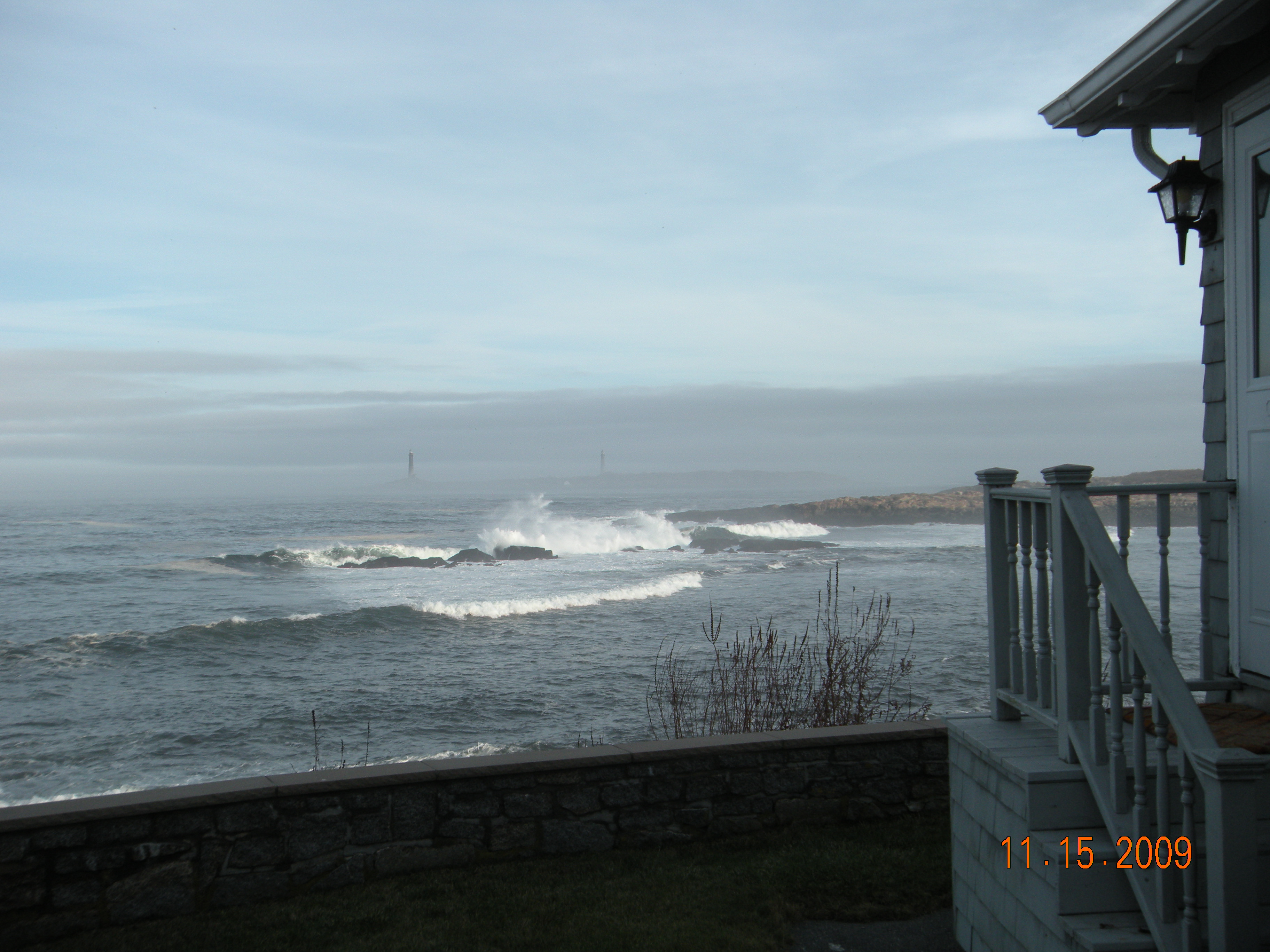
So, that’s number one: pleasing others. I was thinking about how I spent the first year in the cottage by the sea, entertaining family for Thanksgiving, Christmas, Easter, birthdays, as well as sleepover weekends. I was reminded by my landlady recently that I took the cottage “to write.” But because the locale was so incredible, and mostly because I thought this was a once in a lifetime opportunity that might not repeat itself, I threw myself into opening it up to as many people as I could. It was a lot of work. It was also fun. But it was a lot of work.

Now that we are beginning our third season, things have settled down. A lot. I’m going to write again and spend time by myself in addition to being together on the weekends with my husband, G. I’ve brought up a minimal amount of dishes and things to have around. I’ve left open the view of the room from end to end so that nothing interferes with taking in the ocean view.

It’s the same with other occasions too. I used to do what I knew someone else wanted me to do–but was uncomfortable for me, and now, I don’t do that anymore. I do as much as I can. But I am finally learning how not to step over my own line in the sand. Or, even to acknowledge to myself that I even have a line in the sand!

I have thought about why this is so hard for me. Could it be due to my being Asian? or just because I’m female? Maybe it’s because I don’t think I am very important in the grand scheme of things. And that to justify my existence, I made it my business to make other people happy. Except, sadly, you can’t. I mean, I can do things so that others have an enjoyable time. But I can’t make them happy. And I can’t keep myself in the closet anymore either.

So, here’s to walking the talk of being myself. All the time.

more breathing room. . .


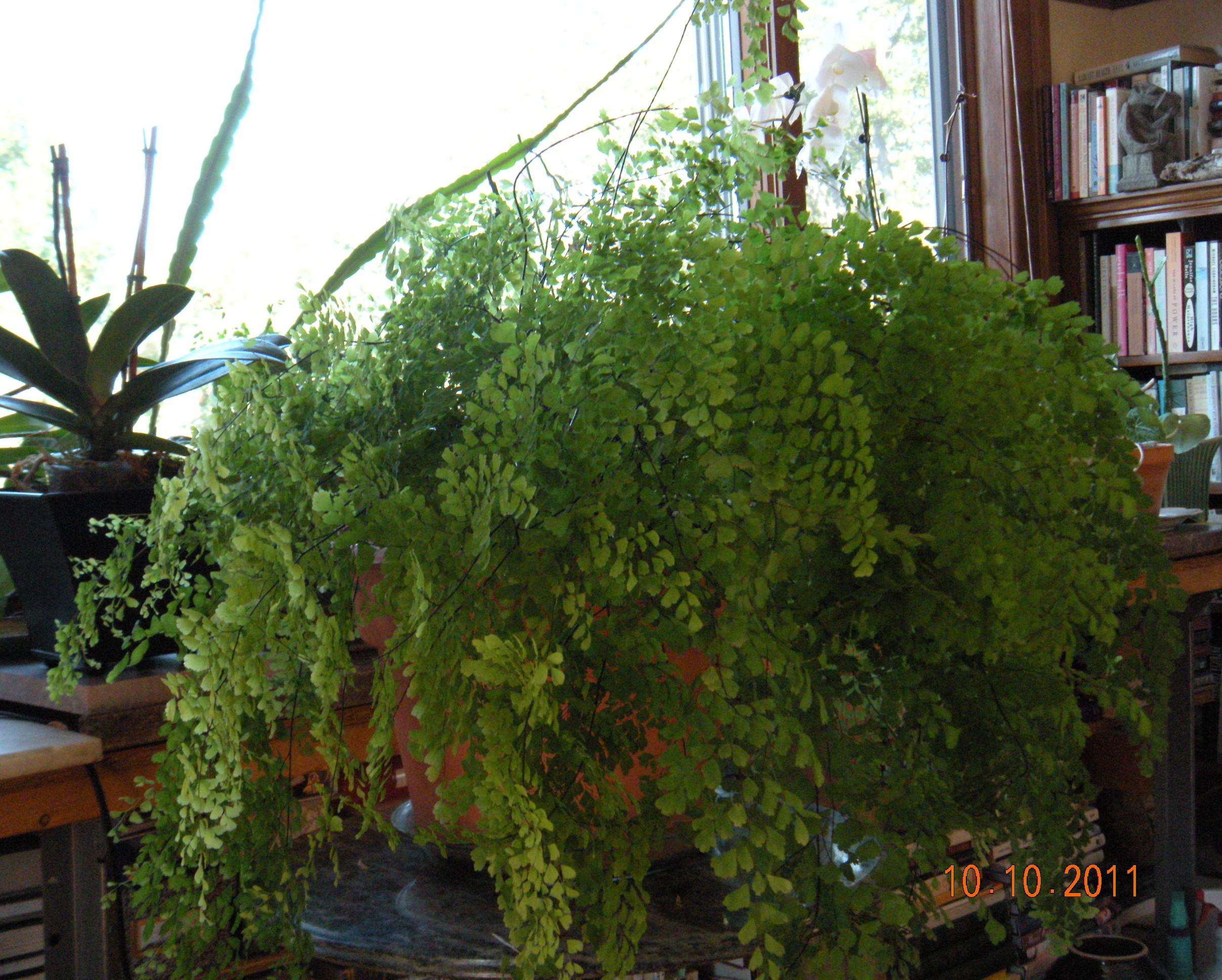
As some of you readers know, I’m fond of maidenhair fern plants and have had them around for decades, their well-being reflecting my own, it seems. Like me, they are high maintenance, requiring constant tending (watering, misting, etc.) On the other hand, hopefully also like me, they are worth it!

The last days of summer hadn’t been that great for me and the maidenhair fern reflected that reality–it was crammed into a corner, brown bits and hazy yellowing parts all over it. I even thought a couple of times about getting rid of it, not having to tend it, nor having this kind of barometer of myself around anymore. But today, on a cool and sunny Fall day, with the full moon ready to shine forth tonight, I moved the bedraggled thing and put it on a marble pedestal stand in the middle of the room. I brought along a brown paper bag, a pair of scissors and sat in a chair cutting out all the frayed parts.

I was surprised to see that it wasn’t as bad as I thought, once I removed all the dried up parts and the yellowed leaves, I gently lifted up the fronds, untangling them as I went along until none were weighted down by any others that might have been overlapping them. This action seemed to give the plant a huge sigh of relief, now free to stretch its limbs with a huge yawn. I laughed out loud at this image as I moved the Meyer lemon tree into the window where the fern had been. The orchid plants were also trimmed and cleaned up on the shelf in back of the fern. I shifted the stand a little to the left after opening up the windows to the fresh air. Everyone felt better, I thought–or everything, that is.

It always amuses me when these simple acts seem to mirror my self. There’s more space in my head as well as in our schedule, now that the Fall season has begun. Most of all, I think it’s being aware of using that space when I think about things I think I have to do, but don’t really need to. Nor, to have things a certain way, just because. More breathing room allows one to take deeper breaths. More oxygen.

That’s a good thing for plants, and for women too!

waste not, want not. . .

I was thinking about this old adage the other day. Because of all the cleaning out and simplifying that has gone on this summer and into the fall, I’ve had a lot of opportunities to come across how much I have wasted because of how much I have wanted in the past. I guess it happens to all of us at one time or another. I have looked at things in my hand and wondered what could have possessed me to want to buy it in the first place!

Fortunately, I have outlets for these objects: consignment shop, auction gallery, goodwill, trash pick-up. It’s getting there. At the same time, I’ve learned how to pay more attention to cooking less because we are eating less. And to using things up in the fridge before buying more. These sound like simple rules of frugality. But I haven’t been as careful as I am now. And it’s not because I have to be, either. It’s because it feels good to do it. For George and me to share an order of a bowl of homemade clam chowder from our local restaurant up here rather than buying two orders. We don’t really need more than that, especially when we’re sharing a sandwich to go with it.

So, I’m on a binge to waste not, and more importantly, to want not. What has happened is that I am savoring more than ever what we already have. And for that, I am thankful.

heart’s desire. . .


I had to chuckle over the weekend when I showed someone a project I was doing, one I was pretty proud of. From her queries, it became clear to me that what I had thought was what I wanted to do, clearly didn’t turn out that way when a third person had a look at it! I was very grumpy about it, driving home. Later, I started switching things around.

Voila, the project came alive to what my original heart’s desire had been. I marvel at how we obfuscate what we are doing merely by the act of trying to please others. The first version was set up to appeal to a bunch of potential readers. I find that’s the biggest trap for me as a writer. To have an imaginary handful of readers in my mind’s eye, and to write something that I would want to read if I were in their place.

That’s the joke on me, though. When I am being myself, I am not able to be in their place because they’re them and I’m me. Duh!

So, the only person I can be sure to please when I write or create things is. . . myself. I suspect there might also be something Asian about this kind of deferral from myself. That is, trying to make sure that everyone else is pleased before I figure out what it is that would please me. Or, maybe it’s just being female. Or being a mother. GAG–is there no way out of this trap?

I’m pretty clear about what I want most of the time. At least I used to think so. Now, I’m not so sure but I’m not that upset about it either. This was a very good lesson. Please myself first with what I create. And don’t worry so much about others.

Finis.

P.S. I’m going to join Nanowrimo too–national novel writing month–because I think it will be a lot of fun and also funny to write 50,000 words in the month of November along with a bunch of strangers who keep track of one another’s progress online. Why take it so seriously? Just learn something and keep on doing things, willya?

equinox . . .


It might be due to the effect of the equinox that we just experienced yesterday that I found myself creating a sort of balance sheet when I woke up this morning. First, I listed all of the things that I feel remorseful about in my life. This includes not taking care of the tiny turtle that a friend gave me in the third grade all the way through mishaps I created for myself during my college days and down to the present day. Little things that have gnawed at me my whole life and big things that I can’t do anything about but have saddened me. The “Remorse” heading had twelve items listed underneath it. I was kind of surprised there were not more after I had done my “Scrooge-like raking over Christmases past.”

As I looked at this list of “mea culpas”, I suddenly had the idea to make a list of “Satisfactions” I have felt in my life. This was not in the game plan when I first set out on my “Remorse” exercise. Extemporaneously and without a lot of thought, I jotted down things I felt I had learned, accomplished or overcome. To my surprise, this list was longer than the first one and had seventeen items. The items were all biggies and there were no fillers in either grouping. I was surprised that “Satisfaction” was longer than “Remorse” because it certainly hasn’t been feeling that way lately.

Then, I made a heading called “Moving Forward.” And here, I’m going to paste in the actual language I wrote:

“Moving Forward: Take ownership for my satisfactions and responsibility for things I feel remorseful about. And then let it all go. Stop striving to prove myself or to make something of myself at this point in my life. Just be and be true to myself. Act intuitively and stop reaching out. Let whatever will come, come to me instead. Change the energy and the direction of the dynamic. And be grateful to acknowledge all of the above, the good, the bad and the ugly. Catch myself when I am being judgmental or defensive. Be as kind as I can be.”

And that’s all. Except perhaps to light some sage and rosemary smudge that I have on the bookshelf in its large abalone shell. So that the smoke clears the energy of the past. And to live the life I really have today.

legacy. . .


I’ve been reading “Although Of Course You End Up Becoming Yourself–A Road Trip with David Foster Wallace,” by David Lipsky, a writer for Rolling Stone magazine. It’s a remarkable log of five days spent together when DFW’s huge book, “Infinite Jest” was published in 1996. Wallace, as many of you may know, suffered from depression and after winning the MacArthur Fellow award after his books were published, suffered setbacks due to withdrawal from an anti-depressant drug called Nardil. Eventually, nothing worked as a substitute, including electro-convulsive treatments. And although he was happily married for four years, he hanged himself at the age of 46. He was a good friend of Jonathan Franzen too–although JF appears to be much more openly ambitious while Wallace appeared almost shy about his fame.

In this book, he talks about what writing means to him. “If the writer does his job right, what he basically does is remind the reader of how smart the reader is. Is to wake the reader up to stuff that the reader’s been aware of all the time.” From reading “Infinite Jest” reviews on Amazon.com (there are over 400 of them, either they LOVE it or they HATE it…) it seems that he has depicted a picture of America as a place of addictions, and especially to pleasure which eventually kills them. One incredible reviewer said they were so sad to read the last page that they immediately started reading the beginning again, only to find more pleasure and understanding in the second reading than the first. Thus, Wallace’s book invoked the very pleasure addiction principle within the actual reading and structure of the book! Endless addiction to the book’s reading. It is over a thousand pages long and I’ve reserved it at the library. People say readers in their 20’s and 30’s are more attuned to the kind of world described in the book–but I’ll give it a try anyhow.

I’m writing about this because I am moved by what comes across in Lipsky’s journalistic observations about David Foster Wallace–his sincerity, modesty and innocence. The five star reviewers on Amazon who write lengthy descriptions of why the novel touched them said in one way or another that it changed the way that they looked at their lives and the world around them.

How many books do that these days?