mulberryshoots

"Tell me, what is it you plan to do with your one wild and precious life?" ~ Mary Oliver

to be . . .

DSC_0436_3Hamlet said, “to be or not to be, that is the question!” For women, it might be more complex than that. I’ve noticed that we women as a group may find it hard to speak up for ourselves or even to say who we are without fear of hurting other people’s feelings. So, it’s not just a matter of being or not being, it’s complicated by our female imperative to be nice.

I don’t know why or how we became socialized this way where there seem to be extremes of a silent majority of women who don’t know how or don’t feel comfortable voicing who they are or what their lives mean to them. If a generation of women (our mothers) were denied educational opportunity or personal independence due to the times they lived in, they usually didn’t complain much, being glad they had what they had after all.

Then there’s the other end of that bell curve where a (very) few vocal women act as outspeaking surrogates for the rest of the female population. Take for example, Hillary Clinton, who, whether you agree with her or not, is self-confident enough to call down senators who were badgering her at the senate hearing on Benghazi. Who else? Kathryn Bigelow, married for three years to James Cunningham, and the director of a movie where torture is highlighted. Or Angelina Jolie who is not so much vocal but demonstrates her compassion for others through her actions on behalf of the disenfranchised.

Even Michelle Obama, who has a law degree, intelligence and instincts probably as good as or even more intuitive than her loner husband, the President, is careful to keep her talents and gifts shrouded because the American public can’t stand someone who might threaten them outside the role of traditional mother and wife.

And we live in AMERICA and it’s like this, not like in India where women are so unvalued as to be blamed for rape, the victims of so-called “honor” killings and so on. Sometimes, I’ve observed women grappling with whether to leave a marriage because leaving might be easier than speaking up and constantly standing up for yourself to a partner whose obnoxious attitudes are easier to resign yourself to, thinking that he’ll never listen, much less want to make a change. These are underground kinds of struggles we usually don’t tell anyone about and might often be hard to admit to even to ourselves. Women are so powerful and yet we can give up our power so often.

Where and when were we taught to be afraid to be ourselves and to own it? To put everybody else first? Feminism missed that boat it seems, in its important battles for the vote, for equal pay, for professional recognition, and now being allowed to fight in battle alongside men.

What am I missing here?

“sweet spot” . . .

DSC_0720Since it’s Sunday, I was reading the New York Times, one of my favorite pastimes, and came across an interview in the business section with Kon Leong, CEO of ZL Technologies about what he seeks in people who want to work for him. Concluding the article is his definition of what a “sweet spot” in life is:
” . . . the intersection of what you’re really good at and what you love to do. If you can find that intersection, you are set. A lot of people would kill for that because, at 65, they’re retiring and never found it.”

I thought about that and am glad that G. embodies someone who is living in his sweet spot. He tunes and restores pianos and is good at it. And he loves it too (he’s right now typing out bills and appraisals which he hates to do, but even with that, he loves what he does.) For over twenty-five years, I was really good at directing project management in biotech start-ups over and over again. But I didn’t love it. It was too rife with politics, power struggles and stress. I’m grateful for the opportunities and I’m also glad it’s behind me.

Now that I’m retired, I am loving doing what I’m really good at doing: cooking, keeping house, knitting, playing music, watching TV, reading books and magazines. It’s okay to love what you do, even if it’s mundane, repetitive and, well, not written about in the New York Times! I’ve always been curious and interested in learning new things especially now that I have more time to do it.

To each their own. We’re lucky if we ever find it. Some of us are already doing it without even knowing it! And it’s especially sweet when you do notice it!

“knitty kitty” . . .

Knitty Kitty post photoOkay, so maybe I overdid it. I started knitting a sweater for M. on Tuesday, this week. I started the back on size 4 needles for the ribbing and size 6 for the body of the sweater. I noticed that the knitting was rather stiff, the gauge being a little tight. So I started over after trying out size 8 needles for the main part of the sweater. Once I had the new gauge, I recalculated the stitches needed for the pattern of seed stitch, purl and staghorn cable. The larger needles gave the knitting more drape and felt softer. Perfect!

I knitted up the back to the armholes, skype-ing with M. to make sure we had accurate body measurements: edge to bottom of the armhole, armhole to shoulder, shoulder to wrist. She wants the sweater ribbing to hug at the waist rather than having an overly large fit. Last night, while watching a couple of TV shows, I cast off at the shoulder line, which finishes the back. I cast on fifty stitches to start the left front of the sweater.

This morning, I woke up with a sore right shoulder. I had also noticed a slight “click” in my shoulder when I rotated my arm, which became apparent when two-thirds of the back was finished. So this afternoon, I’m headed out to my chiropractor for some treatment to the shoulder and general straightening of my spine. I haven’t been there in awhile since I was doing shiatsu, but this is a good time to get back to realigning everything again.

M. wrote to me that “Knitty Kitty” ~ the name of a children’s book that she reads to Josie ~ needs to take a break. I guess you could say she’s right about that.

making things right . . .

DSC_0021_2Have you ever had an uneasy feeling about some loose ends that you’re not comfortable with? I have, although only a few, thank goodness. This holiday season, I’ve taken care of one of the most important ones: that is, to send a much loved Chinese carpet hanging of the Eight Immortals which hung in my late mother’s apartment to the family that took care of her for over twenty years during the last phase of her life. It was a thank you and appreciation for all of the times that they included her as family at Thanksgiving and Christmas, Easter and at other family gatherings of their very large clan. She had knitted sweaters for just about everybody there while she was alive.

Reconnecting with a niece (one of my brother’s daughters) was also important while she went through some medical procedures right before the holidays. We’ve had such a nice correspondence ever since and I intend to keep in touch with her as she prepares for college. My grown-up (almost) granddaughter, A. came and visited with her friend, M. the day after Christmas. The cinnamon rolls weren’t as tender the day after they were baked, but we had a lunch with leftover filet of beef, sliced up on toast with gravy on top. Two batches of crispy, skillet potatoes later, we played the piano for each other and finished off our visit by cracking a Droste orange chocolate apple for dessert.

I don’t know about you but I find there are other loose ends lurking around in the background of one’s consciousness: an ex-husband, an ex-old boyfriend, perhaps someone you’re not friends with anymore but wish you hadn’t parted ways. Some of these, I find, might still be accessible but mostly not. With the holiday goings on, especially the birthday DVD, I can see things more clearly. And most of all, that I want to be intentional everyday to provide loving gestures to those who are important to me. And not to let my usual crankiness get in the way. That’s a pretty big idea: to catch the cranky in time and to crank up the love and affection to communicate how I really feel to those around me.

Perhaps that’s the best way to make things right, all around. Any other ideas?

playing the piano . . . (a review)

Xmas 2005-Spring 2006 583_2_2resizedA pianist’s journey through a composer’s shadows (Boston Globe, 14 January 2013) by David Weininger

“I will be surprised if 2013 brings a musical event more audacious, more edifying, and more fulfilling than British pianist Paul Lewis’s recital on Saturday.

Lewis, who is in the prime of his career, was making his long-overdue Boston debut. Happily, he eschewed the strategy of offering an assortment of pieces chosen to show off his range. He chose instead to make a bold statement about his artistry by playing Schubert’s last three piano sonatas. Like Beethoven’s late sonatas, Schubert’s both sit at the heart of the piano repertoire and exist in their own rarefied world, one not easily infiltrated. Tackling all three on the same program is highly unusual, but Lewis acquitted himself brilliantly.

Schubert was close to his premature death in 1828 when he wrote the three sonatas; they were published after his death and largely neglected in the 19th century. In them a relentless struggle between light and darkness plays out. Rather than shy away from the conflict, Lewis magnified it wherever it appeared. The opening movement of the C-minor Sonata, D. 958, was full of driving forward momentum. Gentler, sunnier stretches of music were played quickly, almost coldly, reinforcing the idea that whatever comfort the music had to offer would, sooner or later, retreat back into gloom. Lewis’s feat was to convey the expressive drama of the music without letting it overtake the virtues of poise and phrasing.

Indeed, Lewis’s approach was equal parts intelligence and daring, a fusion that emerged clearly in the slow movement of the A-major Sonata, D. 959. This is some of the most wrenching music Schubert ever wrote. Lewis consistently pushed back against its rhythm so that it seemed to limp forward irregularly. You got the impression that Schubert had to be pushed, with the utmost reluctance, to commit such sad sounds to paper. The effect is difficult for a performer to achieve without seeming self-conscious, but Lewis nailed it. The crisis that erupts in the middle of this movement was almost too painful to bear.

The final sonata, in B-flat (D. 960), is usually held to be the greatest of the three. Ironically, it is in large part the most placid and least openly conflicted of the three. Yet on Friday there was always a discomfiting sense that shadows lay just around the corner, hidden from sight. Perhaps it was the cumulative effect of what had come before; perhaps its lengthy, unfolding melodies were meant to convey resignation rather than serenity.

In any event, Lewis’s playing was fluent, insightful, and sensuously beautiful by turns. It is impossible to call any performance of a piece perfect, but it is hard to imagine this difficult music rendered more convincingly.

A well-filled Jordan Hall gave Lewis a well-deserved ovation. They did him a greater honor by remaining silent throughout almost the whole concert. With any luck, he will return soon.”

playing the piano . . .

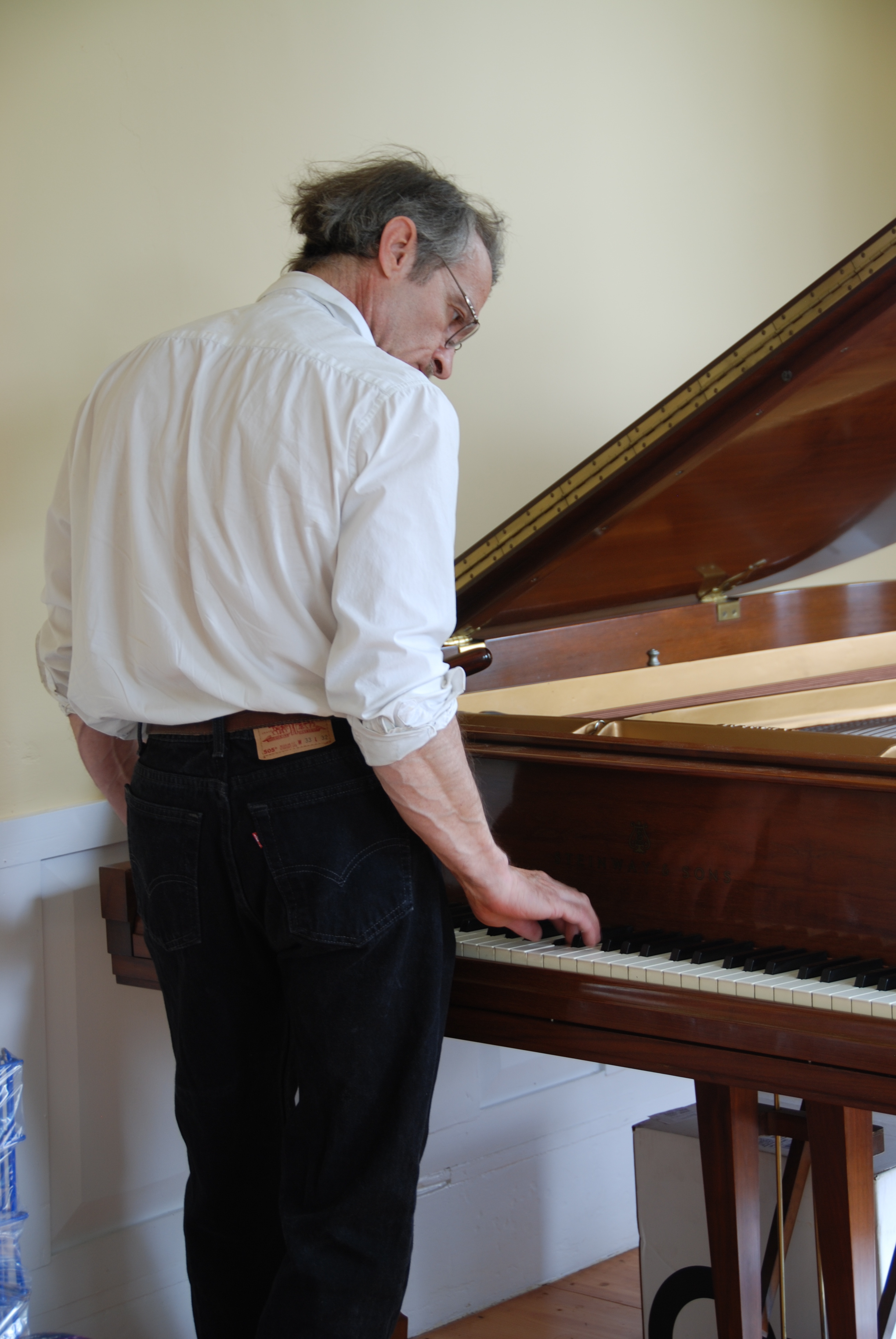
~ photo by C., part of a Christmas diorama she made of me at my Steinway "B" grand piano named "Victor" rebuilt by G. 20 years ago ~

~ photo by C., part of a Christmas diorama she made of me at my Steinway “B” grand piano named “Victor” rebuilt by G. 20 years ago ~

As I’m writing this post, I’m listening to Paul Lewis, the British pianist, playing early Beethoven sonatas. Last night, as my Christmas gift to G., we went to hear Lewis play at Jordan Hall in Boston. I had managed to purchase the last two left-center balcony tickets for the recital.

There was a young (around 5) Chinese boy sitting behind me, his older sister (around 11) and his mother. The boy had the sniffles and kept blowing out of one nostril all the way through the concert. I ignored him because at least he didn’t talk while Lewis was playing. Another young boy around 8 years old sat beside G. These young children at this concert (at around $75 a ticket) reminded me of when my middle daughter, M., played the piano and we took her to hear Horowitz because we wanted her to have a chance to hear him play before he died some years later.

Paul Lewis played three Schubert sonatas for the program: the C minor, A major and B-flat major late sonatas that Schubert managed to write immediately before he died at the age of thirty-one. I’m familiar with these pieces and Lewis did everything and more than one might have hoped: wonderful, round tone, clarity, color with gorgeous pianissimo, a confident yet ego-less grasp of the music and just beautiful piano playing. People stood and called out “Bravo!” even before the intermission.

I thought I had heard a ringing of G# in the lower register during the A major sonata. The piano tuner came out, played the notes and adjusted a note in the upper register. Then distracted by someone on the auditorium floor, he left the instrument and didn’t touch it again. I thought that was a little odd. G. tunes and rebuilds pianos so he had some opinions of the piano too.

In any event, when Lewis came out to play the big B-flat sonata, I thought something was off from the way he had carried himself in the first half. Perhaps it’s because the piece itself has a shallower melody bed than the the other two sonatas, but I definitely had the uneasy feeling that Lewis was, well, uneasy too in the 2nd half of the program.

Even though there was much applause, he demurred from playing any encores. I had hoped we would hear some of the shorter Schubert pieces, “Moments Musicaux” but he didn’t play anything else.

I have to confess that hearing him play on the Steinway Concert Grand in Jordan Hall made me feel, once again, how proud I am to be married to G. who has dedicated his life to pianos. I think he felt something too in his own way. DSC_0006_2

During the intermission, I chatted with two couples who sat nearby. I said I had read online that Lewis’s father had been a dock worker, his mother a housewife and there had been no vestiges of music in his heritage. One said they had never heard of Paul Lewis before and had come as part of their Celebrity Series tickets. The other said he and his wife listened to Lewis’s recordings of these Schubert sonatas before they went to bed for the last two years!

He asked me what I thought of the way Lewis played Schubert compared to Alfred Brendel (with whom Lewis had studied for a short time,) and I said I thought Lewis’s was better than Brendel’s. I also volunteered that I thought Lewis’s recording of Schubert’s Wanderer Fantasy was better than that of Sviatislav Richter, whose recording my daughter C. (the photographer) would listen to every night when she went to bed at the age of about eight. (What’s this thing about people listening to Schubert before going to bed?)

Anyhow, it turned out to be a most wonderful experience. It makes me think I’m getting ready to practice again: maybe the Schubert short pieces and definitely some of the early Beethoven sonatas. If you would like to listen to Paul Lewis, here is a link to the recording that got me hooked in the first place, especially the 6 Moments Musicaux: http://www.amazon.com/Schubert-Works-for-piano-vol-2/dp/B0096YBRR6/ref=sr_1_8?ie=UTF8&qid=1358099759&sr=8-8&keywords=Paul+Lewis+Schubert

“waves crashing on the shore” . . .

These are photos of G. and Josie pretend playing there are waves crashing on the shore:
DSC_0088_2DSC_0087DSC_0086DSC_0085_2DSC_0084_2DSC_0083_2DSC_0082_2DSC_0081_2DSC_0080_2

on the beach . . .

Just received a batch of photos from C. (@1000!) of our holidays. Here’s some of me and G. walking along the beach in Truro.

DSC_0208_2DSC_0209_2DSC_0210_2DSC_0214_2DSC_0215_2

“Wild Flavors” . . .

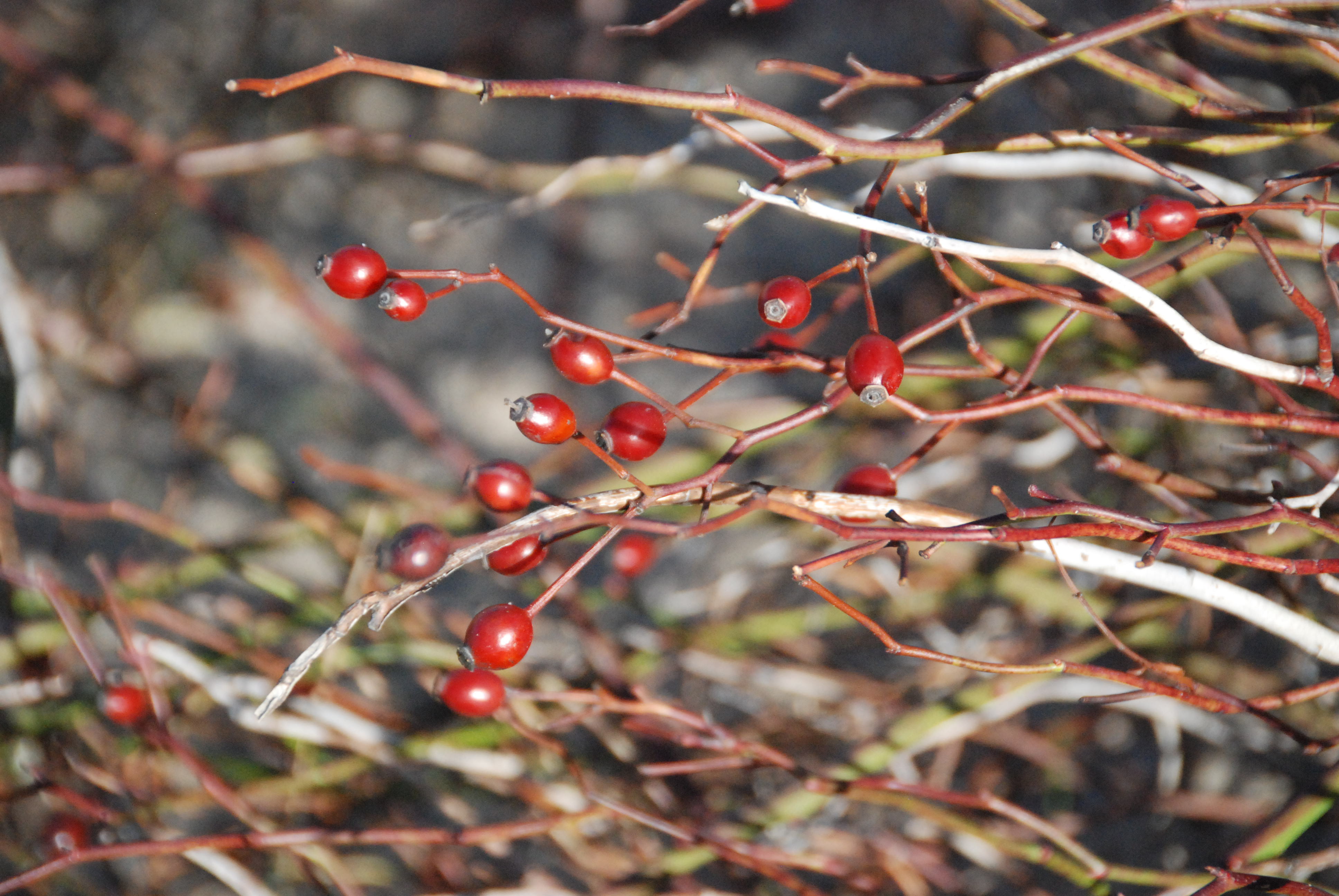
tree with berriesThis book by Didi Emmons about her transformation as a cook after visiting Eva Sommaripa’s farm in Dartmouth, MA. has consumed me since I opened it in the mail this afternoon. It is a tale of farming, food foraging and eating naturally from picked greens and herbs, wild mushrooms and bartering for other foodstuffs. It reminds me somewhat of Helen and Scott Nearing’s back-to-the-land movement but on (foodie) steroids. Its inspiration makes me want to eat way more simply and to rely upon myself and to waste not, want not except what I make with my own hands. A good idea for oldsters and younger-sters alike.

Here is an excerpt from the book entitled: “Breakfast Ideas from Eva’s Head Farmer” to give you a taste of this wonderful book:

“Peter Levasseur, Eva’s head farmer, is thirty-three years old and packed with lean, hard muscle, like the deer and coyote that roam the area. He lives in Eva’s nearby cottage with his two dogs, Dukka and Mazi.

Peter has a talent for cooking and as he does in farming, he pays attention to details in the kitchen. His food is some of the most delicious and imaginative I’ve eaten. i asked Peter about breakfast–the only meal I’ve ever seen him consume, since he eats lunch on the run and dinner around midnight. He told me:

‘First I make French press coffee, locally roasted. I grind it with the partially shelled caco nibs that were given to Eva by a local chocolate company. I pour the hot coffee into a mug with a vanilla bean slit in half. Then I stir in raw honey.

My breakfast changes with the seasons. I make or buy sprouted bread. I slather on raw honey, then raw almond butter; then I drizzle on unfiltered flaxseed oil or coconut oil. I then sprinkle on Himalayan sea salt and freshly grated nutmeg. Also, for a beverage, I like to juice chickweed with ginger and apples.

I asked him whether his breakfast was seasonal.

I have a huge mortar and pestle. Come July I pound basil with garlic, oilve oil and goat cheese. I eat this layered with tomatoes on sprouted English muffins.

Another favorite is mixing raw oats and local berries (wineberries, raspberries, or blueberries) with yogurt and honey.

Other times I crush garlic in olive oil and spread this on an English muffin as a base coat, then I layer on hummus, tomatoes, and fresh herbs (they grow 3 feet away.)

I make oat shakes. I soak rolled oats overnight in cold water, the odd cashews or almonds, and fruit and blend it all up in a blender or Vitamix.

Also, a favorite snack of late may sound odd: chopped ripe tomatoes, chopped onion. Heritage brand cereal (which is like frosted flakes without sugar), garlic, basil, olive oil and lemon juice. I love it!'”

That’s just a single page from this volume. Emmons, the author, runs restaurants and a non-profit bakery in Boston for those transitioning from homelessness. She writes that she can lose her tummy roll just by eating at Eva’s farm for a week. I’m thinking it’s a refreshing change to start the new year. The fridge is near empty and we’ve been eating out of the pantry since the huge holiday feasts we partook of for days at Christmas and for my birthday holiday. I’m thinking that now might be a good time to make a list for what to buy at the health food market tomorrow.

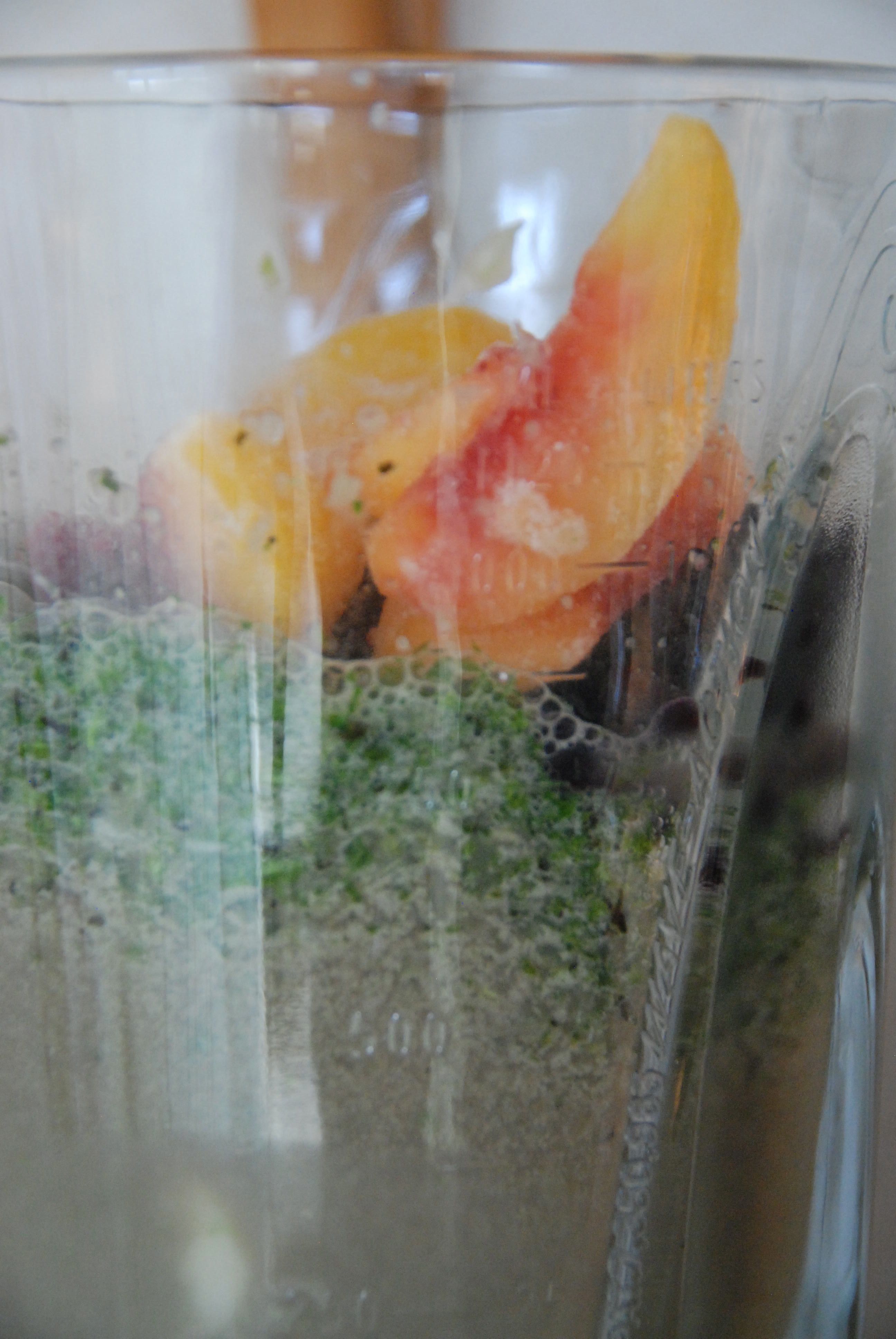
peach smoothie in the making

peach smoothie in the making

Postscript: Since writing this post, I have discovered a perfect breakfast for me: Shiloh 7-grain sprouted bread, toasted; spread with Barney brand crunchy almond butter (no oil film to stir up, just tasty crunchy almonds,) drizzled with Billy Bee Canadian honey. I ate one slice and had to make a second, it was so good. For lunch, looking forward to trying toasted whole grain sprouted bagels with poppy seeds, layered with Boursin herb and garlic cheese spread, thin slices of tomato and red onion on top. Yum!

‘shabby chinese’ . . .

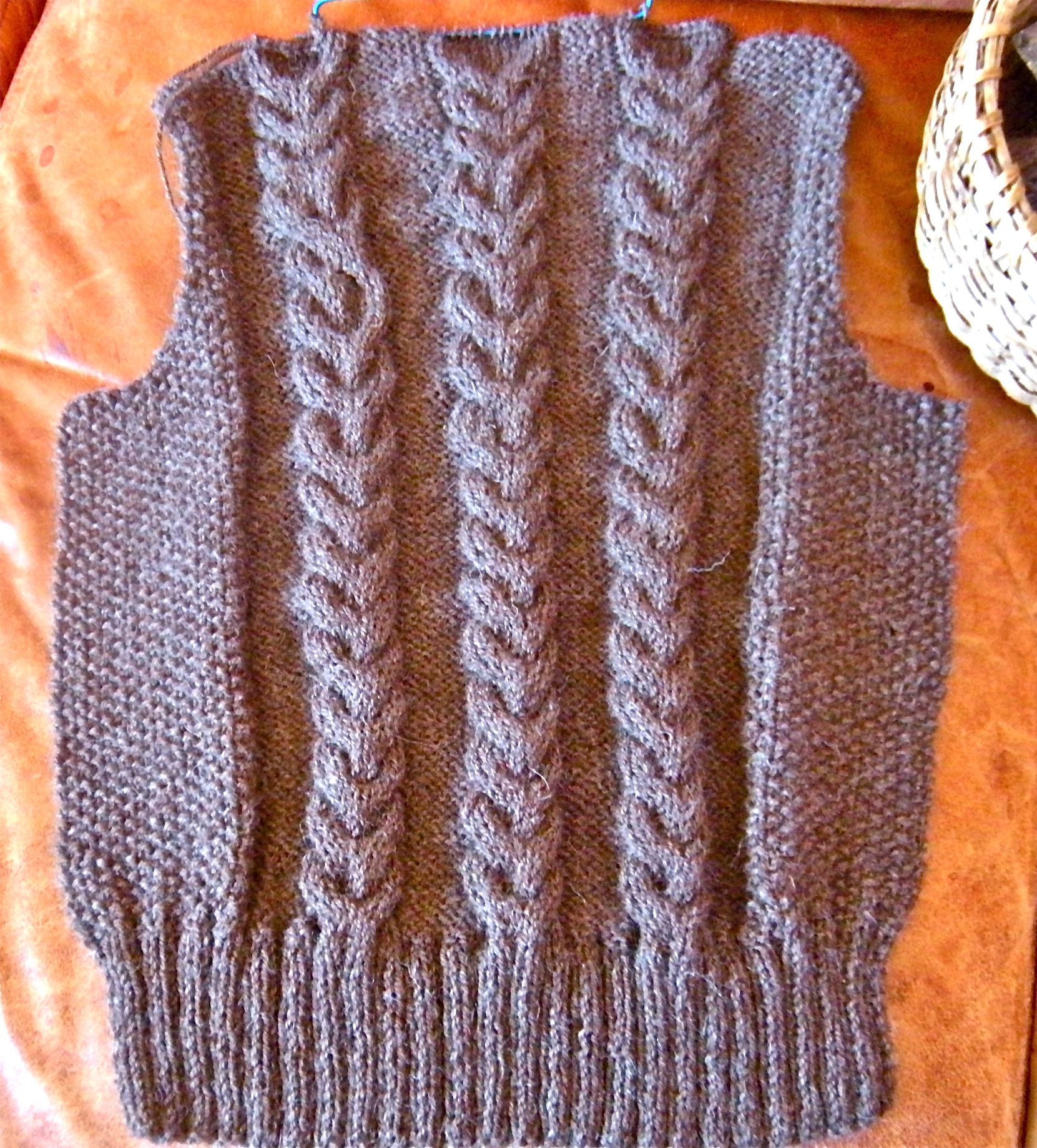
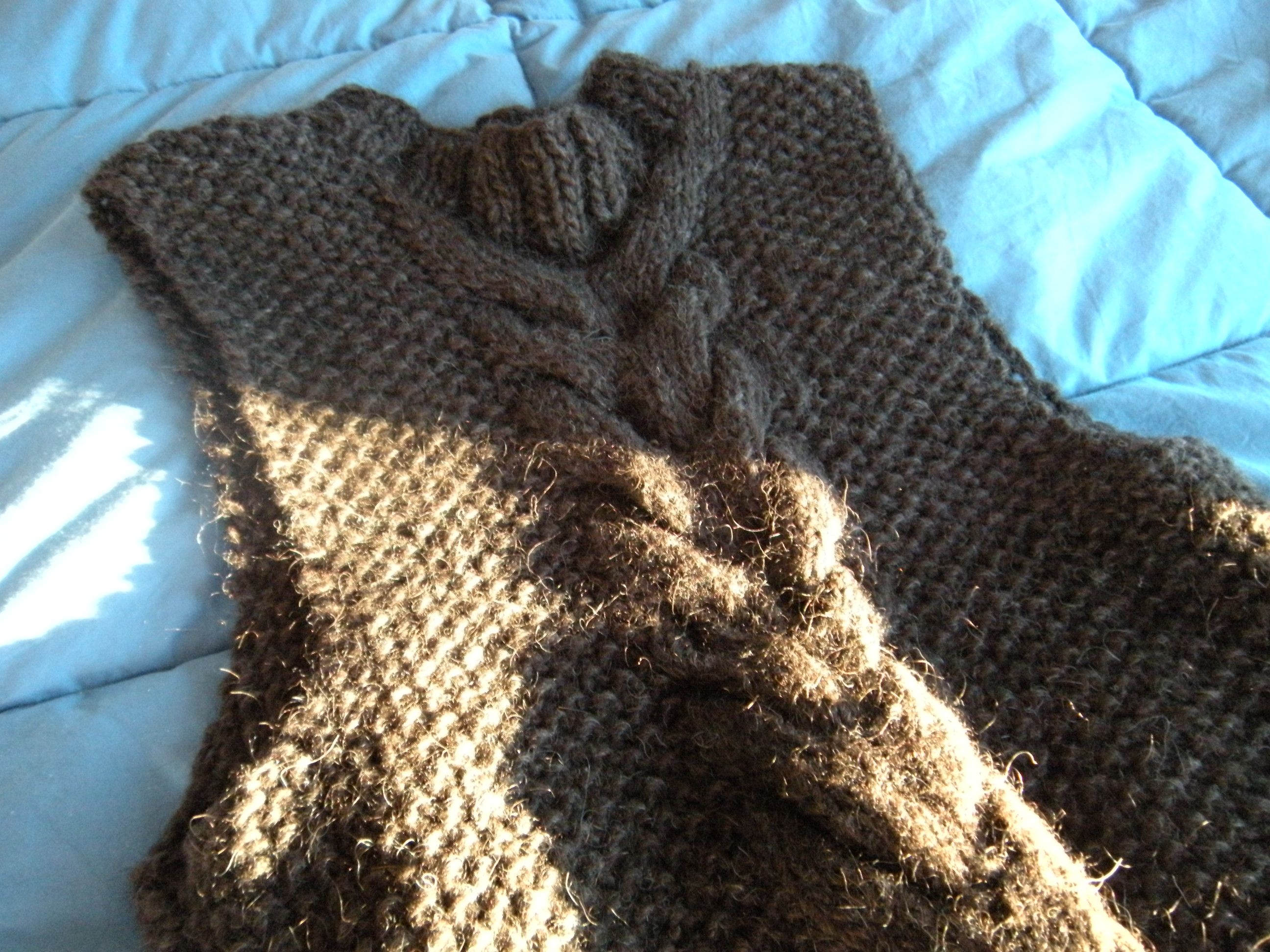
brown vest 2I laughed out loud today when reading an email message from a knitting friend of mine. I had just sent her photos of the free-form sweater vest that I knitted from lopi lite yarn called ‘black sheep.’

She wrote that her daughter had characterized her as being either a “princess” with lots of flowers and sparkle, or the other extreme of “refugee-immigrant” with stark neutral colors and a kind of shabby look.

I really identify with the “refugee-immigrant” look because (I guess I am one–the immigrant part, not the refugee part) and find myself dressing often in drab colors: my favorite color is taupe, believe it or not–a hard color to find when it’s just right. Anyhow, my brown vest is kind of along those lines and I especially like the way the armhole edging is raw seed stitch and that it curves in slightly. I am planning to knit more of these but am thinking of cropping the sweater slightly and knitting it in different gauges of yarn.

First, though, I’m waiting for some yarn to arrive from WEBS in a ‘peat’ color to knit a replica of a brown sweater for M. that I wore all the time when my kids were growing up. It is an iconic sweater memory for all of us. I’ve knitted a variation before in a heavier alpaca yarn along with a deconstructed meandering cable.
alpaca cable seed stitch sweater

All these knitting projects crowd in on me as I read weaving books about how to set up a warp. Honestly, it seems really tedious to me so maybe saori weaving will continue to be a fantasy in my mind’s eye, a romantic notion that I would be sitting erect with flowing long hair at a beautiful wooden floor loom, weaving my way into the sunset. Instead, the reality may be closer to my shabby chinese aesthetic, sitting on the worn butterscotch leather couch that I found on Craigslist, knitting taupe and warm brown sweaters in staghorn cable and seed stitch, growing my hair out and wearing it parted similar to when I was in my thirties, cooking macrobiotic asian dishes with brown rice and watching DVD dramas like “Homeland” at night with G.