mulberryshoots

"Tell me, what is it you plan to do with your one wild and precious life?" ~ Mary Oliver

Category: Life & Spirit

to be . . .

DSC_0436_3Hamlet said, “to be or not to be, that is the question!” For women, it might be more complex than that. I’ve noticed that we women as a group may find it hard to speak up for ourselves or even to say who we are without fear of hurting other people’s feelings. So, it’s not just a matter of being or not being, it’s complicated by our female imperative to be nice.

I don’t know why or how we became socialized this way where there seem to be extremes of a silent majority of women who don’t know how or don’t feel comfortable voicing who they are or what their lives mean to them. If a generation of women (our mothers) were denied educational opportunity or personal independence due to the times they lived in, they usually didn’t complain much, being glad they had what they had after all.

Then there’s the other end of that bell curve where a (very) few vocal women act as outspeaking surrogates for the rest of the female population. Take for example, Hillary Clinton, who, whether you agree with her or not, is self-confident enough to call down senators who were badgering her at the senate hearing on Benghazi. Who else? Kathryn Bigelow, married for three years to James Cunningham, and the director of a movie where torture is highlighted. Or Angelina Jolie who is not so much vocal but demonstrates her compassion for others through her actions on behalf of the disenfranchised.

Even Michelle Obama, who has a law degree, intelligence and instincts probably as good as or even more intuitive than her loner husband, the President, is careful to keep her talents and gifts shrouded because the American public can’t stand someone who might threaten them outside the role of traditional mother and wife.

And we live in AMERICA and it’s like this, not like in India where women are so unvalued as to be blamed for rape, the victims of so-called “honor” killings and so on. Sometimes, I’ve observed women grappling with whether to leave a marriage because leaving might be easier than speaking up and constantly standing up for yourself to a partner whose obnoxious attitudes are easier to resign yourself to, thinking that he’ll never listen, much less want to make a change. These are underground kinds of struggles we usually don’t tell anyone about and might often be hard to admit to even to ourselves. Women are so powerful and yet we can give up our power so often.

Where and when were we taught to be afraid to be ourselves and to own it? To put everybody else first? Feminism missed that boat it seems, in its important battles for the vote, for equal pay, for professional recognition, and now being allowed to fight in battle alongside men.

What am I missing here?

“sweet spot” . . .

DSC_0720Since it’s Sunday, I was reading the New York Times, one of my favorite pastimes, and came across an interview in the business section with Kon Leong, CEO of ZL Technologies about what he seeks in people who want to work for him. Concluding the article is his definition of what a “sweet spot” in life is:
” . . . the intersection of what you’re really good at and what you love to do. If you can find that intersection, you are set. A lot of people would kill for that because, at 65, they’re retiring and never found it.”

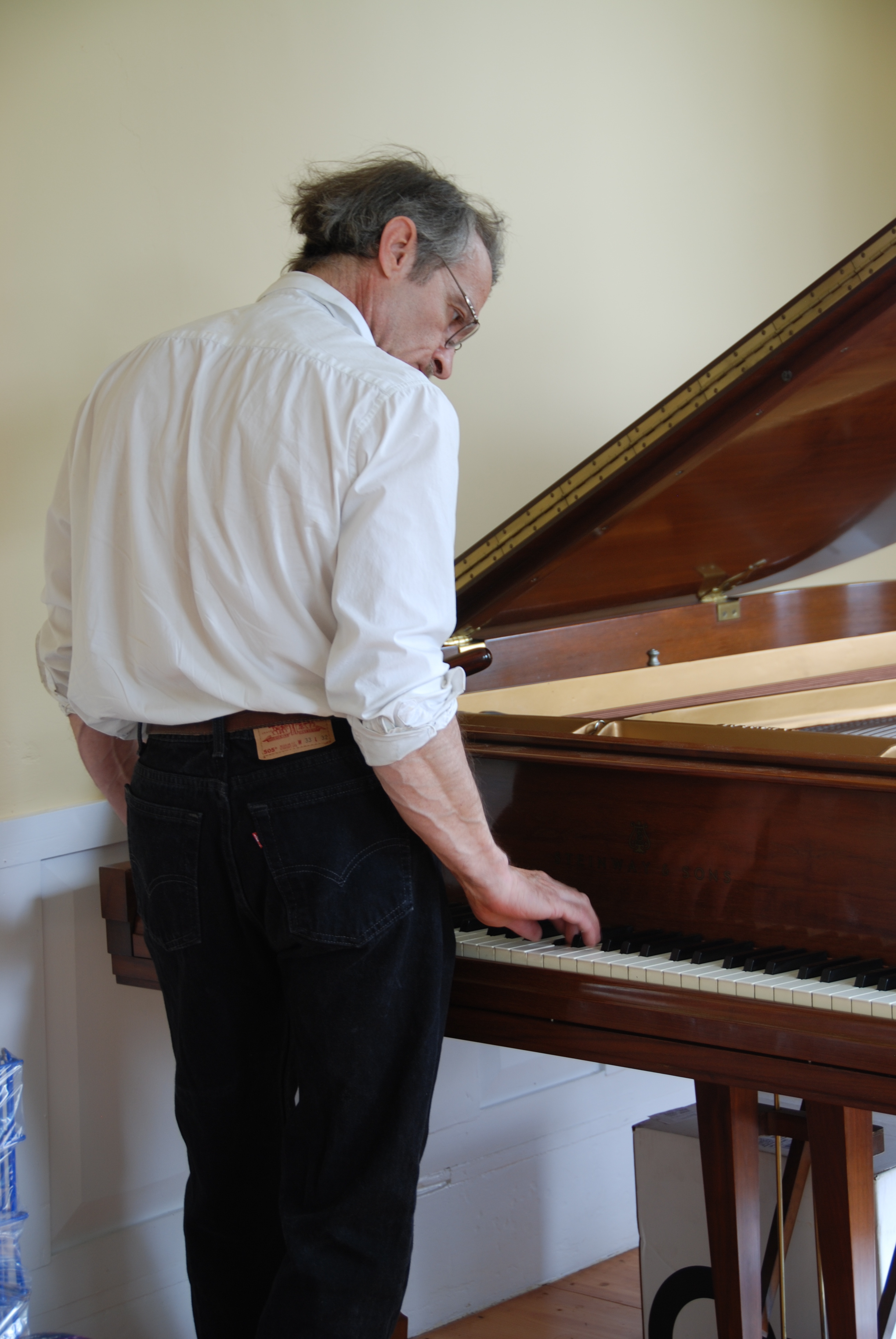
I thought about that and am glad that G. embodies someone who is living in his sweet spot. He tunes and restores pianos and is good at it. And he loves it too (he’s right now typing out bills and appraisals which he hates to do, but even with that, he loves what he does.) For over twenty-five years, I was really good at directing project management in biotech start-ups over and over again. But I didn’t love it. It was too rife with politics, power struggles and stress. I’m grateful for the opportunities and I’m also glad it’s behind me.

Now that I’m retired, I am loving doing what I’m really good at doing: cooking, keeping house, knitting, playing music, watching TV, reading books and magazines. It’s okay to love what you do, even if it’s mundane, repetitive and, well, not written about in the New York Times! I’ve always been curious and interested in learning new things especially now that I have more time to do it.

To each their own. We’re lucky if we ever find it. Some of us are already doing it without even knowing it! And it’s especially sweet when you do notice it!

making things right . . .

DSC_0021_2Have you ever had an uneasy feeling about some loose ends that you’re not comfortable with? I have, although only a few, thank goodness. This holiday season, I’ve taken care of one of the most important ones: that is, to send a much loved Chinese carpet hanging of the Eight Immortals which hung in my late mother’s apartment to the family that took care of her for over twenty years during the last phase of her life. It was a thank you and appreciation for all of the times that they included her as family at Thanksgiving and Christmas, Easter and at other family gatherings of their very large clan. She had knitted sweaters for just about everybody there while she was alive.

Reconnecting with a niece (one of my brother’s daughters) was also important while she went through some medical procedures right before the holidays. We’ve had such a nice correspondence ever since and I intend to keep in touch with her as she prepares for college. My grown-up (almost) granddaughter, A. came and visited with her friend, M. the day after Christmas. The cinnamon rolls weren’t as tender the day after they were baked, but we had a lunch with leftover filet of beef, sliced up on toast with gravy on top. Two batches of crispy, skillet potatoes later, we played the piano for each other and finished off our visit by cracking a Droste orange chocolate apple for dessert.

I don’t know about you but I find there are other loose ends lurking around in the background of one’s consciousness: an ex-husband, an ex-old boyfriend, perhaps someone you’re not friends with anymore but wish you hadn’t parted ways. Some of these, I find, might still be accessible but mostly not. With the holiday goings on, especially the birthday DVD, I can see things more clearly. And most of all, that I want to be intentional everyday to provide loving gestures to those who are important to me. And not to let my usual crankiness get in the way. That’s a pretty big idea: to catch the cranky in time and to crank up the love and affection to communicate how I really feel to those around me.

Perhaps that’s the best way to make things right, all around. Any other ideas?

playing the piano . . .

~ photo by C., part of a Christmas diorama she made of me at my Steinway "B" grand piano named "Victor" rebuilt by G. 20 years ago ~

~ photo by C., part of a Christmas diorama she made of me at my Steinway “B” grand piano named “Victor” rebuilt by G. 20 years ago ~

As I’m writing this post, I’m listening to Paul Lewis, the British pianist, playing early Beethoven sonatas. Last night, as my Christmas gift to G., we went to hear Lewis play at Jordan Hall in Boston. I had managed to purchase the last two left-center balcony tickets for the recital.

There was a young (around 5) Chinese boy sitting behind me, his older sister (around 11) and his mother. The boy had the sniffles and kept blowing out of one nostril all the way through the concert. I ignored him because at least he didn’t talk while Lewis was playing. Another young boy around 8 years old sat beside G. These young children at this concert (at around $75 a ticket) reminded me of when my middle daughter, M., played the piano and we took her to hear Horowitz because we wanted her to have a chance to hear him play before he died some years later.

Paul Lewis played three Schubert sonatas for the program: the C minor, A major and B-flat major late sonatas that Schubert managed to write immediately before he died at the age of thirty-one. I’m familiar with these pieces and Lewis did everything and more than one might have hoped: wonderful, round tone, clarity, color with gorgeous pianissimo, a confident yet ego-less grasp of the music and just beautiful piano playing. People stood and called out “Bravo!” even before the intermission.

I thought I had heard a ringing of G# in the lower register during the A major sonata. The piano tuner came out, played the notes and adjusted a note in the upper register. Then distracted by someone on the auditorium floor, he left the instrument and didn’t touch it again. I thought that was a little odd. G. tunes and rebuilds pianos so he had some opinions of the piano too.

In any event, when Lewis came out to play the big B-flat sonata, I thought something was off from the way he had carried himself in the first half. Perhaps it’s because the piece itself has a shallower melody bed than the the other two sonatas, but I definitely had the uneasy feeling that Lewis was, well, uneasy too in the 2nd half of the program.

Even though there was much applause, he demurred from playing any encores. I had hoped we would hear some of the shorter Schubert pieces, “Moments Musicaux” but he didn’t play anything else.

I have to confess that hearing him play on the Steinway Concert Grand in Jordan Hall made me feel, once again, how proud I am to be married to G. who has dedicated his life to pianos. I think he felt something too in his own way. DSC_0006_2

During the intermission, I chatted with two couples who sat nearby. I said I had read online that Lewis’s father had been a dock worker, his mother a housewife and there had been no vestiges of music in his heritage. One said they had never heard of Paul Lewis before and had come as part of their Celebrity Series tickets. The other said he and his wife listened to Lewis’s recordings of these Schubert sonatas before they went to bed for the last two years!

He asked me what I thought of the way Lewis played Schubert compared to Alfred Brendel (with whom Lewis had studied for a short time,) and I said I thought Lewis’s was better than Brendel’s. I also volunteered that I thought Lewis’s recording of Schubert’s Wanderer Fantasy was better than that of Sviatislav Richter, whose recording my daughter C. (the photographer) would listen to every night when she went to bed at the age of about eight. (What’s this thing about people listening to Schubert before going to bed?)

Anyhow, it turned out to be a most wonderful experience. It makes me think I’m getting ready to practice again: maybe the Schubert short pieces and definitely some of the early Beethoven sonatas. If you would like to listen to Paul Lewis, here is a link to the recording that got me hooked in the first place, especially the 6 Moments Musicaux: http://www.amazon.com/Schubert-Works-for-piano-vol-2/dp/B0096YBRR6/ref=sr_1_8?ie=UTF8&qid=1358099759&sr=8-8&keywords=Paul+Lewis+Schubert

“waves crashing on the shore” . . .

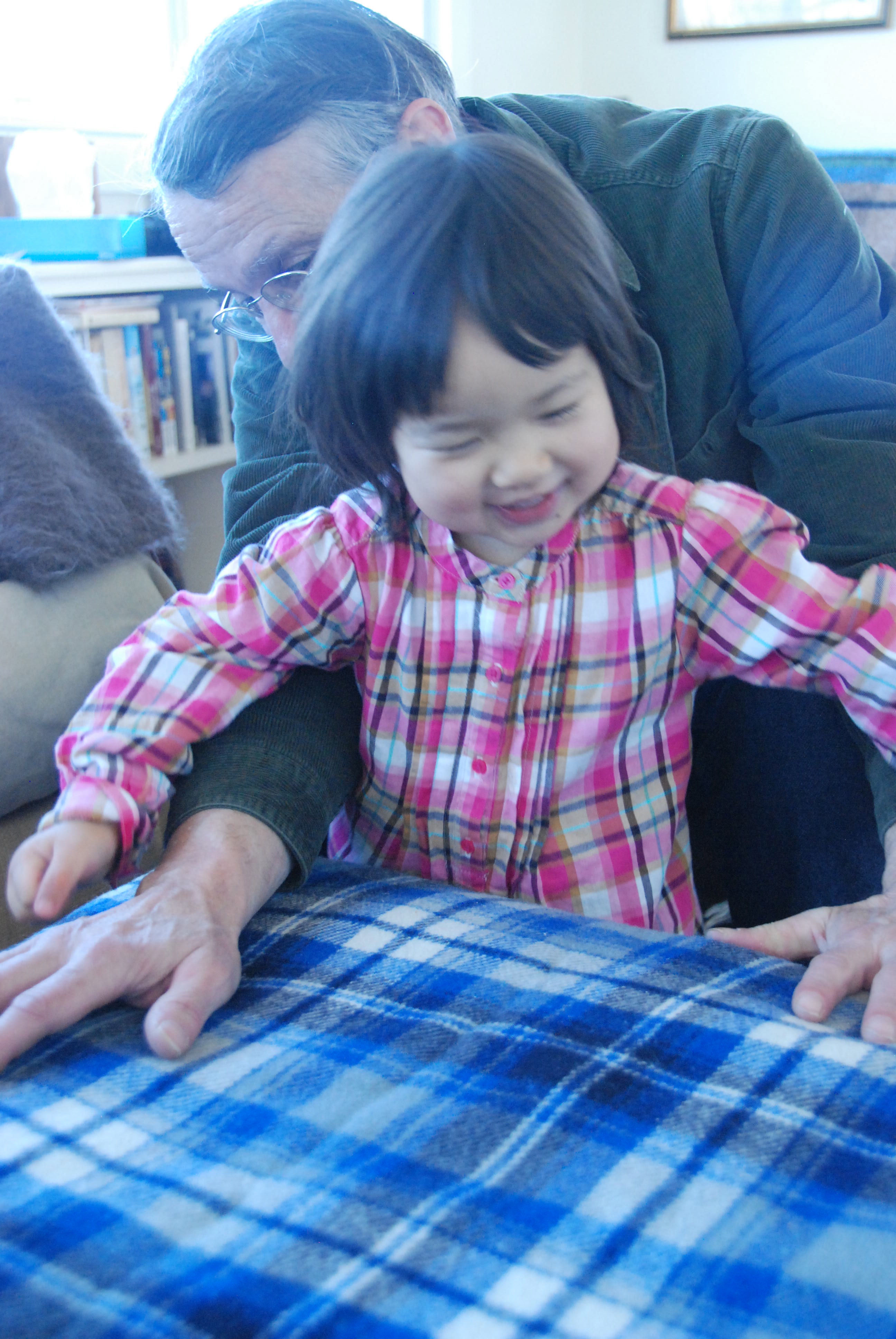
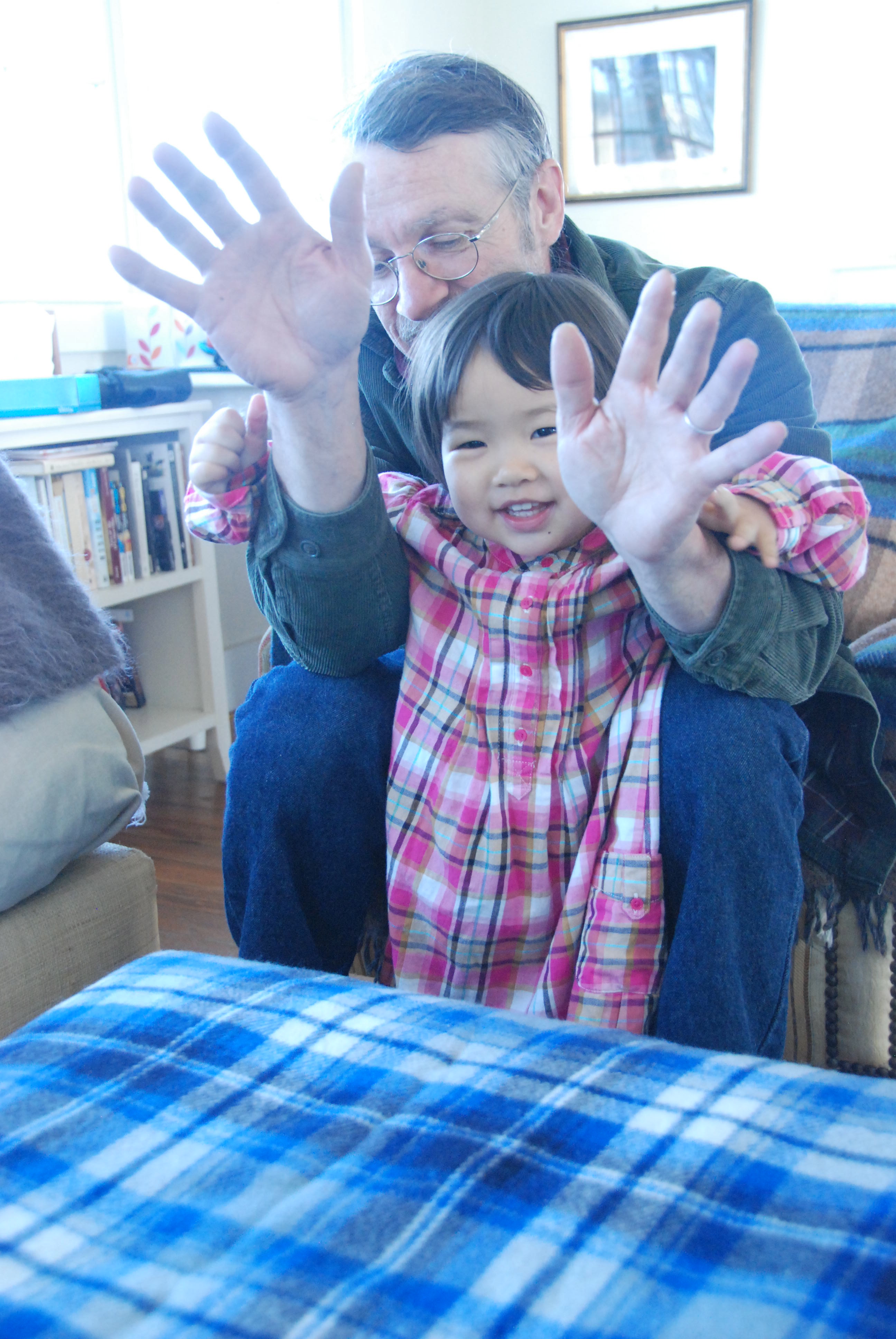
These are photos of G. and Josie pretend playing there are waves crashing on the shore:
DSC_0088_2DSC_0087DSC_0086DSC_0085_2DSC_0084_2DSC_0083_2DSC_0082_2DSC_0081_2DSC_0080_2

happy days are here again . . .

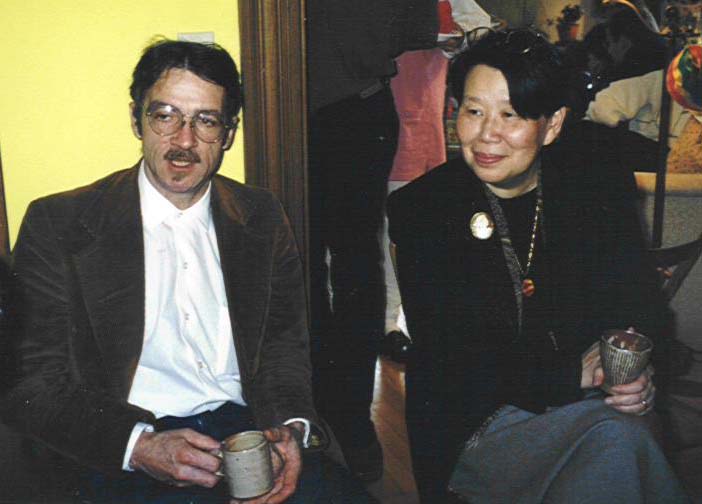
G. and me when we first met

G. and me when we first met

You know sometimes when life seems to stop along the pathway and you can see how beautiful it is where you have been travelling? That is the effect that watching my birthday DVD has had on me. My dear niece, Lizzy, wrote to me and said that she found herself smiling so much at the images that her cheeks hurt, but that “it was a good kind of pain.”

Of course a birthday celebration movie doesn’t contain all the sad and bad parts of one’s life in it. Who wants to watch images of all the things that hurt or were disappointing despite your best efforts? Who wants to rake through all the times you fell on your sword in the name of doing the right thing, or maybe doing the wrong thing because you didn’t know any better?

Someone I didn’t know very well said today that the movie seemed “idyllic” as though nobody’s life could or should look that good. It was a slightly cynical, somewhat sardonic way to describe it and it took me aback a little. I thought about it afterwards and decided that the many images of nature, food, flowers, the ocean, Christmas are at the center of my consciousness and what my life is really about, not merely decorations or extras: they are intrinsic and intentional to these moments that have made up my days for me and my family.

Someone else long ago had commented, also a little sardonically, that my home was like a “still life” and that there were many of them all around. While I might contend instead is that it’s a kind of messy still life as I pick up and move things around, trying to find a place for everything. What this illustrates to me also, is that I want to live the idyl every day that I have left. I’d also like to look a little trimmer as I have in earlier photos, keep growing my hair long and stay healthy.

That doesn’t mean that the areas of my life that have been disappointing are swept under the rug. They aren’t and God knows I have belabored most of them to death, second guessing myself, wondering if I could or should have done something different that would have resulted in a more positive outcome. I have sometimes reached out against my better judgment and thought of ways to gain closure for unresolved loose ends. I am satisfied that I have indeed beaten it to death, one way or another. And that those hurts are behind me, even better, they’re just not in the frame of my life anymore.

I hope that’s okay with the people who want me to know that my life is not an idyl but I’m afraid they might be disappointed that my life does happen to look a lot like the DVD. . . pretty much, I’d like to say.

Postscript: I was reading about a woman in South Hadley who was dying of pancreatic cancer and after a number of unsuccessful marriages, found “the one.” Her advice: “Don’t yell at each other unless the house is burning down!” She lived for six years after her first diagnosis and offered herself up to nursing students to visit and ask any questions they might have liked. Here’s a link to that article: http://www.nytimes.com/2013/01/11/us/fatally-ill-and-making-herself-the-lesson.html?hp

lives of our own . . .

life of my own photo
For awhile now, I’ve had a sister blog started called “A Life of My Own.” It’s obviously a take-off on Virginia Woolf’s book called “A Room of My Own.” Earlier, Emily Dickinson, in the 19th century wrote the poem, “I’m Nobody! Who are you? Are you nobody too?” Now, we women living in the 21st century have had opportunities to make rooms for ourselves and to live a life of our own. Some of us might still be in the process of looking for one.

As I have said in the expanded version of “About” on that website, a very wise woman told us decades ago at one of our Smith College Wednesday assemblies that “life is long.” What she meant was that because women of our generation (graduating in the 1960’s) would still be spending lots of time raising families, taking care of others, working and helping elderly parents, we might be putting our own ambitions or interests aside for awhile. The idea of sequential fulfillment was introduced during that little talk, and each year that I have before me brings home how profoundly true that observation has been for me.

Youth is wasted on the young, they say. But not necessarily, I say in return. We all go through times when we think we know everything, even now! But what occurs in our lives is unpredictable, the good and the bad. Whether we end up with the love of our life is also unclear for a long time for some of us. In any case, I’m lucky to be able to say I am married to mine.

So, if you would like to take a look and join in the conversation, please visit this website and send me your story ~ about your arrival at a life of your own, or your continuing journey along the way. Here’s the link: http://alifeofmyown.net/

And thanks.

the saori in life . . .

saraphoto
I’ve been interested in saori weaving for a long time, having seen it at a shop that taught this kind of Japanese weaving in my town years ago. The irregularity of the weaving and use of color appealed to someone like me who eschews structure when I can manage it and who also likes to be intuitive and observe as life unfolds.

A Japanese woman named Misao Jo invented/created this kind of weaving when she was fifty-seven years old and wanted to weave herself an obi sash. Her husband and sons built her a loom and she learned two things: a commercial tradesman pooh-poohed it as not being “flawless;” and an Obi merchant sold hers right away. Thus was born saori weaving. Read the rest of this entry »

a new year too! . . .

Thanks for visiting and reading my blog!

Happy New Year Everyone!
DSCN4616_2

a birthday place (cont.) . . .

This photo gallery of our Truro stay is kindly provided by C. our wonderful chronicler of family gatherings. . . thanks, Cait!

the beach
crane in the marshland
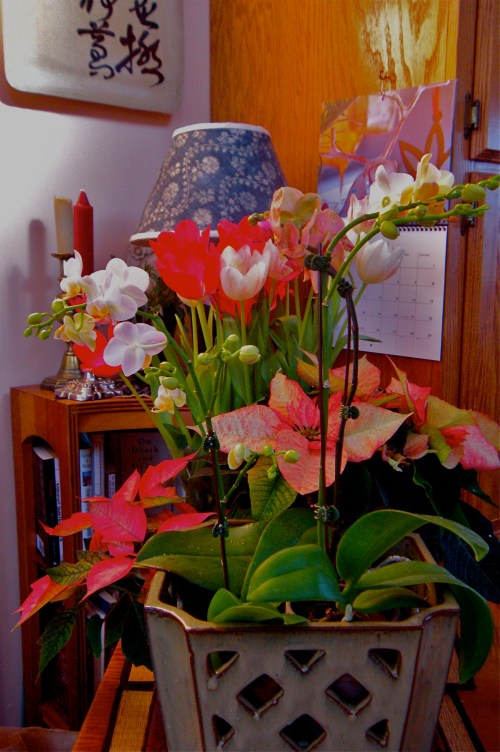
birthday tulips!
coconut cupcakes with frosting
candles on birthday cupcakes
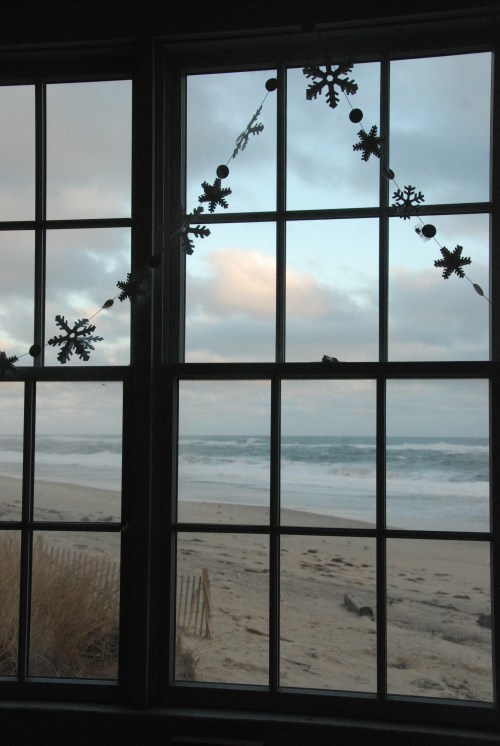
snowflake garlands in the window
red cardinals in the window
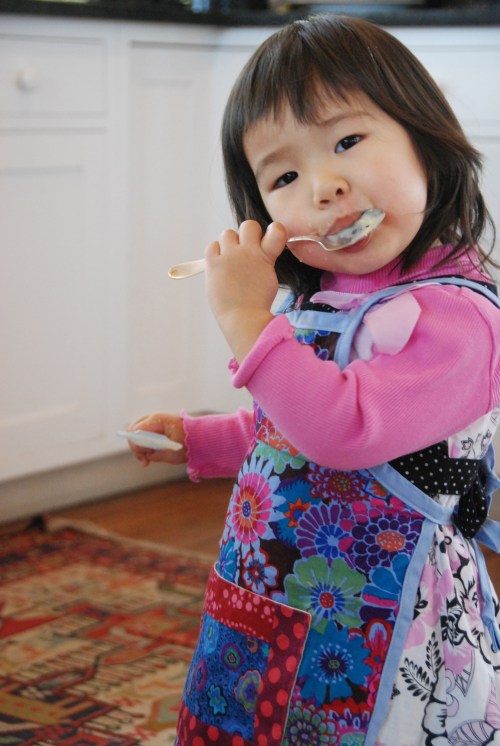
Josie licking icing in her new apron!
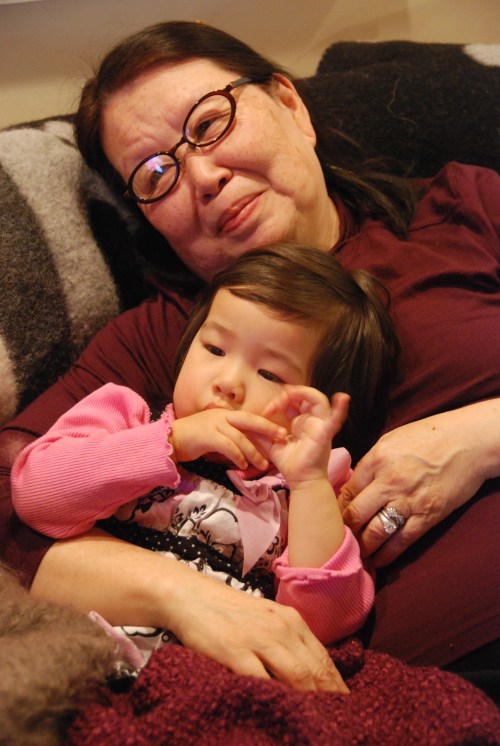
Josie and Grammy