mulberryshoots

"Tell me, what is it you plan to do with your one wild and precious life?" ~ Mary Oliver

Category: Life & Spirit

“supposed-bly” . . .
Recently, I heard someone on TV (I think it was a news commentator on CNN or someone they were talking to) say the word, “supposedbly” instead of “supposedly.” The speaker wasn’t aware of it and this comic word stuck in my head as the events of last week unfolded. It made me think about how we get certain ideas in our heads about what we think the best outcome might be for things that we are worried about.

Last week, for example, we had a meeting for which I had thought the best thing for us would be for us to reach a certain conclusion. I even had so much anxiety about it that I asked the Helpers for help as the I-Ching suggests but which I often forget to do. Anyway, the actual outcome was exactly as I had feared. But the impact of it, drawn from observing small details and listening to what others said they planned to do, cast a different light on things. After doing some research when I got home, I was surprised to find that instead of feeling thwarted and defeated, I was re-energized. It felt like a cosmic hand (helper?) had picked me up and set me down on the gameboard facing a different direction.

Yesterday, we also trimmed back the money plant branches that were caught up against the skylight handle, burned by the heat of the sun with no place to grow. I put the clippings into a jug of water to see if they will root. The tree, whose trunk is growing thicker by the day, may now branch OUT rather than having no room to grow UPWARDS. I had worried, superstitiously, that if we pruned it back, it would diminish our luck. Now the tree has breathing space and room to grow, just not necessarily further up, but every which way out on its branches and trunk. And multiply if the clippings supposedbly develop roots as baby plants.
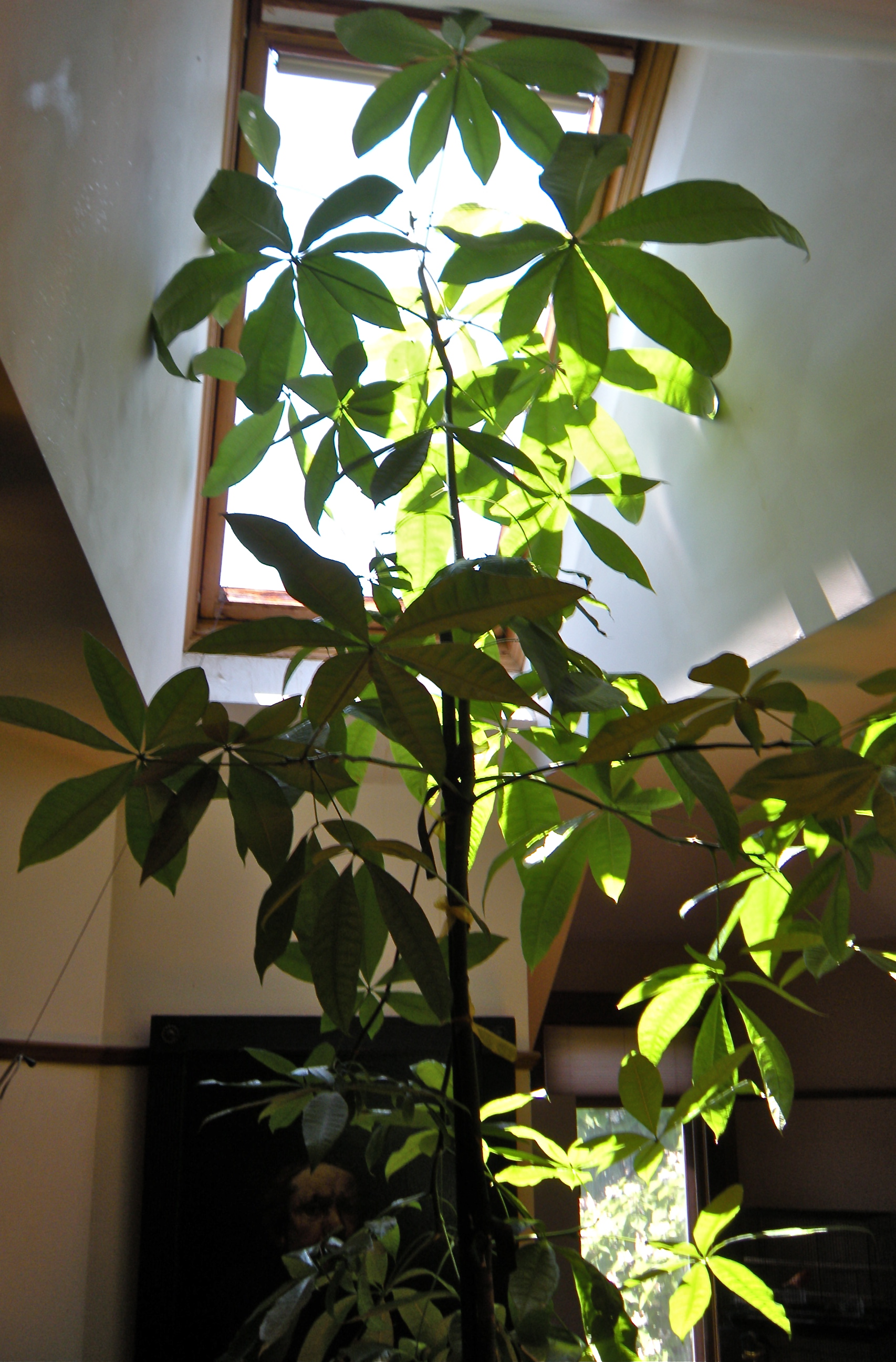
Here we are, instead of things being the way I thought they were “supposed to be,” there are ways that I could not have imagined when my expectations were set in concrete. Transformed in an instant with the help of the Cosmos, I have been given examples of how much wiser it is. I’m going to call this wiser, almost comic relief to things as the way that things are “supposed-bly” meant to be.
detachment . . .


I was thinking that maybe the Buddhists have it right. That detachment is the key to peace of mind. That doesn’t mean that you have to barricade the door to your mind by putting up imaginary chairs to keep desires and willfulness at bay. Just be with whatever is, and maybe the door will open on its own and the room of your mind will clear out eventually. They say that the practice of meditation helps. I think that awakening or the dawning of a realization might also be key in this ongoing process.

One of my pet problems is wishing that things were different. Or worse, wanting to change people’s behavior when it is who they are. I mean, you can’t just love the parts that you like. You also need to love the parts that drive you crazy. Detachment from how someone behaves, not worrying about whether they will succeed or whether their conflicts will be resolved; even watching them not succeed without withdrawing yourself is a big deal.

My life has been dedicated to problem-solving. Given that responsibility early on and making my way in the world whether it had to do with raising a family and keeping it together, or in mid-life, entering the biotech start-up industry and given (over)-responsibility to succeed for the company’s sake (“make or break”) have honed my skills and shaped my personality. Some of it worked and succeeded beyond measure. What’s left has sometimes resulted in my feeling responsible where I don’t need to, at least not at this stage in my life.

Wow. I may no longer be responsible for seeing that someone or something survives. I’ll remember that this realization occurred to me today. I can finally detach myself from the yoke of needing to save someone from failure. I don’t have to catch the vase before it crashes to the ground. One of the CEOs I worked for said that he had observed that as my greatest gift: to watch a crisis build on the project team, and to catch it before it hit the fan. No wonder I have defined myself as such an obsessive worrywart.

When I take a good look around me this morning, nothing is actually falling apart. Yes, the new pump to our geothermal system is not engaged properly as yet–but that is a mere engineering problem and it is not life threatening. I cleaned up the kitchen counter from last night’s debris so that it is orderly again while we have breakfast. It rained hard last night but we closed the windows. The air is cooler and dry today. I can go back to reading the newspaper and drinking my coffee. Now that I am detached from the idea that there is something waiting to be saved in my world today.

life (a little) less driven . . .


What drives us to live intensely? Maybe it’s family genes. I know that’s part of what’s going on with my side of the family. My daughters also live hard driving lives, full of lots of activity, scheduled and not. We’re just used to it, I guess. This week alone, I ran around to a couple of dentists trying to figure out what best to do next after a bridge broke off a couple of weeks ago. Then, yesterday, I considered flying to China on a Zen mountain journey trip that turned out to be oversubscribed already. In the meantime, I found a website where you could get a visa to China overnight. See what I mean?

In parallel, I am exploring the other things that I want to learn to do this Fall:

a. make homemade tofu to the taste and texture that melts in your mouth when eaten with yummy sauces. Reading the instructions sounds like chemistry experiments (ratio of time soaking soybeans to the amount of water, boiling and blending; then how much weight to set on the tofu press and so on.) Since it’s such an individual preference for the taste to the texture (custardy) it’ll probably require a number of attempts before getting it down to a routine. I’m thinking that the homemade tofu might be a regular part of some simple meals along with vegetable dishes.

b. make ramen noodle broth (remember the movie, “Tampopo”?)from scratch from David Chang’s Momofuku cookery book (entails starting a dashi broth with a round of dried shitake mushrooms, boiling a whole chicken until the meat falls off the bone; then add pork neck bones and simmer slowly for 7 hours, etc., then adding final seasonings and condiments with the noodles.

c. learn to shuck cherrystone clams and oysters, which I love but have always been too timid to try handling the shucking knives myself.

During the Olympics, I knitted three sweaters from some gorgeous Noro yarn that was discontinued but which I found in the U.K. One was a wonderful sleeveless tunic with a cowl neckline that I made for C.; another was an abbreviated version with an empire length that I just sent to J. There’s a set of knitting that I just sent to M. and the Minneapolis contingent too. I’m now waiting for a shipment of a new colourway (deep blue indigoes, mulberry tones) from Canada that seems to be hung up in customs at the border.

So, when my daughter M. skyped today and said she was ready, after a long, long time, to be less driven, I nodded, along with a flash of recognition myself. Time to go and have lunch with G. and maybe take a nap this afternoon.

“acceptance” . . .


You know how people talk about “just accept it,” as though if you acquiesce and accept whatever, that it will make it okay? The zen book I am reading, “Being Zen,” handily counters this notion by saying it’s much deeper than acceptance. That living your life as your practice means that it would help if you realize what your expectations might be and that they are the real root of the problem of being unhappy. A real no-no. Because if you don’t have whatever expectations you might have about how life ought to be, then there’s nothing to accept, per se.

To put it another way, we, in our American culture, have a lot of expectations. Some might even say that they’re part of an “entitled” world view: every man and woman is able to pursue his or her American Dream and succeed to some degree, find the love of your life, bear beautiful, inspiring children, live in homes with granite countertops and stainless steel appliances, hardwood floors, huge flatscreen TVs, and have enough money to do and wear what you want.

If these are our widely held expectations, then there’s a lot of acceptance to be had when we’re missing some or many parts of that American dream. A Zen approach is basically to have no expectations at all and to experience the present moment for what it is, without judgment nor opinion, even. Otherwise, the book says, we are just living a “substitute life,” not a real one in a universe where we are not constantly feeling hemmed in with what’s working or not working for us.

Seems easy to describe. Harder to live by.

signs . . .


Sometimes, I find that signs are visual, like a white bird that appeared three weeks ago, flying along the highway next to my car, then fluttering right in front of my windshield before flying off. It seemed like some kind of sign, but different from all the red cardinals which have swooped in front of me and which augured blessings or good fortune, like a pat on the shoulder from the Cosmos that I had encountered before.

Signs also appear in conversation when I find myself recounting something from the past, as I did with my daughters while looking at their aquarium, about how things were so hard twenty years ago and remembering someone who had appeared to help me and who had also given me a book on the I-Ching, my introduction to this Sage which has guided me to where I find myself now. I had searched for that person a few times over that twenty year span with no luck. This time, I came up with information of her married name, which I had forgotten. And for $1.98, I was able to obtain a phone number and three email addresses. When the voicemail message came on the cellphone, I recognized J.’s voice. It was she.

Days later, I had not received a response and wondered if she wanted to be found. That morning, on Saturday, I happened by a store selling futons, used books and clothing in town. On top of a small stack of books was one called, “A Flock of Fools” by Kazuaka Tanahashi. The name was familiar because I had taken a zen calligraphy class of sorts years ago at the Zen Monastery in Tremper, New York. Truth be told, I was turned off by the egotistical attitude of some of the monks during the sesshin sittings and wondered if this was really Zen. Or Zen-like. I realized later they were just being human. Meanwhile, I read Zen writers like Alan Watts, Suzuki, John Tarrant and the Taoist hermit seeker, Red Pine (Bill Porter). My father, before he died, wrote his own translation of the Tao Te Ching which he took from old Chinese texts.

Anyhow, so I chance upon this book which is signed, no less, and carry it home. When I arrive, there is a voicemail from J. saying she had been on a retreat and would love to be back in touch. Our first conversation revealed that she lived in a remote area of redrock country and will be ordained a Zen monk in December. I kid you not. She told me that she had worn a jade pendant that I had given her a long time ago that she hadn’t worn in years, around the same time that I began looking for her again.

Yesterday, someone suggested to me that I think about becoming a mediator. When I heard that, it was a bell-like sign that resonated with me. Back home, I found quite a number of options for mediator training and wrote to J. about it because they conflicted with a visit and a sesshin that I had thought about coming out for a visit at the end of September. Turns out her Zen practice includes mediation and facilitation as core training and that her sensei had also been a Director of Conflict Resolution for the Judiciary system in Utah. And as J. so succinctly notes, conventional mediation is “great for a transactional universe, but leaves a lot on the table in the transformational domain…Training in mediation and facilitation is a part of our formal (and formational) path — required of all the monks. Welcome to the new Shaolin Temple. Our action logic is no-shadows; no-conflict. An interesting evolution in the form of warrior energy.”

So after a long period of stagnation in my life filled with pessimism, exhaustion and oppressiveness, the appearance of the white bird has opened doors to somewhere new. The pace is accelerating as well. My faith in the Cosmos is renewed. Or perhaps its faith in me is refreshed. Either way, I am grateful.

two sisters . . .


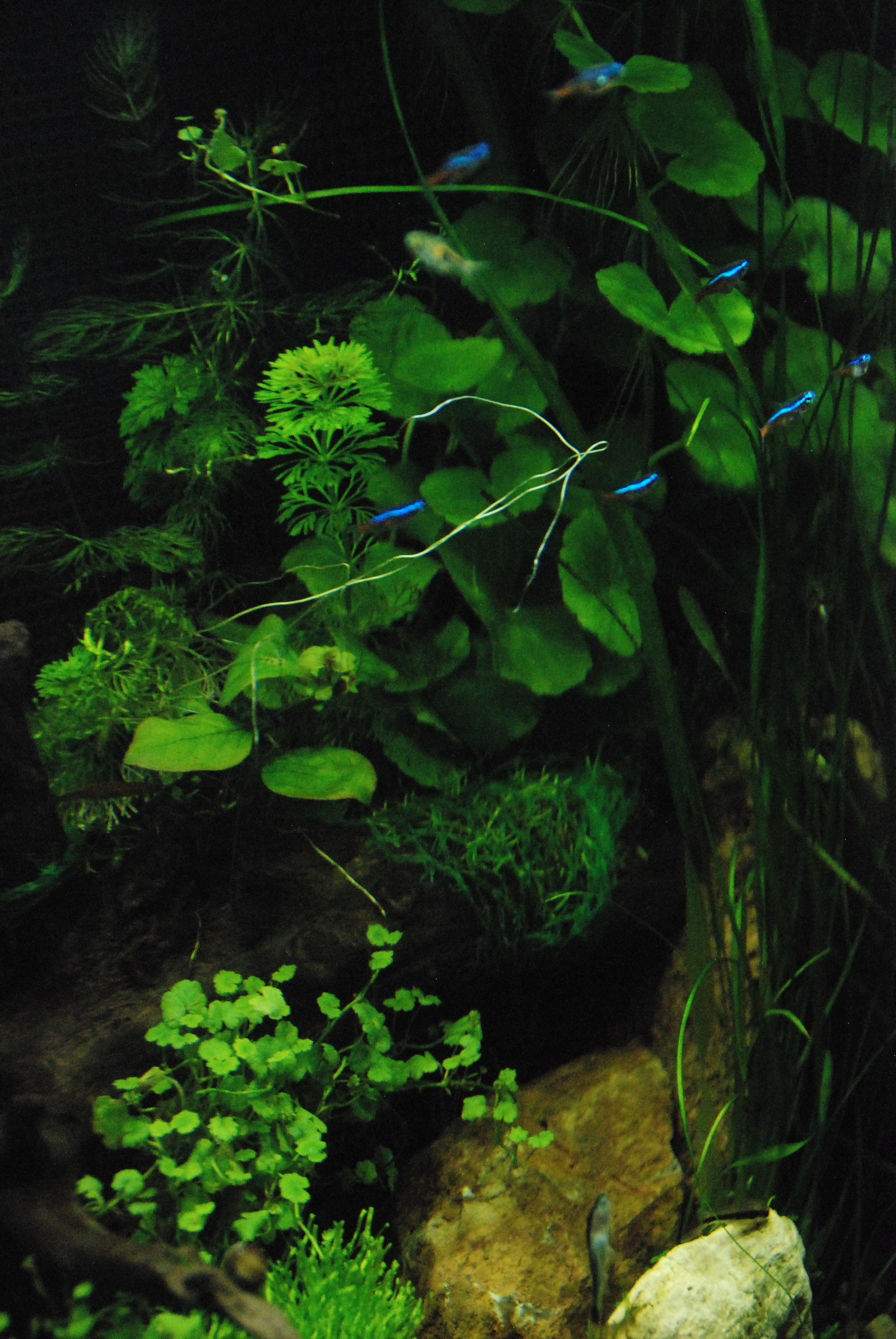
The other day, I had a chance to visit with two sisters via Skype, that wonderful new technology that allows us to see each other and visit via the Internet. The younger sister, who lives in Massachusetts, was visiting the older one who lives in Minneapolis with her daughter, Josie–that charmer toddler that you might have seen on some earlier posts and who is looking at the aquarium in the photo below.

Anyway, M. the older sister, had an aquarium when she was young and the younger sister, C., had just provided a new one for her since M. had lived in Japan for almost a decade and had then settled in Minneapolis two years ago. Apparently things have changed a lot in the aquarium world since M. was a kid. For example, there’s a Japanese guy named Takashi Amano who developed a kind of sea plant imagery culture in aquariums that has grown alongside the more conventional tanks filled with lots of fish swimming around.

M. has been very patient since she first received this new aquarium, setting up the water filtering system, waiting to study what plants might go together, hand-tying bits of moss cuttings that will eventually grow along the back of the aquarium. She has been waiting for C. to visit before going out together to buy a knife-ruffle fish last week, a nocturnal vision (youtube clip) that is amazingly graceful to behold. This week, they were excited about going out together to buy the first neons, nine of them and some shrimp to add to the acclimating tank.

Yesterday, they skyped me when they returned from the aquarium shop. Holding a bag of tiny tetras, M. gently scooped them up and deposited them into the aquarium, instant tiny schools of fish darted around. Today, M. told me the names of the shrimp and the neons. She said that she removes 60% of the water once a week in order to keep the water clear as a crystal. I asked her how she managed to siphon off that much water off the top without accidentally sucking up the tiny fish as well. She laughed and said she was careful.

Earlier in the day, we had visited on Skype when they had just finished doing workouts in the basement, taking showers and then settling down to make scrambled eggs for Josie and fruit smoothies for them all. It was fun to see them so happy just being together. They laughed when they told me about how they were going to watch a DVD on their new cable service the night before, but decided instead to lie on the bed and watch the aquarium instead.

And how do I know this and why am I so touched? Because these lovely sisters are my daughters, that’s why.

(These photos were taken by C. If you click on them, they will enlarge so that you can view them close-up.)
P.S. If you scroll all the way down to the bottom of the last photo, you’ll be able to see the knife-ruffle fish there too.

bouquet . . .

Heavy rains falling in the night have become the norm here. Flashes of lightning that appear brighter and more ominous than their real distance occur a few times a week. We’re lucky to have the rain.

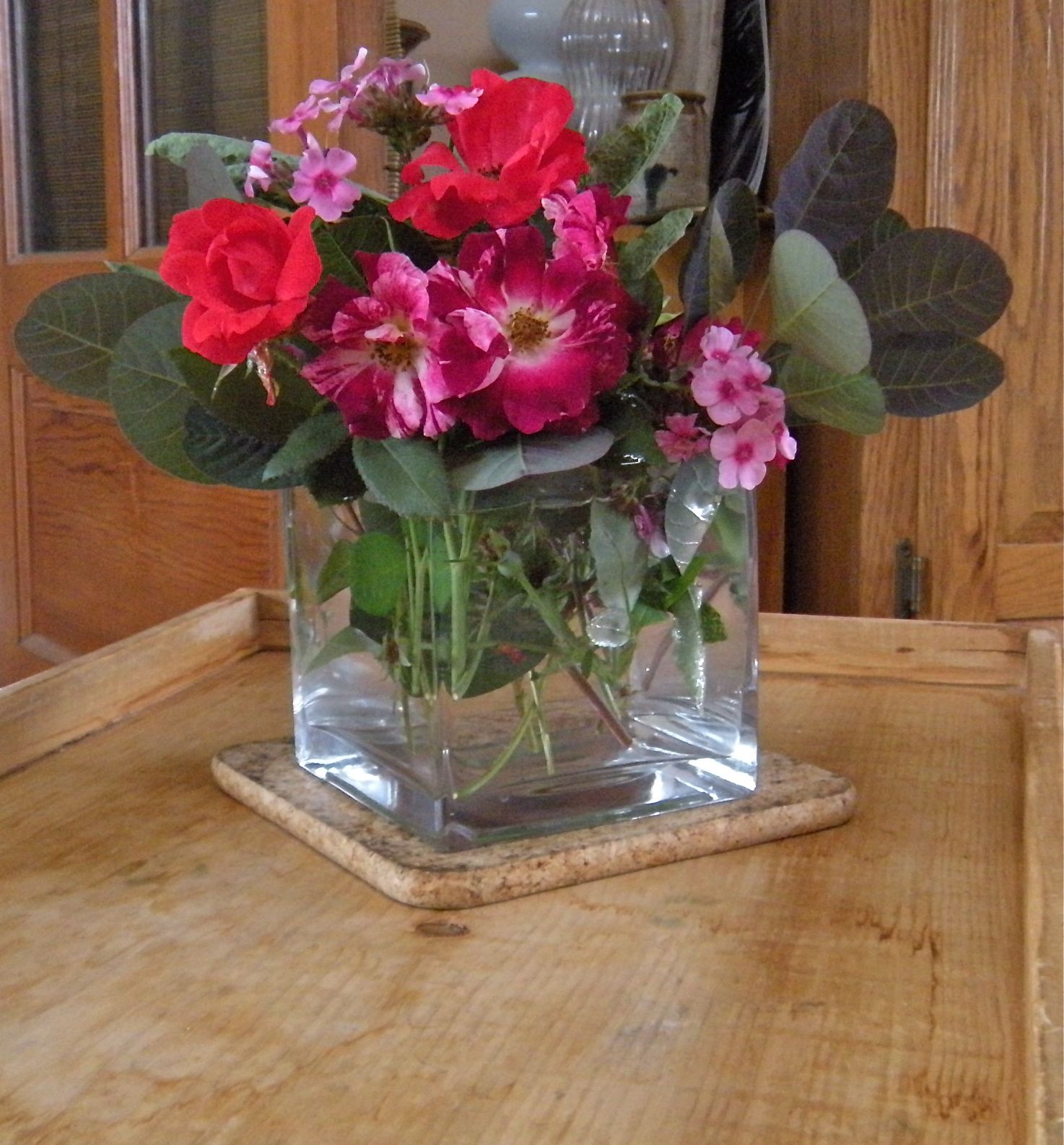
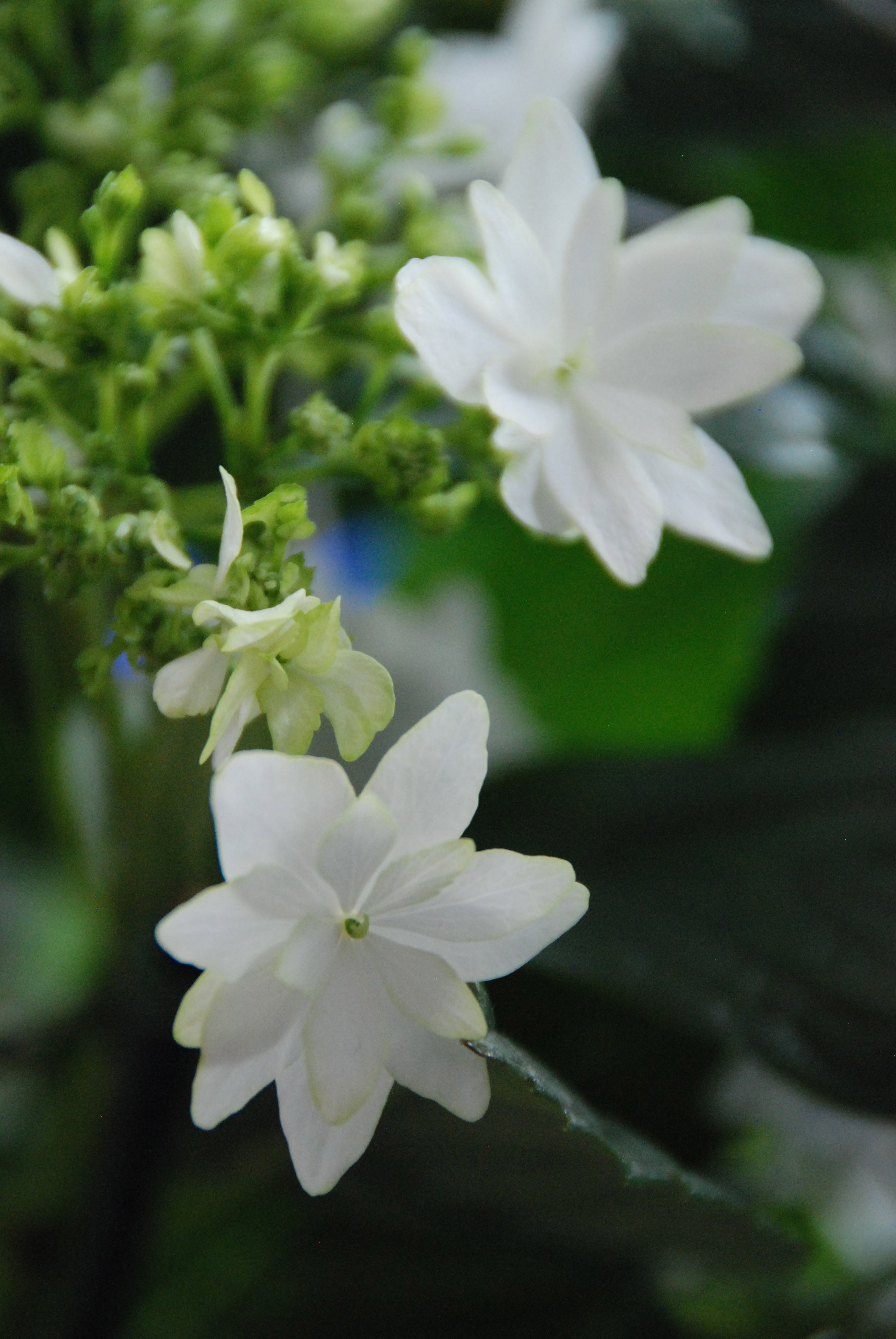
The garden is the better for it. . . although I noticed that the weeds have benefited from the rain as much as the flowering shrubs and bushes. After I put the laundry in this morning, I took my garden shears outside and looked around to see what I could find for a bouquet to grace our kitchen table.

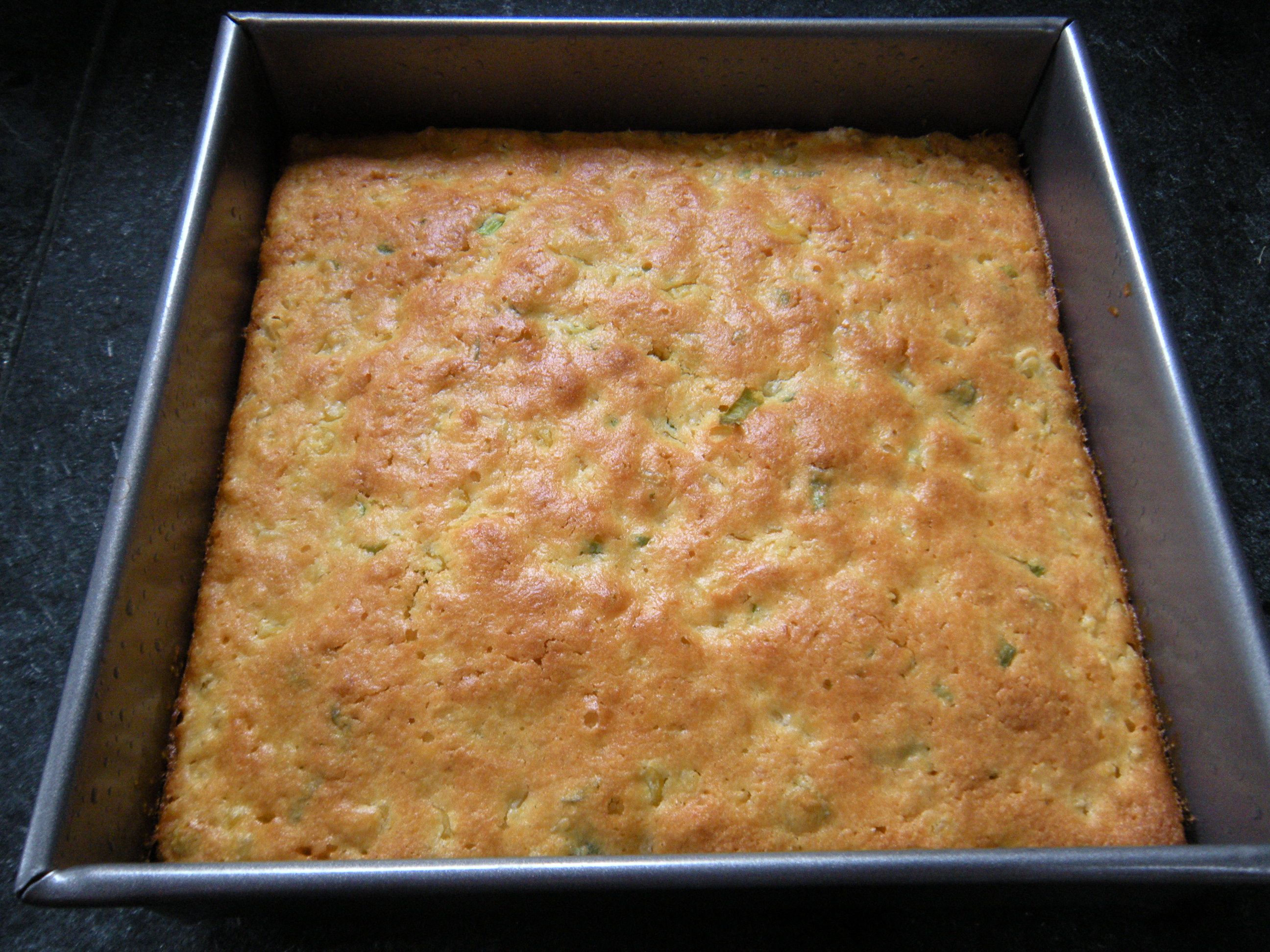
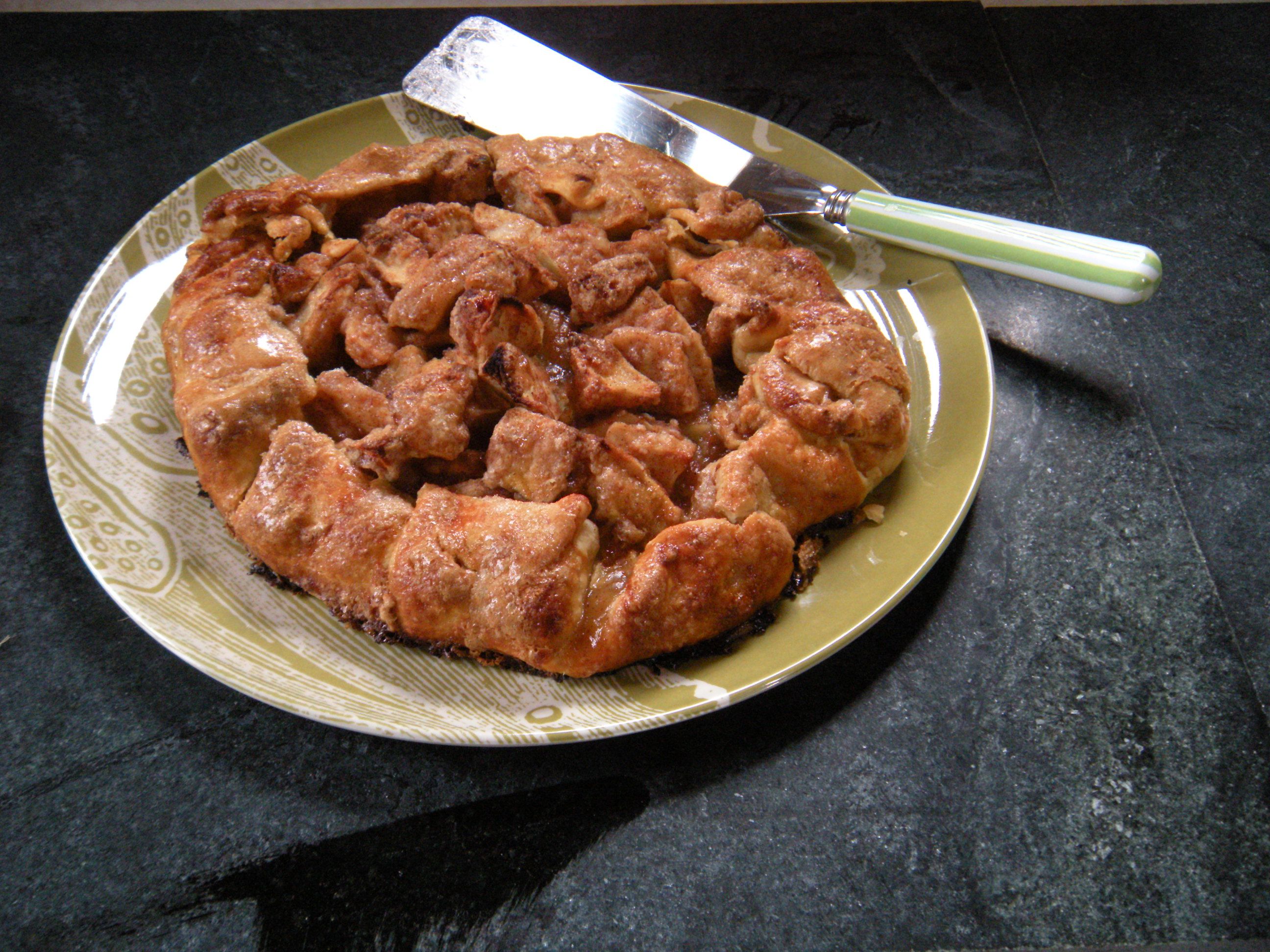
Afterwards, I took the bag of Granny Smith apples and the corn on the cob that have been waiting patiently in the bottom of the fridge. I like cooking in the mornings during the summer. Before you know it, there’s dessert ready for dinner as well as some cornbread made with the corn, sliced off the cob cooked in a little butter with some chopped up green onions after it’s cooled. Will send some of the apple pie and the cornbread across the street to G.’s mother who is ninety-three.

patterns . . .


How do patterns change? Are we creatures of habit all our lives? I know people who have eaten the same breakfast for over fifty years. I’m not one of them. I like to change it up with freshly blended smoothies sometimes. Soft-boiled eggs from the farm with a little dab of oyster sauce like my Dad used to have. Sometimes, the fat side of those big sandwich size Thomas’s English muffins, toasted crisp with sweet butter and some Rose’s orange marmalade. You can see I’m picky about the brands that I use. Those are some of my patterns.

What about patterns that are petty, dumb and that are aggravating? Like noticing when someone takes the best slices of the tomato and leaves you the ends. Or, wanting time and attention when things are going crazy with other important stuff but you’re feeling miffed and neglected all the same? I know someone whose end of the day drink is always Campari and soda with ice clinking in the glass. I used to be a dry martini on the rocks drinker when I was working 90 hours a week but not anymore. All we can manage these days is to split a can of Miller Lite beer poured into frosty glasses from the freezer where the beer also chills until we’re ready to sit down for dinner.

I’ve been noticing that I don’t like some of my patterns that are throwbacks to when I was a kid and was either scared or unhappy. I’m neither scared nor unhappy now but it’s hard to let go of those patterns of feeling that way anyhow. What a dumb thing that is, isn’t it? That’s one pattern that needs to go, pronto.

chilling out . . .


I’ve just been reading “Hua Hu Ching, The Unknown Teachings of Lao Tzu” translated by Brian Walker. Following on from William James’s instruction that in order to change one’s life, do it immediately and with flamboyance, I was amused to reflect today, (while some mild machinations were going on in our household, not being able to reach people, looming deadlines and so on,) that the most flamboyant thing to do to greatly change my life today is to let go of it all and chill. Seriously chill out. Zen the rest of a frustrating day and let it go.

Stop worrying about what others do or won’t do (like call us.)

Stop depending upon someone else’s schedule to fit one’s sense of anxiety about meeting certain deadlines.

Come up with a simpler approach, which is to take care of things ourselves and just do it, which is the best we can do under the circumstances anyhow.

Without going through the details of any particular situation today, this kind of dynamic seems to occur and repeat itself almost everyday and to each and everyone of us.

It seems like an ironic turn to think that the most flamboyant thing I can do to change my life is to let it all go.

Haha. I like that a lot. Here’s a verse from the book too:

“The ego is a monkey catapulting through the jungle:
Totally fascinated by the realm of the senses,
it swings from one desire to the next,
one conflict to the next,
one self-centered idea to the next.
If you threaten it, it actually fears for its life.

Let this monkey go.
Let the senses go.
Let desires go.
Let conflicts go.
Let ideas go.
Let the fiction of life and death go.
Just remain in the center, watching.

And then forget that you are there.”

How about that?

free at last . . .


When are we finally free of that period in our lives when we look back in order to look forward? I’m just about there, I think. Perhaps it’s because my next birthday is what they call a “milestone.” Or that everyone of us, at one time or another, goes through the Scrooge-like exercise of looking over our lives to see who we have really been so that we may muster up the will and willingness to live a “better life” or at least one that is truly our own.

The Taoist books, thin and succinct, make the argument to simplify our personality, to recognize that problems are mostly derived from our ego lurking around in the background, and to stop wanting things that we don’t need.

The other day, Bel Kaufman, the writer of the book “Up the Downstairs” turned 101. She was quoted as saying:

“I’ve lived a long time, a very long time, 101 years, and I’m still here. I’m done with the doubts and struggles and insecurities of youth. I’m finished with loss and guilt and regret. I’m very old, and nothing is expected of me. Now, provided good health continues, I can do what I want. I can write my memoirs. I can edit my works for future eBooks. I can even do nothing—what a luxury that is! I have new priorities and a new appreciation of time. I enjoy my family more than ever, and also a sunny day and a comfortable bed. I keep up my interest in books and theater and people, and when I’m tired, I rest. My former students write to me and visit me. I had many problems and disasters in my life; fortunately at my age, I don’t remember what they were. I’m glad I am 101.”

I also ran into this saying about change from William James, of all people:

To change one’s life:

Start immediately.

Do it flamboyantly.

No exceptions.

~William James