mulberryshoots

"Tell me, what is it you plan to do with your one wild and precious life?" ~ Mary Oliver

Category: Life & Spirit

“still life. . .”


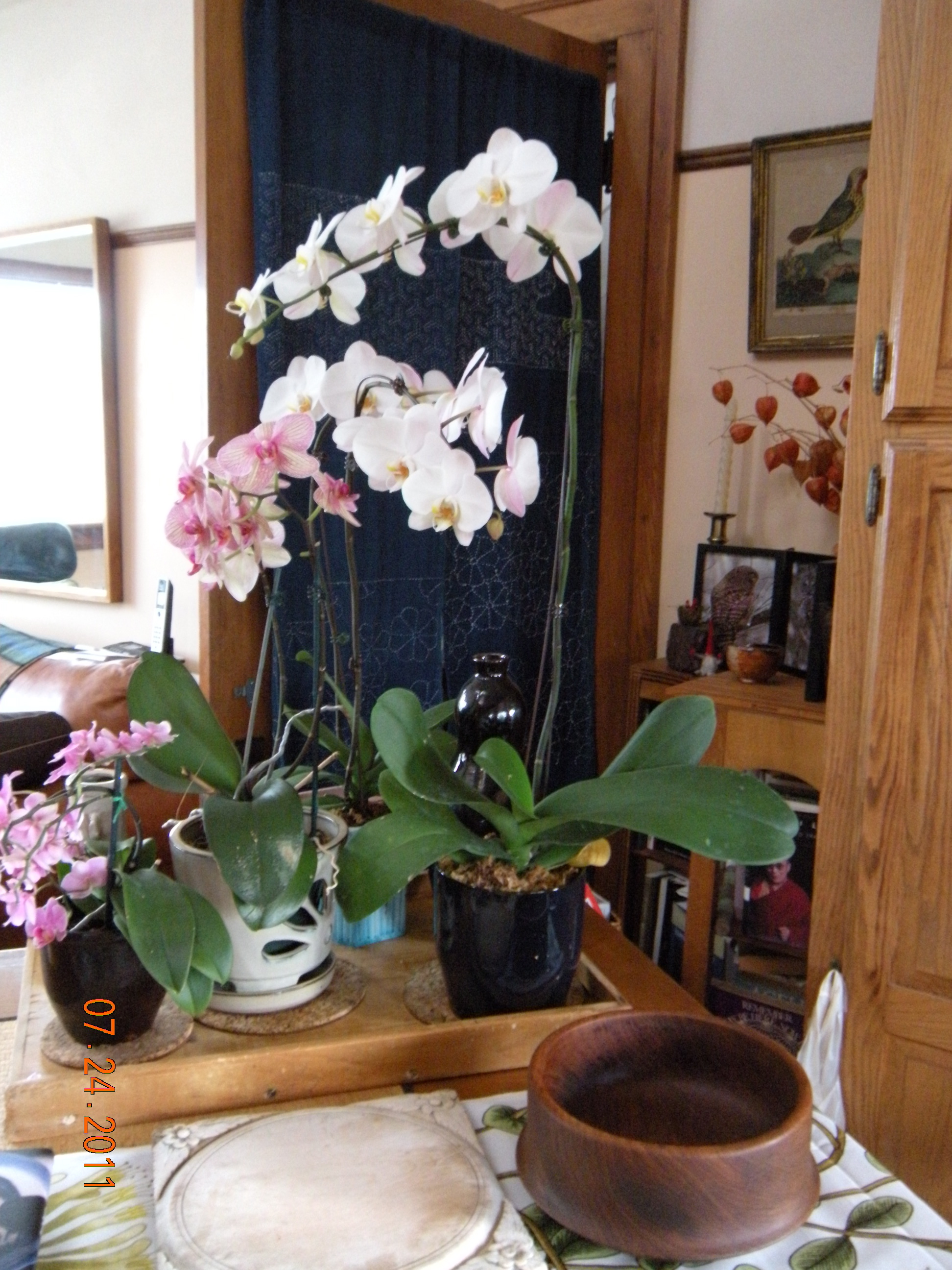
Through the years, one of my daughters would remark about how my house was replete with what she called “still life” arrangements, as if in a painting. I noticed that she did not necessarily mean this as a compliment, her tone of voice slightly tinged with sarcasm. I was always a little baffled by what sounded to me like implied criticism in this grudging commentary. Until recently.

On another note, I’ve been drawn to books by stylists from Australia recently–“Etcetera” by Sibella Court and another stylist’s guide to finding wonderful things in New York City, a place I like to visit when I can get on the bus from where I live and take a day trip.

What I discovered about myself from these two threads is that I like making settings for myself. Engaging, appealing books to read, asian-inspired arrangements of leaves from the garden in old pottery or modern glass. The kitchen space has finally been cleared out, easier to maintain when we remember to clean up after ourselves. It pleases me to look at it.

What I also noticed is that I reserve things aside: nice clothes that I wait to wear for an event to happen; antique jewelry that is too beautiful to part with but delicate to wear everyday; books that are still waiting to be read, thumbed through but not as yet digested from front to back. Meanwhile, I shift things, clean them out, hold them back, give them away, consign them, and then cycle through and recycle again. I will go to my grave finding the next beautiful blue and white rice bowl.

Meanwhile my life goes by. It’s now time to live within the framing that I spend my time creating. To enjoy playing Beethoven sonatas on the gorgeous piano that I’ve always wanted and now have; to listen to the music that I’m afraid might bother someone else’s privacy; to wear beautiful clothes and go somewhere. I am fulfilled with most everything I have ever wanted: but I am afraid to acknowledge it, I think.

Maybe I’ll start today.

gone fishing . . .


So, if you’ve been reading my posts, you can see that while I thought I’d spend the summer cleaning out and simplifying our home, taking things to the consignment shop, dropping a few things off at the auction house, the rest to Goodwill, it turns out that the events around me have given me a chance to clean my own psyche out while I’m at it.

But today, I’ve had enough. Quite enough, as a matter of fact. I’ve given it my best and tried to help out where I can. But people sometimes keep taking when you tell them you’ve given enough: it’s their business and it’s their karma. But they still don’t leave you alone.

Right now, I’m drawing the line. Closing the curtain. Taking a time-out. I think I should go shopping or something, don’t you?

when we appear in the mirror. . .


Have you ever found yourself in a situation observing someone else’s behavior, and suddenly realize that sometimes you behave like that yourself? This is what I call, an “OMG” moment. When a mirror appears before you with images bounced around a situation in someone else’s life, it’s easy to miss seeing our own reflection. Some enduring mysteries of our own lives stem from this kind of avoidance, at least it has for me.

Is this a kind of stubborn self-denial? in order to stay hidden to ourselves as though we have Harry Potter’s “magic cloak of invisibility” wrapped tightly around us? Or, is it simply a way to avoid seeing ourselves the way others might see us most of the time? Once, we start to consider that perhaps there is some truth to the revelations of that mirror, we can either deny it and keep going; or we can look in that mirror and say, “OMG.”

I vote for the “OMG” path. Mainly because none of us is getting any younger. And if we want to live with some kind of personal integrity for the rest of our lives, it’s necessary to take off that cloak of invisibility that we have wrapped around our self-knowledge to ourselves, and to face the music. Before it’s too late to change the wobbly axis on which we move around our world, mystified sometimes by how life turned out or why others treat us badly. It’s us after all, not them. Which is what I had thought and was afraid of all along. But it’s not too late to use this newly found self-awareness and to put one foot in front of the other in a different way, is it?

In this particular instance, it’s a kind of relief that I feel, after feeling somewhat horrified at first and then chastened. We all have delusions of one sort or another. It’s what we do with them that matters, someone said. Or was that hardships they were talking about?

“helping. . .”


You know, this summer has been just rife with people’s tragedies, people whom we’re pretty close to: suicides of young people, deaths from old-age, contentious marital strife roiling around innocent young children. I have been wondering why, and why now? The answer is that I don’t know. There seems to be an epidemic of bad luck, misfortune and just plain hardship. Personal tragedies of Shakespearean proportions.

What I do know is that there is not much one can do to help. Because I have tried and failed most of the time. Grieving is as personal as it can be. Some people want to talk about it. Others deflect angrily. Everyone asks what more they could have done. Why didn’t they know? Why did this happen? What went wrong?

Many things that used to bug me now pale in comparison. This confluence of personal grieving has shut me up. I retreat into the companionship of my friendships and marriage with gratitude and forbearance. Being still seems to help. That’s about all.

giving. . .


I think I’m making progress on my summer project, clearing and cleaning things out of our home, providing for more space in between and opening up the way that we live to a more simple place (real and imagined.)

In the process, I have noticed that I have been ruminating about myself and habits that are so ingrained that I am not so aware they are even there. Like wanting to give people things. I’m the grande dame of present-giving–a benefit or a burden for many, depending upon how they view it (my intention and the object.) I like to put things aside in the bottom drawer of a chest of drawers to save for the coming Christmas, for example. But as time has passed, Christmas, a well-worn ritual or tradition in our family has slowly dissipated, like a sand castle on the beach, lapped by the incoming tide as the afternoon of my life wears on.

Something happened recently where a gift that I sent to someone arrived completely broken into pieces. I was shocked because I had wrapped it (I thought) especially carefully in a wooden Japanese box, then nestled into another larger box full of styrofoam peanuts. Alas, the fragile contents never made it intact. Worse yet, it was an unwelcome surprise to the person it was intended for, and added to the pain that I had meant to assuage. Rather, the Universe put down a lesson for me. Which is to stop doing that any longer. People don’t really want “things” when they are in pain. That this broken box brought even more fragments to deal with was something not to be ignored. So, I started thinking about where the gift-giving intention arose from (perhaps feeling I am myself not enough without bearing gifts.) And concluded that it’s time for a change.

I had also thought that my children might want to have some of the things I’ve collected over the years later on. But, they have small houses with not even enough room for their own things, let alone more things of mine. So, it’s off to the auction house next week to skim off the crust of things as a start.

Everything seems to be circular these days. Cleaning out, thinking about intentions– such as they were, finding outlets, moving things out, starting their usefulness over again. Over and over. Just like us, I think. This summer of reflection has been sobering and rejuvenating in its own way. There’s no good in having regrets about follies of the past; or even excessiveness from another place in time. Although I’ve had a bunch, believe me.

adagio. . .


Here’s an interesting discovery I made after reading a novel by Rachel Cusk, a young British writer. (I seem to have artists from the UK in my frame of reference these days for some reason.) In her novel, “Bradshaw Variations,” Cusk describes a character playing an “Adagio” movement from a Beethoven sonata. Although the sonata is not revealed, I was curious enough from the novel’s description to page through my Henle edition of Beethoven’s 32 Sonatas in two thick volumes. As I did so, I sat down at my Steinway grand piano, named “Victor,” rebuilt years ago by my husband, “G”, and began to sightread through ALL of the Adagio movements. I discovered in the process that they are among the most melodic, beautiful compositions that are contained in this oeuvre (not knowing the plural for the word, “opus”!)

Anyhow, “Adagio” means “slowly.” An apt concept for how to spend days when it is so hot and humid outside (now under the heat dome that the weatherman keeps talking about) and as summer days languish. These gorgeous melodies also serve as a musical antidote to all the cleaning up and cleaning out that I’m still in the process of doing (“simplifying. . .”) I’m even thinking of playing (and possibly recording) a program of Adagios when my birthday rolls around next year, perhaps. Because the tempo is “slowly,” the melodies also offer up an opportunity to make beautiful music while not having to kill oneself technically to keep up at this point in my piano playing life.

To my amusement, I discovered that I was already practicing Bach’s D minor sonata whose first movement is marked “Adagio.” It serves primarily as a chordal introduction to a wonderful Fuge movement.

So, I’m blessedly happy, adagio-ing along and am glad to have discovered these wonderful pieces. And for my money, they put Mozart to shame–the Beethoven melodies meatier, more robust, evoking such sweet pathos. Yum!

being original. . .


I met someone this weekend who has done something original. Seeing her pottery was an eye-opener, not only because her works are so fresh and robust, but because they are also full of colorful glazes and whimsical brush strokes that enrich the spirit when you look at them. At least, that’s the kind of impact they have on me.

Over the years, I have been interested in, and collected pottery made by potters along the traditional lines of Bernard Leach and Shoji Hamada–anchors of British tradition in making pots–seminal pottery aesthetic and techniques learned in Japan, making symmetrical pieces glazed with zen-like brushstroke decoration. In the U.S., I’ve collected the work of Warren MacKenzie for its utilitarian, yet simple forms made by a modest and prodigious potter who is still going strong as he nears the age of ninety in Minnesota.

It seems in retrospect that the Holy Grail for making pottery has been to emulate this tradition of Anglo-Japanese pottery techniques, manifesting them in well-made (regular-shapes) in browns, tans and more earth tones.

What Sandy Brown has done is to transmute this tradition by means of her own creative spirit. While utilizing Japanese clay techniques (SB lived and studied pottery techniques in Japan for five years, thirty years ago) she has brought her soft, yet robust forms into playful realizations that are uplifting to look at and use. To me, she has found a space between the somewhat rigid traditions of Leach/Hamada/Mackenzie and jimmied open a place of light where color enters in and shapes become organic (a much overused word these days.) I read on-line that she is considered one of Britain’s pre-eiminent potters, with works exhibited at the Victoria and Albert Museum and other prestigious institutions all over the world.

I was blown away (not often for me) by how different and how true these pieces are because they resonate with and inspire me to look for that kind of originality in my own search for fulfillment as a writer.

Rigidity dominates in that arena as well–you have to follow certain rules to produce brown and tan writing that then has to go through a rigid, punishing process defined by the publishing industry as we now know it. But have you noticed that more and more people are “self-publishing?” In movies, there doesn’t seem to be the same kind of “vanity” taint that applies to self-published books. More actors are executive producers of their own work: Clint Eastwood, Tom Hanks, Laura Linney, Hilary Swank. It seems to be the only path to creating your own work, your way. Of course, you have to have what you believe is truly exceptional before you’ll put your own money and efforts in order to justify bringing it forth and promoting it.

In making pottery or writing books, there are experimenters who “do their own thing”–making pottery that may express themselves but hardly communicates or resonates with anybody else; or experimental writing that appears to be merely self-indulgent (e.g., David Foster Wallace). SOMEWHERE, there is a place to be original AND resonate message with others in a wholly new way: as colorful, whimsical and charming as these pottery pieces are, made by Sandy Brown.

Seeing these works of originality and their emergence in a previously brown pottery world of predictable shapes is an inspiration to keep going on the unlit path, seeking to be original. Artful without being indulgent. To open up the expected and humdrum sameness of what we are used to seeing and reading everywhere, and to let the color come through!

Thanks, Sandy Brown!

Click this link to see what I’m talking about!

simplifying. . .

We’re a few weeks into the summer and I’ve been making some headway toward getting things cleaned out (see previous post, “Holding On”.) Yesterday in the muggy heat, I gathered up all the CDs in their plastic holders and many not. I laid them out on the table according to composer and kind of music. Finding the right cases for the loose disks was like playing the game, “Memory,” and I’m relieved that mine seems to be holding its own.

I found a dozen favorite CDs that I hadn’t listened to in awhile: Mendelssohn cello pieces played by Steven Isserlis and Saint Saens piano concerti played by Stephen Hough. All bright, optimistic melodies from the 19th century. The set of Schubert sonatas played by Radu Lupu also made it into my iTunes library on my laptop. I discovered that I buy multiple recordings of the pieces I like in order to listen to different pianists perform them. For example, I have Bach’s Well-Tempered Clavichord recorded by Rosalyn Tureck, Angela Hewitt, Sviatislav Richter, Till Fellner and Glenn Gould. Ditto the Chopin Ballades by Maurizio Pollini, Claudio Arrau and Vladimir Ashkenazy. Beethoven late sonatas played by Alfred Brendel, Maurizio Pollini, and Claude Frank.

Today, I’m going through the rest of the books that I started to weed out last week. There are many books that I value that I don’t look at anymore. I haven’t wanted to just donate them anywhere because I’d like them to be available to others. So yesterday, I talked to someone at the Worcester Public Library who said they’d be happy to take them along with CDs. They also suggested donating books to the local vocational school libary–such as cookbooks. I’m glad these outlets are available for these remainders from my libraries. It allows my conscience to know that they may be part of someone else’s reading and listening life.

There are lots of books to sort through, similar to the task of going through all the CDs yesterday. The result though, is a renewed awareness of not only what I have and want to keep. But also a renewal in appreciating the music I’m going to listen to while I sort through the books, a stack of them growing beside my chair that I want to read the rest of the year.

So, simplifying has been enriching for me in ways I did not anticipate. Meanwhile, the house is stacked with cartons that make the place look like we’re getting ready to move out. When what we are doing this summer is getting ready to move on.

the glass still full. . .


I just got scammed. Okay, maybe that’s too harsh a word to put on it, but I was taken for a ride, at least. On a train named “Ego.” I met some people who complimented me on my writing: the blogs and my holdings about women needing to wake up to live their own lives, rather than waiting too long to do it.

Sometimes I can be over-generous. Naive in my desire to believe in people’s sincerity and goodwill. Well, this time it ended quickly. I’m disappointed but I learned my lesson. When people think your work is worthwhile, think again. It’s still what I think of it that matters in the end.

Putting ego aside, and after I got over feeling foolish, I asked myself what I thought about my work. And I’m happy to say that I still think it’s a worthwhile pursuit. I’m just going to give it a (big) rest!

And go and knit a new sweater. HaHa

being still. . .

Verse 19, taken from Red Pine’s translation of the Tao Te Ching:

“Get rid of wisdom and reason
and people will live a hundred times better
get rid of kindness and justice
and people once more will love and obey
get rid of cleverness and profit
and thieves will cease to exist
but these sayings are not enough
hence let this be added
wear the undyed and hold the uncarved
reduce self-interest and limit desires
get rid of learning and problems will vanish”

Today is independence day.
Maybe this inner alchemy is the Way.