mulberryshoots

"Tell me, what is it you plan to do with your one wild and precious life?" ~ Mary Oliver

being happy enough. . .

Here in America, the land of opportunity, we work harder than anyone else, strive to change ourselves from the outside in or from the inside out. We are encouraged to improve, to eat better, work better, make things better, BE a better person. Constantly. Everywhere you look.

I have been there.

Today, I thought about being happy enough. We have so much when we think about it. I now have time, which is the biggest luxury of all. There have been periods in my life when I had no time at all (stirring the pot) or when I had time but found myself without anything else: no job, no future, living in a strange town (eggs in a basket).

The DNA in my family, especially on my father’s side (my father, myself) is pretty driven. What might have been missing was an ability to relax and to enjoy life for its simple pleasures.

To be rather than to do.

When we have what we need in a basic sense, what do we still have to have before we are happy enough?

full circle. . .

coming full circle. . .

From an oft-quoted T.S. Eliot poem:
“We shall not cease from exploration, and the end of all our exploring will be to arrive where we started and know the place for the first time.”

How long does this take to come around to finally understanding who we are? How many rounds does it take before we come full circle? Or maybe life is a series of ever expanding circles?

Another quote that comes to mind is “Utopia is in our own backyard.” But I don’t know who to attribute that to.

a measured approach. . .

How do we measure ourselves? If we create something and nobody notices, does it matter? Or is the act of creating and satisfying oneself what’s important? If you write a book and it isn’t published, is it still a book? What if it is published and nobody reads it anyhow?

I have to do what I am doing. Or I wouldn’t be doing it. And if no one else reads it or when they do, they misunderstand or disagree, I still have to do what I am doing.

If a tree falls in the forest and nobody is around to hear it, does it still make a noise? I say YES!

‘wet hen’ syndrome. . .

"you've got to be kidding me. . ." photo, m. steverson

Do you know where the saying ‘madder than a wet hen’ comes from? One version gives a farmer’s take on it:
a) hens will sometimes sit on a nest to hatch eggs that aren’t there anymore;
b) she gets dunked in a bucket of water to shock her out of this mode;
c) the hen may return to the empty nest again;
d) another dunking in a bucket of water ensues.

By this time, she’s not a happy camper. That’s where ‘madder than a wet hen’ comes from.

After a few dunkings, the wet hen eventually returns to the empty nest to lay more eggs rather than trying to hatch phantom eggs.

So this little metaphor is for all of us out there who find ourselves acting like ‘helicopter’ Moms to grown children. (Notice I didn’t say ‘adult’ children–because that’s a matter of individual development or perception and I’m not going there.) The empty nest can also represent careers, jobs, and marriages that have flown the coop. Time to hatch new plans.

I don’t know about the “madder” part of that phrase though. We don’t have to be frustrated or angry because we can’t go back to what we’re familiar with. Do we?

What do you think?

handwriting on the wall. . .

A few years ago while I was writing a non-fiction book about change, I woke up one morning and saw handwriting on the wall. Seriously.

It was in cursive, about 3 inches high in dark blue ink. The message travelled around the off-white wall at about shoulder height. It reminded me of the calligraphy that was stencilled on the walls of Thomas Jefferson’s home in Monticello. It was beautiful. It was there. And this is what it said:

“The more we are at one. . . the more we are All One.”

I remember the initial caps used in “All One.” I reflected about this and even wrote down some notes about what it might mean at the time. The “at one” seemed to suggest that if we were “at one” that we would be more at ease and comfortable with who we are in our own skin. At peace with our lives and who we are in it. That’s what I thought ‘at one’ might mean.

The “All One” I thought was more complex. If we’re together and at ease with ourselves, that reduces conflict that we might have with others, right? Or, if we are all doing our own thing and happy about it, and let others do their thing as long as it doesn’t conflict with our doing, then each of us would be feeling a similar peace of mind and with those around us, right? More brotherhood, sisterhood, peoplehood.

I don’t know. Maybe it isn’t a formula for world peace.

What do you think it means?

“braintube”. . .

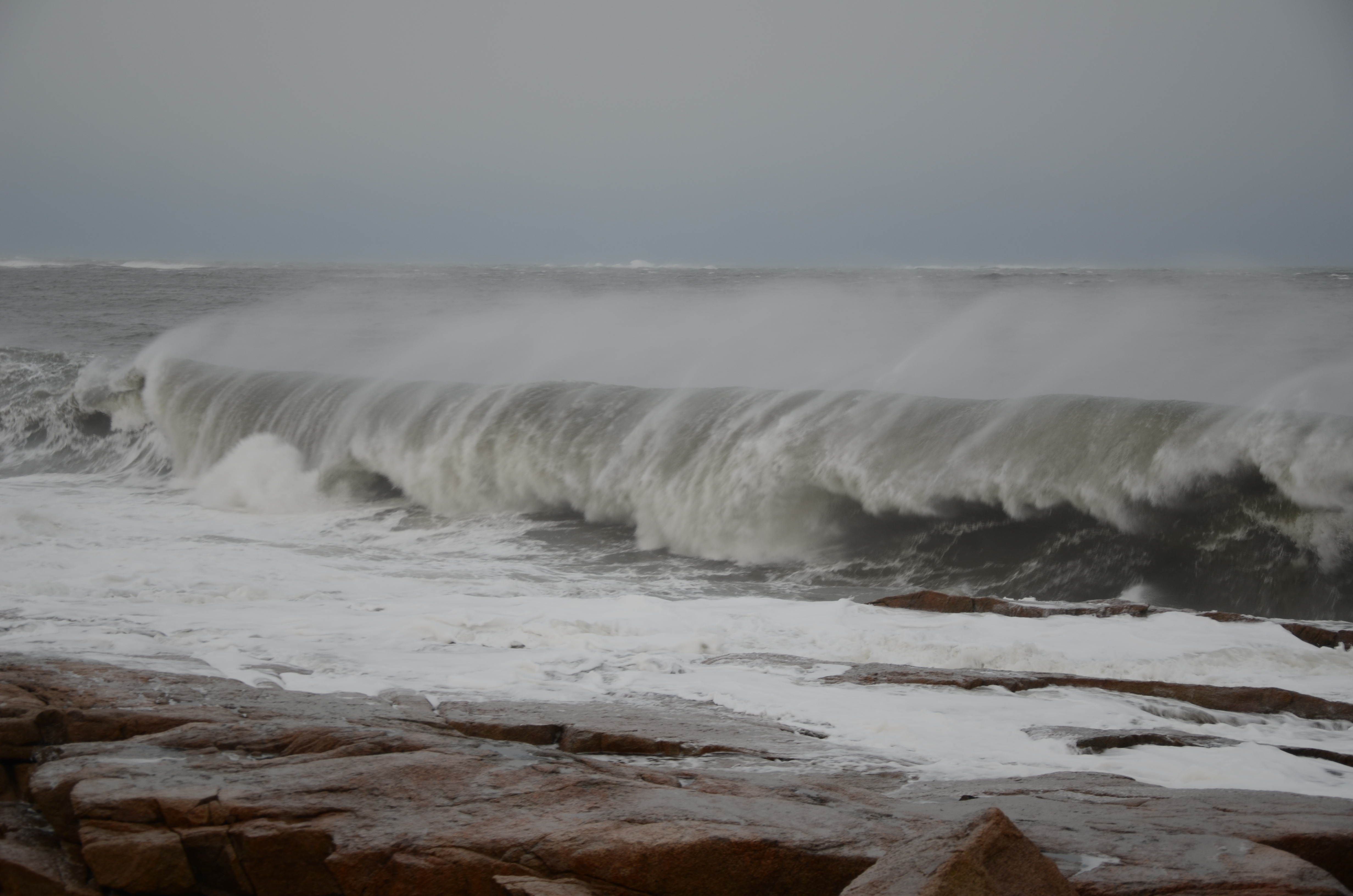
at cape ann photo, g. evans


I was in the sixth grade when my family moved to Virginia. A boy in the class befriended me for no reason that I could figure out. But I was glad. In those days during the McCarthy era, lots of people looked at anyone from China as a “communist.” The Red Scare was rampant and I felt lucky when I was the butt of racial slurs only once in awhile. For some reason, this boy named J. thought I was smart, even though he was obviously the brightest in the class before I came on the scene. He nicknamed me “braintube,” a salutation that he uses to this day when we write to each other by email, even though we are both grandparents by now. J. is one of the few people that I kept up with from that far back. He worked as a diplomat for the State Department and was posted in various countries, always coming back home with his wife Anne who accompanied him abroad.

In 2008, J. came to a luncheon at a Chinese dim sum restaurant which turned out to be my mother’s last supper with her friends. It occurred in September a few weeks after she had received a diagnosis of cancer in August. All of her friends came to gather one more time. The charm with which he greeted my mother, told us stories and put everyone at ease reminded me once again how much I enjoyed and valued J.’s friendship. My mother died shortly thereafter without pain in early November.

As I thought about that reunion, it occurred to me for the first time that his nicknaming me “braintube” in the sixth grade was akin to parting the Red Sea for me (no pun intended). He was very popular and well-liked when we were twelve years old. And his taking a shine to the new kid–a stranger who was a Chinese girl, no less–made it okay for the others to accept me as one of them. My social assimilation could not have been made easier by Moses! Sometimes it’s hard to tell what strife we might have endured when someone rescues us from potential doom. The thing is, he did it all on his own, maybe not even as consciously aware as I have given him credit for. Maybe it emanated from his southern manners or from his innate diplomatic nature. In any case, it made a big difference in my life! Thanks, J.!

Braintube

getting to ‘there’. . .


I don’t know about you but I like to have things caught up before I embark on a project that I want to do for myself. The house has to be picked up and the refrigerator cleaned out. I’m not sure if guys feel the same way though. I read somewhere about the difference between guy and girl brains; something to do with the amygdala being different sizes or something. There might be clues in our DNA too. I don’t think guys feel like they have to wash the dishes before they go and tinker with the car, for example.

I’m not dissing guys, I’m talking about how self-critical we women can be about what we expect from ourselves. Last year, I spent weeks cleaning out the closets, taking things to Goodwill, lugging boxes to the consignment shop, changing cotton sheets to flannel before I could get to re-writing my novel. Maybe for me and other women, we’re good at putting off doing what we really want to do. I noticed that G. procrastinates when it’s something he doesn’t feel like doing.

The ‘there’ we want to get to today keeps moving so that it is still there waiting for us tomorrow. If we wait until we get ‘there,’ we might forget what matters most. I have days when I think the book is just not going to happen. There are other days, (like today) when I feel buoyed by its progress. The opening chapters are now headed in the right direction. In about six weeks, the book may finally be done–just in time for Mother’s Day!

So there!

american masters. . .


Last night, G. and I watched a documentary on PBS called “American Masters” which featured Carole King, James Taylor and the ’70s music scene at Laurel Canyon. It was fun to hear the songs from Carole’s album, “Tapestry,” a recording I played often when the kids were growing up.

In the documentary, I was flabbergasted to learn that with Gary Goffin, she wrote the song, “Will You Still Love Me, Tomorrow?” at the age of EIGHTEEN!! On wikipedia, it states that Carole King “holds the record for the longest time for an album by a female to remain on the charts and the longest time for an album by a female to hold the #1 position, both for “Tapestry.”

After I downloaded “Tapestry” on I-Tunes, I decided to make a playlist for my daughters, one of whom I’m going to meet this afternoon. I started thinking back on the singers who have touched me as much as Carole King. Here’s my playlist of these American Masters.

Ladies singing folk/ballads and more:

the moon’s a harsh mistress (judy collins)
turn, turn, turn (judy collins)
send in the clowns (judy collins)
diamonds and rust (joan baez)
jesse (joan baez)
i am woman (helen reddy)
I feel the earth move (carole king)
home again (carole king)
you’ve got a friend (carole king)
will you still love me tomorrow? (roberta flack)
stoney end (barbra streisand)
if you could read my mind (barbra streisand)
I don’t know where I stand (barbra Streisand)
the rose (bette midler)
when a man loves a woman (bette midler)
ladies of the canyon (joni mitchell)
both sides now (then) (joni mitchell)
both sides now (now) (joni mitchell)

Who are some of your favorites?

a tiny tiger. . .

"tiger, tiger burning bright"


Although G. and I live in a large house, it is split up into many uses. G.’s piano shop is on the first floor; there are over two dozen pianos, Steinways mostly, other ones, active and inactive down there. More pianos are in the barn. We live on the third floor where we watch the sun set while we have dinner. On the second floor are apartments that are rented out, often to grad students and post-docs at UMass Medical School which is nearby. Our current tenants have a two year old boy named Spencer.

One day last Fall, as I was washing the breakfast dishes, I heard a whirring noise out on the deck. As I wiped my hands and looked down at the deck that connects the barn to the house, I saw little Spence riding his three wheel bike. It wasn’t really a bike, it was one of those down to the ground vehicles that tots ride before they are old enough to get on a bicycle. Anyhow, Spencer was riding this thing, but he wasn’t just riding it, he was barrelling as fast as he could without a care in the world. I mean, he was careening around on the deck!

I wonder where that kind of joyful abandonment comes from, trusting that you can actually go at that speed in life without running into something or taking a fall. Even more exhilarating to see was the expression on his face, his eyes almost closed, shrieking with joy. Man, it was really something! His father quietly took photos of him, kneeling in one place as he recorded his kid running amok on the deck.

Are we all born with the potential for this kind of unbridled joy? I wonder.

kindred spirits. . .


As a self-described loner, the number of friends I have can be counted on one hand. Most of them are loners too, a few even more reclusive than I am. They are all artists of one kind or another. Their eye, hand and spirit are usually mucking around in what they are making, the instruments they are playing or what they are reading and writing. It takes a lot to go it alone. They share an insistent curiosity that seeks out what sparks their interest, incapable of just letting it lie there.

G. said about me once, “the difference between you and other people is that you pull the trigger.” I guess he’s right. My father was like that too (“My father, myself“.) When he decided to make all of our living room furniture from scratch, he taught himself how to do it. One of our neighbors wrote to me when he died that she still remembers that about him and the simple maple furniture he made for our house. There was a wooden chair in the shape of a Mies van der Rohe chaise lounge that I wish one of us had saved.

During his African violet phase, our entire basement was suddenly filled with aisles of artificial growing lights and metal carts with layers of trays lined with potted flowers. It seemed like an odd choice of plant for him. Later, I remember that he also liked gloxinias and christmas cactus plants. When each “phase” was over, it clicked shut, just like that.

I wonder where these obsessive urges come from. I find myself doing the same thing sometimes. They feel like a binge to me. Whenever I come upon something that resonates with me, I feel it right away. It’s not just what appears on the surface but something else I feel a kinship with, an energy submerged within.

That’s the experience I had on Saturday night when G. and I watched a DVD about Margaret Leng Tan. Born in Singapore, she is a pianist living in Brooklyn who built a following through her performances playing John Cage’s compositions on pianos and on toy pianos. Her dedication to forging her own path and her sense of presence bowled me over. The energy of her performances, her large piano hands, her crisp haircut and the four dogs that kept her company stayed with me long after the documentary wound to a close.

The next day, I downloaded “The Art of the Toy Piano” on I-Tunes. I was glad to find the gorgeous blues-y Satie piece by Toby Twining played concurrently on piano and toy piano. I scrolled through twenty-four pages of toy pianos listed on eBay but didn’t see anything that compared favorably with her collection of eighteen toy pianos. I sat down at my piano and sightread the Beethoven sonata that Margaret adapted for Charles Schultz’s Peanuts character, Schroeder, that was featured in the film. I read about John Cage again. I took out “Wake Up and Cook”, a Buddhist cookbook which describes Cage’s preference for making brown rice the macrobiotic way with spring water that he drove miles to fetch in empty water jugs he brought from home.

I even wrote an e-letter to Margaret because I felt her life was so inspiring and poignant at the same time. Miraculously, she wrote back! She says she now has six dogs!

Take a look for yourself at http://margaretlengtan.com/.