mulberryshoots

"Tell me, what is it you plan to do with your one wild and precious life?" ~ Mary Oliver

“red sparrow”. . .


skipping rope

When we lived in Berwyn, Maryland my family often gathered with other Chinese immigrant families. One of them was the Chang family who were related to us as second cousins or an aunt & uncle once removed or something like that. I was never quite sure what the connection was. We settled on being “cousins” with them. Judy (on the right of the photo) and I spent a lot of time together skipping rope at my house. We went to see Bob Steele and Hopalong Cassidy cowboy movies every weekend at the Greenbelt Theater. Afterwards we would walk up and down the aisles of the five-and-dime store, inspecting the plastic toys and candy that we would choose to blow the rest of our allowance on.

Judy was an only child and her parents were both physicians. Her mother worked at a hospital and was often away from home. Her father took care of Judy and did the housework at home in addition to being a doctor. Whenever I stayed over with Judy at her house on the weekends, Uncle Chang would buy us whatever we wanted to eat and let us do whatever we felt like.

One day when we were about nine years old, Judy and I sat on the living room rug of her house and demolished a gallon of peach ice cream together. We also ate a large bag of Fritos. We got so sick afterwards that I haven’t gone near peach ice cream or Fritos ever again.

Because both her parents worked, Judy stayed with us over the entire summer when school was out. She was very good at drawing, went to Swarthmore and afterwards became an architect. She also became a hippie of sorts. She met her husband, an American, on one of her treks in the Himalayas. Even though our lives went in different directions, I sought her out for a reunion of sorts when our children were young. We met at a restaurant with our then-husbands and families and then lost touch again. Her marriage ended at the 20 year mark. Mine ended at 26 years.

Much later, I invited her to visit us for Thanksgiving in 2002. By that time, Judy’s father had passed away and she spent her time in Philadelphia practicing architecture and visiting her mother in a nearby nursing home. Judy told me that she had made peace with her mother who was by now nearly a hundred years old.

We had a good, albeit awkward visit together that Thanksgiving at our home. She brought her drawings to show me; I showed her my writing efforts. We talked about how it wasn’t too late for women to reach out for what was still important to us. She told me she had always wanted to travel to Mongolia to take photographs and to sketch the landscapes there. In 2003 she won a SWIMPY (“Senior Women In their Most Productive Years”) grant from Flora Stone Mather College at Case Western Reserve University to sketch a restoration project in Mongolia. She said, “It was a spark I needed to begin a journey imagined a lifetime ago.”

When we skipped rope together, we moved in tandem. Each of us fiercely wanted a creative life. We found a belief system that worked for us: mine in Taoism and Judy in Buddhism.

We spoke again after she returned from Mongolia. Then, she became ill with cancer and died in 2006 with her sons by her side. In memoriam, they created a website to celebrate her life and her art. In the process, her sons discovered drawings that none of us had ever seen. They are posted on a website called “Red Sparrow.”

a standstill gives way. . .

sunrise at thacher island, cape ann -- photo, a. dalton


There are periods of time when everything seems to come to a standstill. Last year was one of those times. From the autumn through the end of the year, family misunderstandings abounded. Then they took a turn for the worse. During that time, my three canaries went through their yearly moult. Silent as stones, they sat lethargically in their cages for weeks. Tiny feathers littered the floor and down floated in the air. I gave them egg food to supplement their diet; then gradually added back their usual song food. Often, it took awhile before the birds would sing again as their feathers grew back in. During this standstill, no sounds were heard at all, not even little peeps.

Two years ago, somebody gave us a good-luck money plant. It was about four inches high and sat on our kitchen windowsill. Since then, it’s had a couple of intense growth spurts. I repotted it twice and moved it into the other room as it got taller. In November, as I adjusted the support stake, the thin trunk doubled over and almost broke in half. We bandaged it with a splint taped around it, but the plant looked like it was not going to make it. Distraught, I started misting the wound where it had cracked open, four feet midway to the top, hoping that the added moisture would reach the tiny leaves above. The lower leaves began to discolor and fall off, one by one every other day.

The winter solstice arrived on December 22nd and the days began to lengthen and brighten up a little. As I cleaned the house in preparation for the holidays, I came across an old string of prayer beads made out of fossilized coral. Not knowing where to put it, I impulsively wound it around the old bronze Buddha which sat on the maple chest under the skylight. A day later, I found another string of prayer beads made of fossilized bone that I looped three times around a second Buddha, the silk tassel dangling like a pendant on the gilt statue’s chest.

One snowy day in January, I heard soft chirping noises. Short snippets of song followed. Soon, even the bird that hardly sang at all was joining the other two in song. After four months of eerie silence, a cacophony of canary song filled our rooms. Nothing had changed except the passage of time and the quality of light coming in the windows. The maidenhair fern made a comeback too. As for the money plant, we counted twelve new shoots appearing over the course of three days in the same week that the birds started singing again. As I watered the plants along the west side of the room, I also noticed that the Trader Joe orchid plants had branches of new growth with flower buds on every plant. We couldn’t believe all this was happening at once.

According to the I-Ching, a period of stagnation will eventually turn into its opposite. Change is the only thing that does not change according to this ancient book. Although I have had my share of ups and downs, it is still hard during a time of despair to have faith that things will improve again. It is human nature to worry that perhaps this time, the dark will stay forever, even though we know from experience that it is darkest before the dawn.

This dawn arrived, ushered in by a chorus of birdsong, a multitude of new leaflets on the money tree and a dozen orchid buds ready to open.

I am thankful and filled with awe. Hallelujah!

commonplace journals. . .


my commonplace journals

Today is Wednesday (“why I love wednesday and thursday mornings“) and I just cut out a recipe for Japanese sake-steamed chicken from the NY Times Dining section. The description of a small chicken steamed gently over sake and water, rested, succulent slices covered with a sauce made of ginger, soy, garlic, lemon, orange and rice vinegar sounded like the perfect thing to make for dinner tonight.

A Japanese kabocha squash that has been languishing in the wooden bowl on the counter will be cut up into chunks and  simmered in a dashi broth with a little soy added. Bowls of white rice will accompany the chicken and the squash.

These recipes will be added to the current volume of scrapbooks that I have been creating for years. In them, I have assembled everything worth keeping that refreshes my spirit and stimulates my appetite for cooking, reading, writing, anything that I want to remember and think about more. For example, the article about the lady who put in plants with plumes that mimicked the exotic roosters is saved in one of these books(“why i love wednesday and thursday mornings”.)

Last year, as I was doing research about Ralph Waldo Emerson, I read about his habit of keeping what he called “Commonplace Journals.” He used them as a way to capture one’s thoughts and to collect and savor the things that appealed to him. He encouraged this practice because the journals were a tangible tool and handbook for trusting your own intuition and being self-reliant (“emerson and the heart“).

The photo above of my scrapbooks illustrates the kind of collage that I put together to represent where my head was at the time for that particular volume. Although there were many images of wishes and desires in these volumes, they represent much more than that. Their pages captured something intangible, an energy or a kind of longing that embodied my spirit as it hovered around in those days. It was a way of putting together a pastiche of where I wanted my life to be going, or perhaps end up, a way of awake dreaming for what my life could be.

I believe that making imagery visible makes what you hope for more tangible. At least that’s what these journals have been for me. Paging through them, some of them from twenty years ago, I can see the person I was back then. Somewhat dated, to be sure. But the spirit of who I was and what I wanted to realize still comes through loud and clear.

stirring the pot. . .

cream of tomato soup

Although I sometimes think of myself as being quiet and solitary, (“a taoist hermit”), in my professional working life, I was anything but. Although I tried very hard each time I was the “newest kid on the block,” to keep my mouth shut and not challenge anybody, it was hard for me to do any of these things longer than for the first week or two. It’s actually amazing that I had a professional career at all, all things considered.

I was a late starter getting into the workforce because my first husband didn’t want me to work (“life is long”). When my kids were in high school, I talked my way into a project management job at one of the two premier biotechnology start-up companies in the U.S. at the time. In those days, cloning was an art, carried out by molecular biologists who were treated and paid like rock stars. Nowadays, there are machines that clone while people are on their coffee break. Before I was hired, I was asked to interview with the “Senior Scientists” of the start-up company. They were very nice and very distracted by this waste of their time. In other ways, they behaved like Knights of the Round Table, coming to work at 2 a.m. and leaving whenever, or vice-versa. They purposely didn’t want anyone with a Ph.D. in science to be a project manager, which is why they were interviewing me, a liberal arts history and music major. What they wanted, it seemed, was to hire a nice “nanny” to find their notes and to run meetings that they didn’t want to attend.

Long story short, I was hired and in two years was promoted over a young Harvard MBA to Director of Project Management. I hired and trained young MBAs from Wharton and other business schools because that’s what senior management said they wanted (even though I wasn’t one.) There were four divisions in the company at the time: pharmaceuticals, agriculture, diagnostics and biocatalysis. The project managers covered projects in all four groups; there were over 25 projects with global business partners in the pharmaceutical division alone. I also managed my own projects, the most important one being recombinant Erythropoietin (EPO). Simply put, it is a glycoprotein that stimulates production of erythrocytes (red blood cells).

I remember one company-wide meeting when the CEO said, “Our number one priority is EPO; our number two priority is EPO and our number three priority is EPO.” It was a crazy time. Once the VP of manufacturing and I flew to Frankfurt for an emergency meeting and met our business partners in the airport lounge after 8 hours in the air. We then turned around and flew back a day later without leaving the airport! When I boarded the American Airlines plane the crew recognized me from the flight two days earlier. It was right before Christmas and everyone was in a festive mood. The stewardess put me in First Class and served glasses of champagne on a tray with red roses. Then, I was offered (I’ll never forget this) an unopened jar of Sevruga cavier the size of a softball–just for me. There were perks that went with all the pressure and this one beat them all.

Back to the grind, I led a global development team with business partners who succeeded under great duress to obtain EPO regulatory approval in Germany and Japan. Amgen won the U.S. patent rights over the company I worked for and built its company from its early success with EPO. During the patent litigation phase, I travelled to New York for depositions and testified on behalf of my company’s claims. Today, you might recognize EPO under its marketed name,”Procrit.” Athletes are accused of using it to stimulate performance. To this day, it is still the single most successful product ever developed by recombinant technology, generating over a billion dollars of revenue a year.

Wow, you might say. . .how did you survive that? Well, I read huge textbooks about Molecular Biology and Protein Chemistry without understanding or at least retaining much of what I read. The first year, I walked around the garden and cried a lot on weekends. Understanding a research scientist’s mentality, having grown up with my father (“my father, myself”) gave me a leg up towards coaxing them to do what management needed them to do. It was a privilege to be on this ride in the early years of biotechnology. The work was exhilarating and very, very stressful. I virtually disappeared from my family. I told my first husband that from then on, he would have to go to all the school meetings for the kids and to carry on at home as though I had left the planet. Which is also how it felt sometimes.

Anyway, that’s how I started working. They thought they had hired someone they could ignore. I managed to stir the pot enough to get things done. It was a lot of fun working with such intelligent people for such a long time. After the bloom of biotech faded, it got a lot harder to raise money, it was a lot more stressful and a lot less fun. But I had a good run. I lucked out. I worked very hard. And I’m glad that a product like EPO made it across the finish line.

serendipity and synchronicity. . .


I feel that serendipity and synchronicity have shaped my life to a large degree.

When my father decided at the last minute not to return to China right before the Cultural Revolution took hold, that was serendipitous. We had our shots, bags were packed, we were ready to go. Even though my grandfather accused him of being “disloyal” at the time and for years afterwards, my Dad made a life decision to stay in America and not to return to China. When I think about what my life would have been like, all I would have to do is look at my Chinese cousins’ lives, a generation whose future was stolen by the Red Guards. I might be wearing my hair in pigtails and growing cabbages. Or maybe I’d be online, writing a blog!

Without synchronicity, my lost dog wouldn’t have been found and my husband wouldn’t have found me (“life is long“). Seeing the first quartet of red cardinals was serendipity. Seeing a family of them in our rose arbor was synchronicity (“seeing red cardinals“).

Wikipedia (see links above) says that “serendipity” has been voted one of the ten hardest words to define. Maybe it’s one of those concepts where “you know it when you see it.”

How have serendipity and synchronicity touched your life?

seeing red cardinals. . .

photo taken by Timothy Hardin

Whenever I am driving along in the car and a red cardinal swoops in front of me, I think of it as a good omen. I don’t know why but I think of it as a secret messenger whispering in my ear that something good is going to happen. Or, simply that “hey, everything is fine!” It is a bird of affirmation. With this unfounded bias, whenever I see cardinals, the rosy, light brown female and the bright scarlet male, I sense that the Universe is playing a song and that I should listen to it.

In February, two years ago, my father lay in a bed by a basement window. He could see the trunk of a shrub outlined there if you propped his head up with a pillow. A few days before he died, we heard birds hopping on the branches of that shrub. When we looked up, we gasped when we saw not a pair of cardinals, but two pairs of cardinals. Yes, there were four adult cardinals brightly hopping on that shrub. If they were a “sign” of anything, the cardinals did not tell us what it was. They lingered for at least two days. Right on that same shrub–it seemed as though they were giving some last messages to my Dad while he was still here on earth. Or maybe vice versa, who knows?

My husband, G, is aware of my affection for cardinals. He shares an affinity for them too, I think. One day last year as I unloaded groceries from the car onto our front steps, he greeted me with a “shh” and beckoned for me to enter the side door of the house. Along the south wall, there was a twelve foot high iron trellis that G had erected years ago to support a bower of climbing roses, mostly pale pink “New Dawn” intermingled with “Constance Spry” . Signalling for me to step quietly inside the saw room, he pointed at the window and the underside of the rose bower, whispering the word, “nest.”

A proud father cardinal stood on a branch near a nest of baby cardinals, the mother nowhere to be seen. She returned a little later after a break sitting on the Sassafras tree on the other side of the driveway. Here, we witnessed two pairs of cardinals, parents and babies. Seeing them so close up in a nest built next to the house brought back the memory of the two pairs we had witnessed at my father’s bedside.

I don’t know what cardinals represent but click here to see what Ted Andrews, in his book Animal Speak says about them.

a taoist hermit. . .

In “About” I write that I think I would like to be a Taoist Hermit. If you read Bill Porter’s books written under the name, Red Pine, he relates stories about looking for Taoist hermits in the wild mountains west of Sian. Sometimes the hermits are in plain sight in a village but there’s no way to truly identify them even if you are looking straight at them. There are stories about hermits who sit alone in their mountain hut on a moonless night, eating only pine needles and drinking drops of dew.

I have been a loner all my life but I don’t think that qualifies me as being a “hermit.”  Here are two definitions of “hermit” I found online:

her·mit:

1. A person who has withdrawn from society and lives a solitary existence; a recluse.

2. A spiced cookie made with molasses, raisins, and nuts.

My existence is pretty solitary which is why being able to write this blog is a way to share who I am and to becoming more known by my family and friends.
So the hermit/recluse part is pretty well established in my lifestyle. Following the Tao begins with a single step (Lao Tzu) and the rest of the journey is the way that I live my life.
Click here if you would like to read a well-written article about the difference between Taoism and Confucianism (or Confuse’em-ism)

eggs in one basket. . .

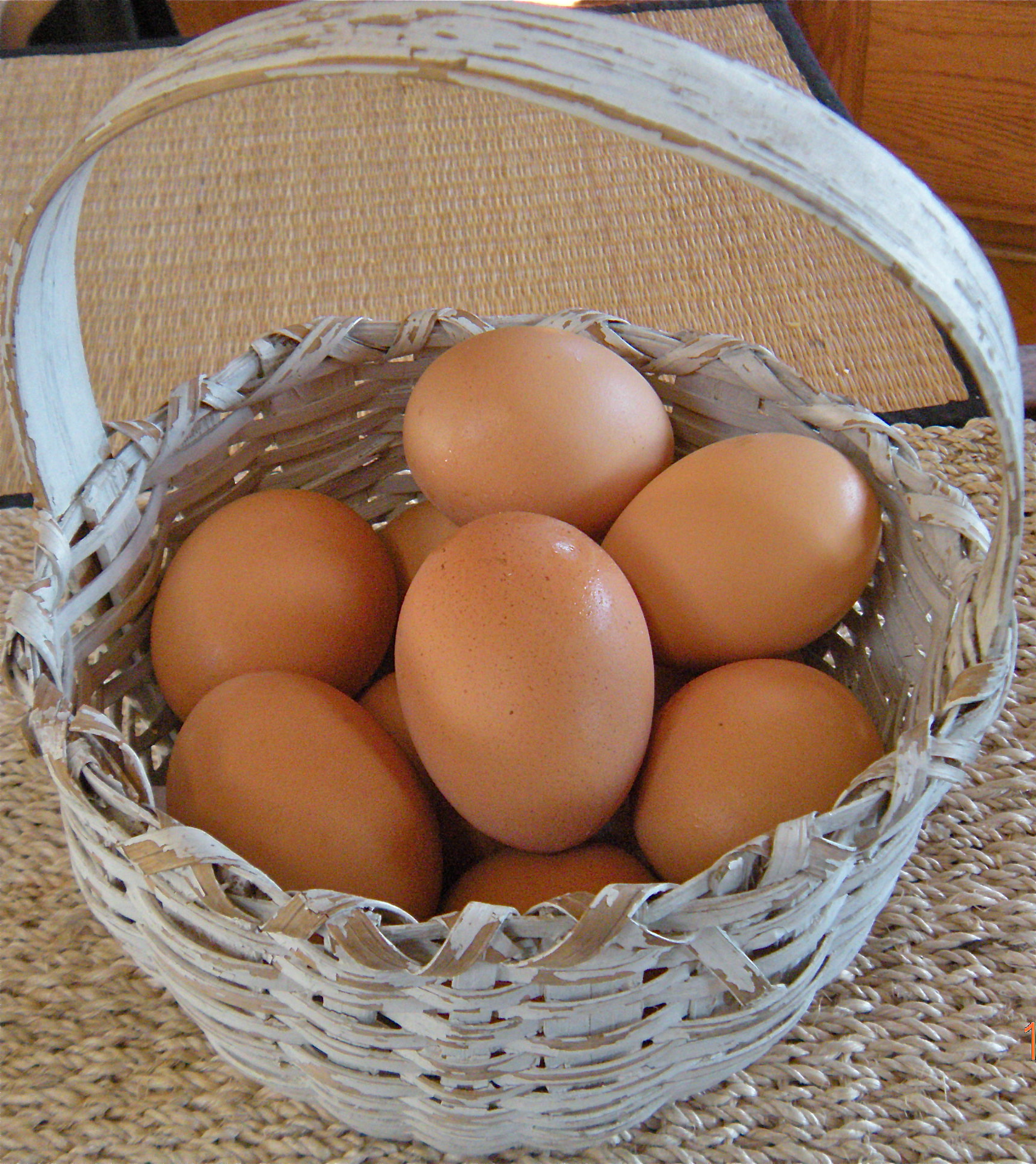
Well, you know what they say about having all your eggs in one basket. At my age, I’m happy to have any eggs in my basket at all. There have been times in my life when I thought I had lost the basket along with all the eggs…yeah, a basket case, right?

When I was divorced, it felt like that. Lost the dream of our family staying together. Lost my job. Lost the dog (see “Life is Long” post) But true to the truisms of life, I found myself. When I had no job and knew no one while living in an apartment in one of those Georgian houses on the common in Salem, I was happier than I had ever been. Why was that… or  come again?

Things had gotten so bad that I was beyond bottomed out.  I was burned out from a brutal job, I was unemployed, living off savings. I was alone in life because my ex-husband and my children had all disappeared, avoiding the fallout from the divorce. I didn’t know what would happen to me. Usually a very strong person, I had had it at this point in my life.  I cried “Uncle!” and gave the burden of my fear away.

I looked up and said to the Universe, “Here, take it! It’s all yours! I can’t handle it anymore so I am asking for your help and hoping that you will hear me.” “Please.”

And for the rest of my time in that place, I didn’t worry about the future constantly anymore. I just lived. One day after another.

Little by little, things happened and help was on the way. I got a call from a VP from my last job that asked if I wanted to do some consulting for a start-up biotech firm. When I moved there, my piano needed fixing and I met my future husband to be (see “Life is Long“).

The COO of the biotech company asked me what I wanted to find in a place to live. I said a new contemporary condo with a view of the water. He said “good luck“. The next day, a stranger called me about a condo on a lake that was just listed for rent. I moved in there and loved it. It had more pantry space in the kitchen than I had ever had. Although having pared things down, I no longer needed it as much.

Now that I had a job, I could support myself again. There was a fireplace, a glassed in atrium with a bluestone floor, a small deck that looked out on the lake. There were lots of birds and wildlife too. A large blue heron would stand on the dock near my back yard and preen itself in the afternoon sunlight. Once, I heard a fluttering in the chimney and a bird got into the house, flying back and forth frantically seeking a way out. That same COO answered my distress call along with his wife and two young sons. A graduate of MIT, he engineered a chute with a chair and a blanket draped over it so that the poor bird (who was standing still under my bed by this time) could emerge and fly out the open window.

Then, I became friends with the piano tuner who invited me to dinner at his home, a huge Queen Anne Victorian house where his shop was, and which he renovated with a geothermal heating system drilling a well deep under the house. There was also a handsome stone drywall built around the perimeter of the property, the rock hauled by hand and loaded on over fifty trips in his small truck.

Life went up and down again. The biotech start-up that had such promise sputtered when their clinical trials (which I was managing) failed. We opened the interim results on a Thursday night and the company closed on Friday. I was out of work again. More work appeared magically over the phone. I could never figure out how they knew where to reach me. I was lucky. I also worked very hard for a long time, not always knowing what to do but coming up with ways to solve problems. Finally, I found myself not having to do it anymore.

So, I don’t know about eggs in a basket. My experience is that there is help and all you have to do is ask for it. And to be thankful when it comes. That’s an important part of this whole thing. Ask for help and be grateful when it arrives. It is also important to recognize help when it appears and to go with the flow if your intuition tells you that it’s okay. Just remember to give thanks.

emerson and heart. . .

"Trust Thyself: Every Heart Vibrates to that Iron String"

Ralph Waldo Emerson is one of my favorite thinkers. This is big because I usually gravitate toward the work of women writers like Emily Dickinson (“I’m Nobody! Who are you? Are you nobody too?”)

Emerson’s essay on “Self-Reliance” is one of a handful of admonitions that I have unknowingly subscribed to most of my life. His further exploration of universal energies and relying on your intuition is even more firmly embedded into my consciousness, especially after all the synchronicity that has shaped the direction of my life. Emerson said:

“Trust thyself. Every heart vibrates to that iron string”

and:

“Every spirit builds itself a house, and beyond its house a world, and beyond its world a heaven. Know then, that the world exists for you. For you is the phenomenon perfect. What we are, that only can we see.  Build, therefore, your own world.”

basil toutorsky. . .

Basil and Maria Toutorsky's home on 16th St., Washington, D.C.


I started playing the piano when I was three in China trying to imitate my Aunt Anna, a piano teacher. When my father was finishing his doctorate at the University of Chicago, he sent for my mother and me to come to America. We were living in Peking with his parents until the end of World War II. We travelled by freighter for three weeks, arriving in California. Then we took a train to Chicago, five days sitting up in a train, eating sardines on saltines for our meals. Our first home in Chicago was located in the cement basement of a house belonging to a Chinese family who kindly took us in. When he graduated, my father got a research position at the U.S. Geological Survey in Washington D.C. and we moved to a 2nd story apartment in a small house in Berwyn, Md.

Piano was important everywhere we lived. We had an upright in the Chicago basement which I would practice after I had started the evening’s rice to cook. In Berwyn, we also had a piano. That’s when my parents found a piano teacher named Mrs. Cortez to give me piano lessons. We stood by the highway and took the Greyhound bus to Washington, D.C., then took the D.C. Transit bus to 16th Street for my piano lesson. Sometimes my father would drive us there, reading scientific papers in the back of our old black Ford while he waited for me to have my lesson. Soon, Mrs. Cortez suggested that I take lessons with the Professor instead. She was a student of his as well, her teaching room right off the reception room filled with sumptuous furniture.

Before leaving Russia, Professor Basil Toutorsky was a renowned pianist and friend of both Sergei Rachmaninoff and Alexander Scriabin. He was also one of the nicest persons I had and have ever met. He took me under his wing for about four years from the time I was eight to when I turned twelve. The architecture of the house on 16th street made it a landmark in Washington. Click studio to see the outside and imagine what it must have been like for a Chinese kid to have piano lessons there. Inside, there were twenty-two grand pianos, placed two-by-two with keyboards that ran from one end to each other. Some were coved together as matched pairs in room after room.  We spent many hours playing four-hand pieces together, either on one piano, sitting side by side or on two pianos where we could see each other over the music desks.

By osmosis, this early routine of playing with Professor Toutorsky gave me a deep sense of music and rhythm. He taught me laborious hand and finger exercises that gave me strength and independence. I played a lot of technical exercises: Czerny, Cramer and lots of scales: chromatic through the circle of fifths, natural, in parallel and contrary motion. I later learned that the finger exercises were known as the Leschetizky method. To this day, I owe the development of my technical ability, ear training and musicality to Professor Toutorsky.

me, at the age of twelve, at the piano in Toutorsky's studio


He was also one of the few adults who showed me humor and compassion. One year for my father’s birthday, he recorded me playing Beethoven variations and encouraged me to say “happy birthday” on the ’78 rpm record that he put into a paper sleeve.

When I was twelve, he took me down to the Cosmos Club, an exclusive place where concerts were attended by Washington’s society elite. It was the first time I played a few notes on a nine-foot Bosendorfer grand piano. The tone of the Bosendorfer’s bass notes made a lasting impression on me. Later, I compared its tone to many of the instruments that I played, looking for that elusive and rare depth of sound. He also planned my first recital to be given at his home. As a momento, he showed me a photo of a music lyre in the Encyclopedia Britannica, and then with my assent, had the image of the lyre made into a gold pendant, engraved on the back with my name and date commemorating my”First Recital”.

first recital pendant

To this day, I am ever so grateful to this gentle man who gave me so much technical and musical training so magnanimously. My parents underestimated what he did for me. I don’t think they knew what Leschetizky method was. For sure, they didn’t realize how much Professor Toutorsky cared for me. Nor I for him.