mulberryshoots

"Tell me, what is it you plan to do with your one wild and precious life?" ~ Mary Oliver

inch by little inch . . . on a massive scale
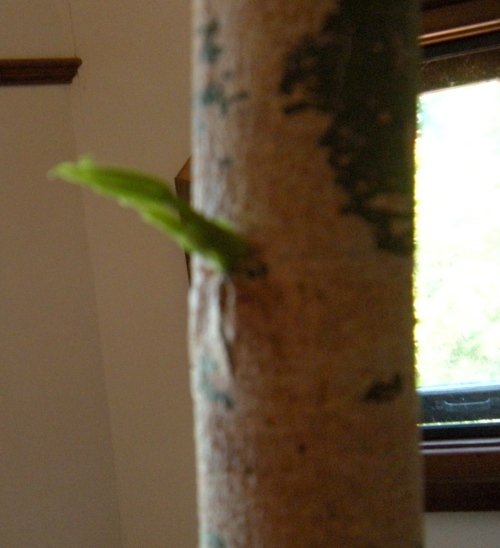
After fifteen months of dormancy, tiny sprouts appeared on June 15, 2016.

After fifteen months of dormancy, tiny sprouts appeared on June 15, 2016.

Neuroscience is the underdeveloped frontier of medicine. While it has taken decades for new therapies such as targeted immunological approaches to treat melanoma and other cancers, there has been virtually no progress in understanding neurological diseases such as Alzheimers, Parkinson’s disease, Multiple Sclerosis or ALS (Lou Gehrig’s disease.)

Why is that, I’ve often wondered? With the billions of dollars spent on research throughout the world every year, why has medical progress been so slow for so long?

Then a popular craze comes along spurred by celebrity participation – such as the ice-bucket phenomenom that raised $100 million dollars in 2014 for ALS research. How many participated? And how many clucked their tongues thinking it was a waste of time and money? It was easy to do and nobody thought much more about it afterwards.

Well, guess what? With some of that ice-bucket money, they’ve discovered a new gene involved in 3% of ALS patients, both inherited and spontaneous. That may sound like a small thing but it has the potential to lead to new treatments. What was compelling to me is that it took research done at EIGHTY labs in ELEVEN countries throughout the world for this discovery to happen.

Maybe that’s what breakthroughs in medical science require: MUCH BIGGER SCALE. That is, maybe people have underestimated all this time what’s required to make miniscule progress and that “it takes (more than) a village” to make progress or to solve problems facing mankind.

This is exactly the opposite of “divide and conquer” – the ugly and selfish politics of Donald Trump.

Rather, even people working together at a small scale is not enough – but working together at a much more massive scale in the world and cooperating together – is what the world really requires if we are to make any progress at all to solve mysteries of science and medicine that would benefit everyone.

So you can think small and build walls to keep people out or, what? Can societies who have such different self-interests band together at a new scale in order to make progress? What a concept! It’s taken a FAD like an ice-bucket challenge to reap a tiny new breakthrough in ALS. But the real take-home message is much more significant: we are stronger working together than we are apart. And we should be doing it at a much larger scale in order to make breakthroughs that we all need.

DUH!?!

P.S.  After this post was published, it occurred to me that the reason science makes such slow progress is due to the enmired secrecy culture of scientists – who hoard their own work so no one else will get credit for it. Things may be evolving now for larger consortiums to work together on scientific problems – but the old “I’m going to win a Nobel Prize” syndrome is still pretty entrenched with researchers that I’ve known for a long time.

40 days later, leaves and shoots photo taken on July 25, 2016
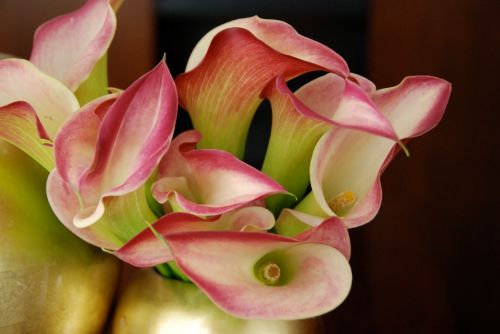
40 days later, leaves and shoots photo taken on July 25, 2016
 

“rebirth” . . .

DSC_0832

There’s a lot of talk about rebirth these days, it seems. Older couples finally decide to throw in the towel when the kids leave the nest and go to college. What used to hold marriages together doesn’t seem worth it anymore. We have a friend who is going through a separation and divorce. He has been eating dinner with us once or twice a week for the last few months ~ and we have become close family friends after having been good neighbors for years.

In parallel, a poignant interview story appeared in the New York Times a couple of weeks ago about Chuck Close, the portrait painter who was confined to a wheelchair after an accident decades ago. He recently left an unhappy marriage after over forty years and started dating younger women. Or maybe not even dating, it sounded like. He’s seventy-four years old and his grown daughters say they worry about him day and night because of his behavior. Why is that, I wondered when I read the article? One thing he said about his unhappy marriage and his uneasy relationship with his daughters was:

               “You would think by now that they would just want me to be happy.” 

I was thunderstruck by this sentiment because we, in this country, don’t think about old people in this country having a right to be happy at the end of their lives. Sure, younger generations have a right to be happy: to have big weddings, new careers, have children, buy houses, dogs and go on vacations. But with older people, I think there’s too much talk about who’s going to take care of them, what their health is like and who’s turn is it next to visit them?

Moreover, there might be tons of baggage, resentments from the past, estrangements resulting in boundaries set up high and expectations set down low among various members of a family. Just witness women’s fiction these days and that’s all they’re about – family reunions, conflict, bitterness, resentment. There probably isn’t a dysfunctional-free family in the whole country, it seems to me.

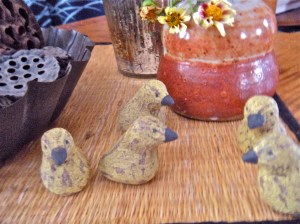
a family of "little peeps" . . .

a family of “little peeps” . . .

But hey, I forgot I was writing about rebirth. Yep, I think it’s a good idea, ESPECIALLY if you’re pushing seventy or more. Why not reach out for something (big or small) that you’ve always dreamed about that you would like to have in your life while you’re still around? For me, it’s publishing a book that I hope will affect a reader’s life down the line. I wrote it four years ago and for some reason, I resurrected it a few months ago and began to re-read it. I found myself enjoying it and laughing out loud at different parts of it. Since then, I’ve been revising it and making some corrections to the plot that it needed. But the most important thing is that I (still) like it. And I’ve found beta-readers (like beta-testing for computer programs) who are reading hard copies of it now and letting me know what they think. In fact, I was kind of surprised that so many of them said they’d like to read it when I sent out a general S.O.S. a few weeks ago.

As an Indie (independent-self-publishing) author, I have been fortunate to have met a seasoned literary editor and a professional book designer who are “excited” about helping me self-publish my book. That’s my aim. Fortunately in New England, there’s also a very active volunteer-run organization called IPNE, Independent Publishers of New England who support and organize themselves to provide Indie authors with a place to learn about the book publishing and marketing business and have fun too. There is a two-day conference scheduled in October to be held in Portsmouth, New Hampshire where guest speakers will talk about self-publishing and what’s entailed in promoting your books (way more than you ever thought you’d have to do, it sounds like.)

So, Chuck Close is still painting his self-portrait while he leads what sounds like a wild last-ditch life that he imagined for himself. I hope that he’s happy even if his daughters disapprove of what he’s doing. As for me, I feel that the only way to be happy “by now” is to follow my dreams, no matter how old I am and to do something creative every day. That’s about all and if it takes some rebirthing to do that, then that’s fine too.

Whatever it takes, right?

(Daphne, thanks for writing – this post’s for you. K)


“hope springs eternal. . .!”

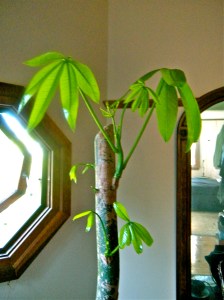
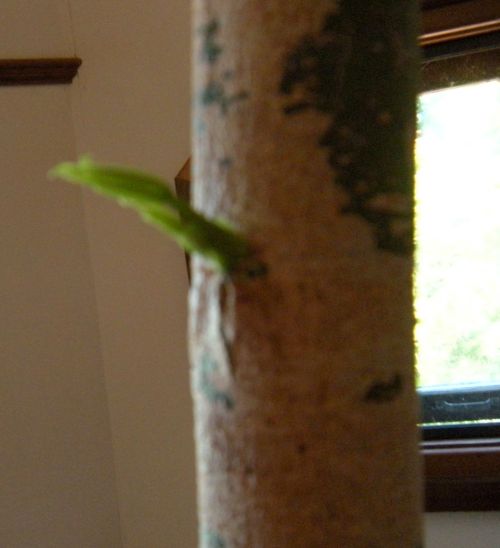
the "mama" shoot, now growing multiple leaves!

the “mama” shoot, now growing multiple leaves!

Here’s an “against all odds” kind of post.
We had a money plant that was over eight feet tall, grown from a shoot we bought at the grocery store that grew on the kitchen windowsill. Then it collapsed for some reason and we were told by a plant expert to CUT IT OFF down to about four feet.

new shoots 2No leaves or branches left. A bare stump of a trunk. I kept it barely watered since the radical surgery taken last March (2015) and it lay dormant until and about ten days ago. I looked at it and saw, miraculously, that there was fresh growth coming out of a couple of “eyes” on the bare trunk.

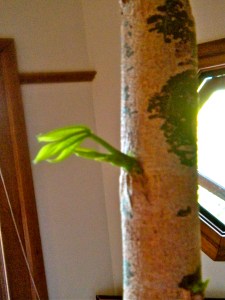
one of four more "baby shoots" coming along. . .

one of four more “baby shoots” coming along. . .

Since then, the “shoots” are lengthening every day (about an eighth of an inch per day.)

 Now if that isn’t a sign of hope and renewal, I don’t know what is!
What do they say about perseverance?  “Love Conquers All,” “Hope Springs Eternal,” and most of all, “NEVER GIVE UP!”
POSTSCRIPT:  June 18, 2016
Here are three photos taken 12 hours apart in the last 36 hours showing exponential growth. To the adages quoted above, one more comes to mind this morning which is:  “Its Never Too Late!”
It also occurred to me this morning how encouraging this truism might also apply to us humans as well as the plant kingdom. Right?
DSCN9726
DSCN9749leaves Sat. June 18 6-30 a.m.
 GROWTH since June 18th:
photo taken june 23rd

photo taken june 23rd

photo taken june 26th

photo taken june 26th

it’s almost summer! . . .

it's almost summer! . . .

it’s almost summer! . . .

Now that we’re approaching Memorial Day, we’ve “fired up the Barbie!” as they say in Australia & New Zealand. Ours is a modest cast iron hibachi like the Japanese use because we prefer cooking over real charcoal briquets and wood-chips to cook and flavor our food.

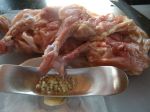
Recently, I’ve marinated some flank steak (yesterday) and chicken thighs (today) to grill on the hibachi. After breakfast today, I “butterflied” the chicken pieces by cutting all around the thigh bone so that the meat is flattened out, more surface area to soak up the marinade and easier to ensure that they are cooked through without burning the outside while the inside is still too pink.

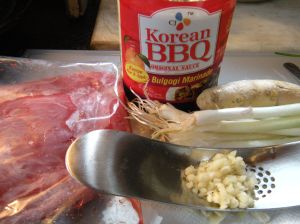
The marinade is the same for both the flank steak and the chicken: About a half cup of Korean barbecue sauce that you can find at asian markets; 3 fat cloves of crushed garlic, slivers of fresh ginger root and 3 scallions, washed and sliced.

flank steak marinade ingredients

flank steak marinade ingredients

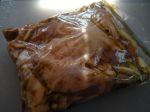
The meat fits conveniently into a sturdy sandwich bag along with the marinade and I squish it around so all of it is evenly distributed. Then I pop it into the fridge until about an half hour before I’m ready to grill – about the time I start the coals and give them plenty of time for the fire to calm down – not too hot but a steady cooking heat.

Here’s a photo of the “butterflied” raw chicken thighs:

"butterflied" chicken thighs

“butterflied” chicken thighs

chicken, marinating

chicken, marinating


And the piece of resistance – the chicken browning on the charcoal grill (below).


Bon Appetit!

chicken browning on the charcoal grill hibachi! Yum!

chicken browning on the charcoal grill hibachi! Yum!


musical miracles on a Sunday morning!

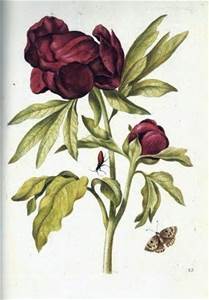
Marie Sibylla Merian - botanical engraving (c. 1705)

Marie Sibylla Merian – botanical engraving (c. 1705)

Just a quick note about how miraculous (that’s the only word for it) the technological world we live in is that allows us to access art, artists and beautiful music on a Sunday morning at home.

Here’s my little tale: this a.m. I was browsing concert schedules for ones that we might want to go to this summer. Happened upon a French pianist I had never heard of: Lise de la Salle, on the Rockport Chamber Music Festival website.

And while we’re unable to attend her concert on June 18th due to a heavy schedule, I looked up her recordings on I-Tunes. For a 24 year old, she has EIGHT albums that comprise a huge repertoire including Bach, Mozart, Schumann, Liszt, Prokoviev, Rachmaninoff, Shostakovitch and more. Looked her up on her website and discovered she concertizes mostly in Europe including the prestigious Verbier Festival in August, 2016.

Back to I-Tunes, I listened to a bunch of samples from her albums, purchased 3 for 99 cents each and made a playlist on my Library after they were downloaded. Found Youtube clips of these pieces and posted on my Facebook page to share this wonderful music on a quiet Sunday morning (both G. and I were very impressed with the clarity and musical depth of her playing.)

THEN, I looked up the IMSLP (International Music Score Library Project) website where you can search for music scores and found Rachmaninoff’s (Rocky) 2nd Etude Tableaux Op. 39, No.2 which I downloaded and printed in about 7 minutes time.

I’m planning to sightread it today and am looking forward to learning this piece. In my high school days, I played another Rocky Etude Tableaux but not as beautifully poignant as this one.

All of this new music (audible and legible) has materialized from virtually nowhere (except the Internet) and it’s not even 9 o’clock on a Sunday morning – thanks to the instant access available to us on our laptops.

WOW! Aren’t we lucky?!

(big & chewy) ginger-molasses cookies . . .

ginger molasses cookies title

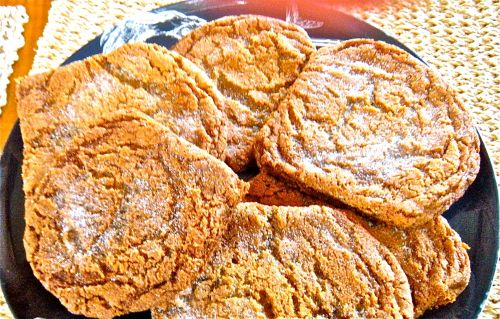
A couple of weeks ago, I posted a recipe and photos of some crispy, thin gingersnap cookies. They were good (enough) and we enjoyed them but the other day, I picked up ONE gigantic ginger-molasses cookie sprinkled with sugar at Idylwylde Farm. G. and I split it and we thought it was one of the best things we’ve ever eaten. It was moist, chewy and full of flavor.

We’re having a visit here this afternoon, playing some piano music and so I thought there might be enough time to try making these large ginger-molasses cookies to have with tea.ginger molasses cookies 1

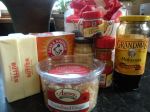
Here’s the recipe that I found online that I’m going to try – I added a little more of the spices and thought of one inclusion that might make them interesting: chopped up candied ginger (a la chocolate chips in cookie batter) which might give the cookies a little more “zing”. One thing I might try next time is to substitute light brown sugar for the granulated sugar.

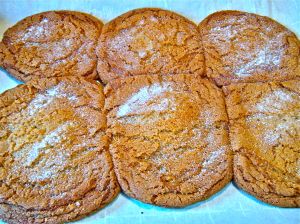
a "six-pack" of large ginger-molasses cookies . . .

a “six-pack” of large ginger-molasses cookies . . .


“fava bean linguine” . . .

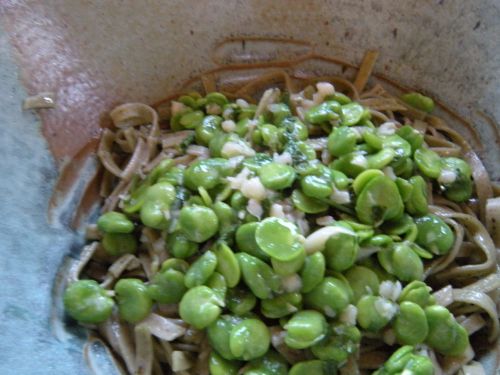
fava bean linguine with garlic butter and parsley. . .

fava bean linguine with garlic butter and parsley. . .

Last night, we made it to Idylwilde Farm just before it closed at 7:30 p.m. I wanted to stop there because they carry fresh fava beans when they’re in season. Sure enough, there they were in their fat pods. I’ve made them before so I’m familiar with the double-peeling process.

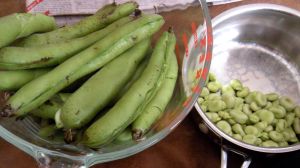
First you harvest the beans from the fat pods that you paid so much for and then throw them away. There are three or four beans in a fat, fluffy pod. Then you parboil the beans and peel off the white covering to reveal the brilliant green beans inside. All that work results in about a half handful of succulent bright green beans (see both photos below.)

empty pods on the left, fava beans in shells on right

empty pods on the left, fava beans in shells on right

fava beans in the cup; white shells on the right!

fava beans in the cup; white shells on the right!


Tonight, I thought I’d heat the peeled fava beans gently in some unsalted butter, minced garlic and fresh parsley until just right – and then toss some cooked spinach/chive linguine noodles with the beans. Then add chopped fresh basil, along with a robust grating of fresh parmesan cheese on top. A squeeze of fresh lemon mixed in.

ingredients: fava beans, fresh garlic, basil, parsley, lemon & Trader Joe's spinach-chive linguine. . .

ingredients: fava beans, fresh garlic, basil, parsley, lemon & Trader Joe’s spinach-chive linguine. . .

A simple watercress/lettuce salad with a classic vinaigrette and coarse ground pepper finishes off the meal.


“utopia in my own backyard” . . . (or at least in my pantry!)

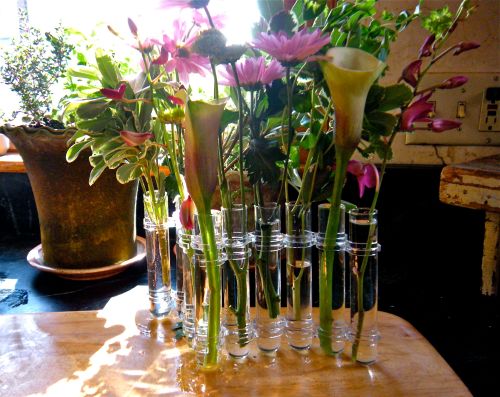
a flexible glass tube flower vase "lost" and now "found" . . .

a flexible glass tube flower vase “lost” and now “found” . . .

I’ve been doing a massive Spring cleaning out of my pantry. It is a nice-sized room that adjoins our living space and also serves as a passageway of sorts to our back deck where we grill and have planters of kitchen herbs for three seasons of the year. When the weather is pretty mild, we basically keep the doors open and enjoy the additional view and extension of our living space. The trouble is that the “view” in the pantry wasn’t much of one, mostly foodstuffs tossed in there, looking more like a disheveled storage room than anything else (after all, it’s a pantry, right?)

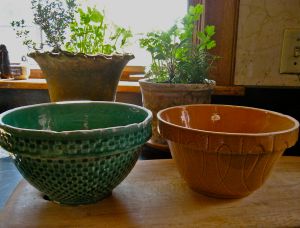
We’re now on our second day of taking things out in order to give away what we won’t be using and reorganizing it so that storage will be more practical and the room more presentable. The funny thing is that we have unearthed a number of “finds” – that is, things we wished we had (like the cute little glass flexible vase in the photo above) and rediscovered things that meant a lot to us – like some McCoy pottery bowls that show their age but are wonderful, nevertheless.

McCoy pottery bowls. . .

McCoy pottery bowls. . .

So, the saying that “utopia is in your own backyard” comes to mind while also wondering what to do with the huge sack of rice saved in case of a disaster.

To dress up the pantry space, I thought I might experiment with some pieces of vintage Japanese indigo blue/white fabric plus some blue wood-block printed “Tree of Life” cotton from India. We’ll see how that works out when the sticky-back velcro tape arrives tomorrow! Stay tuned!

Meanwhile, it’s comforting and discomfiting at the same time to realize that I haven’t changed much over the years: there are duplicates of the things that I love (Le Creuset, vintage copper, pottery bowls, ruffled quiche pans) and also things that I completely forgot about! Like the little flexible glass tube vase that I cleaned out and which now holds the remnants of Mother’s Day bouquets that my daughters sent me last weekend.

This whole cleaning out process reminds me of a French phrase:

“les plus de choses changent plus elles restent les mêmes” (the more things change, the more they stay the same!”


carrot-orange cake . . . and music too!

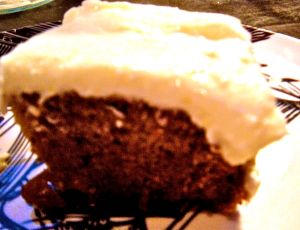
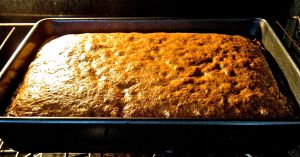
carrot-orange cake with cream cheese frosting. . .

carrot-orange cake with cream cheese frosting. . .

For years, I’ve made this carrot-orange cake because it’s a favorite with my family. It’s a little different from a straight carrot cake recipe because it includes orange zest and freshly squeezed orange juice (navel oranges) in both the cake batter and in the cream cheese frosting recipes.

By trial and error, I’ve discovered that hand-grating the carrots (washed but unpeeled) on a box grater works the best because the grated shavings are light enough to stay suspended in the cake batter. One year, I used a Cuisinart to “grate” the carrots and they turned out to be too finely ground – and sank heavily into the bottom of the cake! This hand-grating on the hole side of the box grater takes awhile and is the most laborious part of the recipe but it’s really worth it.

The other tweaks that I’ve made to this classic recipe (mine was from Bon Appetit,) are using golden raisins instead of dark brown ones, slightly heaping teaspoons of cinnamon and ground ginger, slightly more than half a teaspoon of nutmeg. And gently folding in the grated carrots and golden raisins at the end in an up-and-down motion with a rubber spatula (similar to folding beaten egg whites into a souffle.) carrot cake 1

For the frosting, I use two packages of Philadelphia regular cream cheese (not non-fat) and ONE stick of unsalted butter rather than two. I also only add as much confectioners sugar (one heaping cup rather than five cups) as the frosting will taste slightly sweet, but not as (overly) sweet as what the recipe calls for. Fresh orange juice and grated orange zest liven up the frosting as well.  Instead of cutting the cake horizontally as the recipe suggests, and because it is such a dense, moist cake, I frost it right in the pan just as it is. A small square serving of frosted cake goes a long way!

It is baking now and smells divine. This carrot orange cake will be shared with my 97-year old mother-in-law who lives across the street, a few friends to whom I’ll take some tomorrow – and the rest will be shared with those who are close by.

Oh, and by the way, an old friend who’s a pianist recommended Leon Fleisher’s 1987 recording of Beethoven’s “Emperor” concerto conducted by George Szell (“listen to the longest, most fabulous diminuendo that goes on forever at the end of the second movement!”) Seems like a good pairing to me: eating homemade carrot-orange cake with cream cheese frosting while listening to Leon Fleisher playing the “Emperor” in his heyday! Doesn’t get much better than that!

And happy mother’s day too!


“awakening” . . .

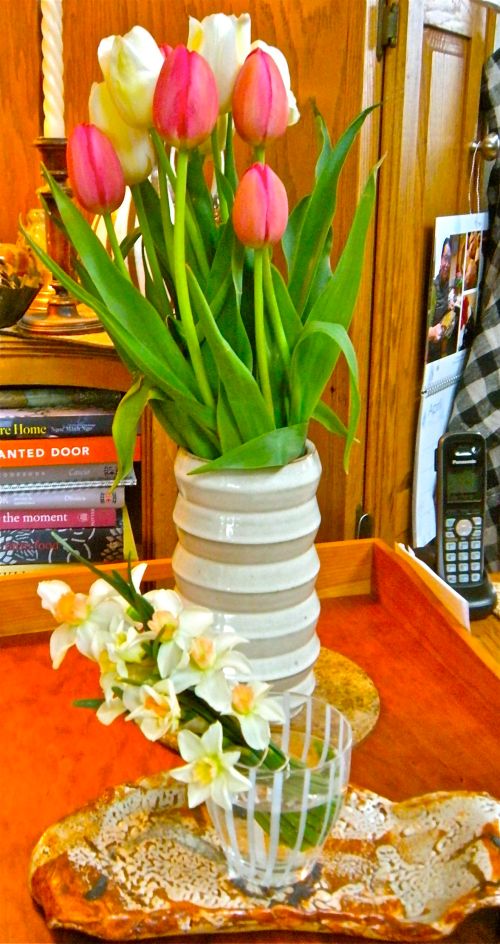
tulips and narcissus from the farmers market in Northampton . . .

tulips and narcissus from the farmers market in Northampton . . .

Yesterday, I picked up a book I had reserved at the library last week called “A New Earth – Awakening to Your Life’s Purpose” by Eckhart Tolle. I had seen it years ago but hadn’t been able to read it all at the time.

It seems that now, every paragraph and chapter seems relevant to my life. He talks about how we sometimes see ourselves in a life-role as a parent and that the role may overtake us rather than allowing us to be who we truly are underneath. He also speaks to carrying a “pain-body” around which we are unaware of, which may result in perpetuating past pain in cycles within the present. The Ego is responsible for much of the pain that we experience and learning how to think about it and how it influences our behavior is also illuminating.

Here’s one segment which encapsulates how to be in the Now and not mind what happens.

Not Minding What Happens: J. Krishnamurti, the great Indian philosopher and spiritual teacher, . . . surprised his audience by asking, “Do you want to know my secret?” Finally, after all these years, the master would give them the key to understanding. “This is my secret,” he said. “I don’t mind what happens.” He did not elaborate and perhaps his audience were even more perplexed than before. The implications of this simple statement, however, are profound.

When I don’t mind what happens, what does that imply? It implies that internally I am in alignment with what happens. “What happens,” of course, refers to the suchness of this moment, which always already is as it is. It refers to content, the form that this moment–the only moment there ever is–takes. To be in alignment with what is means to be in a relationship with inner nonresistance with what happens. It means not to label it as good or bad, but to let it be. Does this mean you can longer take action to bring about change in your life? On the contrary. When the basis for your actions is inner alignment with the present moment, your actions become empowered by the intelligence of Life itself.” 

Sound heavy? Maybe. But, if you read this book and are able to reflect on the author’s observations, it might make more sense and fall into place in your own consciousness.

In any case, I have found it to be reassuring  – to know Presence of yourself in the moment we are in and not minding what happens – rather than struggling mentally with just about everything else our ego might come up with.